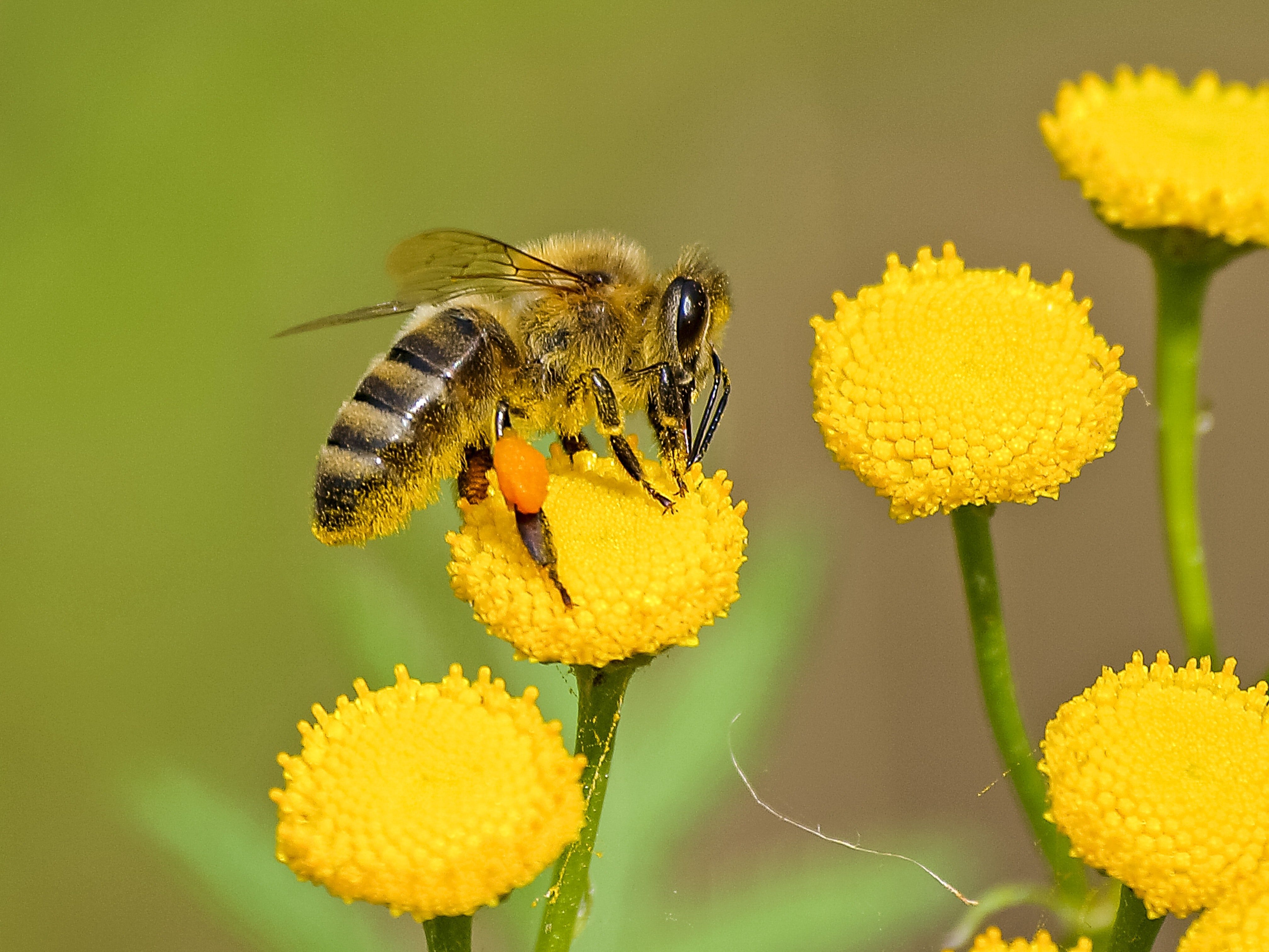
People love to recount bee-sting tales. But we seldom tell stories about the times when bees showed restraint. We should.
When I first raised bees 25 years ago, life wasn’t as tough for them as it is now. We placed a hive at the bottom of our sheep pasture, fairly convenient to water troughs, and let them go about their lives without much interference from us. Sometimes guests wanted to visit the hive. One, a woman from Japan, stood on a rock to get a better look and lowered her head to watch the bees go in and out. “Oooooh,” she said with delight. I told her bees get nervous when someone blocks the entrance, but she was enjoying herself too much to move.
When the bees tired of her close inspection, they started buzzing around her head. She watched them, smiling, and didn’t try to shoo them. I persuaded her to return to the house with me.
Once, a neighbor was doing our chores for us while we were away. With two buckets of grain in her hands, she looked up and saw a large, dark basketball heading toward her. It made a loud humming sound. She dropped the buckets and ran for the house.
Our bees had swarmed. The basketball zoomed into our garage and settled onto the rafters. By the time we returned home, the bees had firmly attached themselves, and an experienced beekeeper told us it was too late to move them.
Every morning, I encountered bees as I carried hay to our horses. My path apparently intersected with a beeline, because I’d walk through a cloud of them. At first, I felt nervous, but with full hands, couldn’t wave them off. After a few days, walking through a mob of bees became routine. They had their work, and I had mine.
We hosted 4-H livestock club meetings at our house. Most of the girls chose not to use the garage entrance. The boys, especially younger ones, liked to stand and gaze at the rafters and listen to the buzzing. “Cool,” they said.
During that summer, not one of us got stung. Honey dripped onto our car, but that was the lone inconvenience. When my husband took the bees down in the fall, he got several stings, but he hadn’t zipped his bee suit all the way up, and angry bees saw an opening.
In our climate, bees come out in late spring, eager to get started. They search my neighbors’ yards for blooms. They sit on damp clothes hanging on my clothesline.
Two years ago, I came home with a Great Pyrenees puppy who had been car sick on the trip and thrown up all over herself. My neighbor’s child, Kelly, then 5, asked if she could help bathe her.
I had just filled a tub with warm water when a small hand touched my back. “Can you help me?” I turned around. A bee was crawling on Kelly’s face. Kelly held perfectly still, as her mother had taught her.
I could do nothing. If I tried to wave away the bee, it might sting Kelly’s tender cheek. The bee explored at its leisure, walking this way and that. I watched in horror as the bee headed upwards, toward Kelly’s eye. Did bees drink from eyes, like fleas? “You’re doing it just right,” I said, but I worried. Kelly remained a statue. The bee stopped right before it reached her eye, and flew away. Bravery had worked.
A beekeeper who hosts school visits told me he had warned kindergarten guests not to stand in front of the hive entrance because it makes the guard bees nervous. When he turned his back, a little boy had put his arm into the entrance. “They won’t sting me,” the boy bragged.
The man said, quietly, “Take your arm out, slowly.” The boy did. He didn’t get stung.
Some races of bees are more laid back than others. Recent interest in Russian bees has spread because they are supposed to resist disease better. I’ve talked with people who raise them, and they use their smokers more than they used to. But they aren’t getting more stings.
I raise Carniolans, who originated in Eastern Europe. They are docile. I haven’t used my smoker in years. Beekeepers from the area they come from don’t wear protective clothing.
The county agent in my region, a second-generation beekeeper, believes it’s good for beekeepers to get a certain number of stings every year to build immunity. I’ve watched the man work bees, and he scarcely takes note of a sting. I trust he knows what he’s talking about, but I still try to avoid stings.
For a certain percentage of the population, a bee sting is serious, and we need to keep that in mind. But we have a tendency to amplify stories where someone gets stung, and not talk at all about the many times when bees ignore us.


Wonderful stories! Your love and admiration of bees is catching.
LikeLike