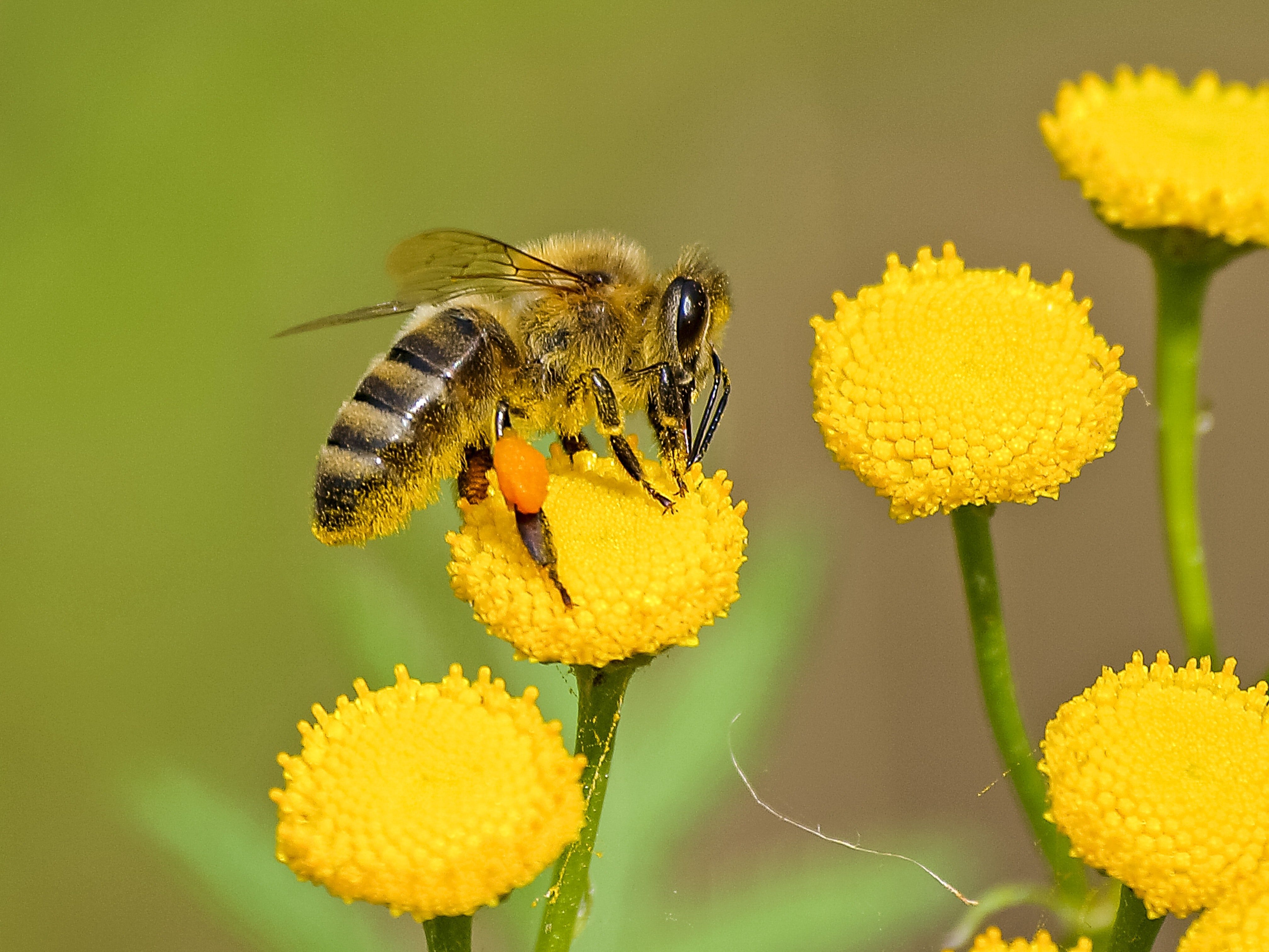
If we’re to love bees, we first need to trust them. For that, we need to grasp something. Bees don’t want to sting us.
I give talks on bees at elementary schools, and sometimes begin by asking, “Who here is afraid of bees?” Few kids raise their hands.
But as the hour progresses, I hear something different. A fourth-grade girl, looking at a photo of bees clustered on a comb, said, “When I look at this picture, it makes me want to throw up.” A boy whispered to me that if he had a laser gun, he’d use it on the bees that come into his yard. “I’d get them before they could get me.”
Despite nature programs and books that convey how necessary and industrious bees are, many kids and some adults aren’t sorry to see fewer of this once-abundant species.
Bees commonly get a bad rap. Do they sting? Yes. Do they get blamed for stings they don’t inflict? Often.
A hiking friend and I stopped to rest on a boulder. An insect landed on my friend’s hand. She did the exact right thing. Remained still and calm. The insect stung her, she yelped, and her hand began to swell. She recognized the insect as a yellow jacket. Yellow jackets can sting without provocation. But many people would have presumed the offending insect was a bee.
My daughter, a rafting guide, told of a guest who bit into a sandwich and got stung. His face swelled, and he cussed bees. Some of the guides referred to the annoying insects as “meat bees,” while understanding they weren’t actually bees, but carnivorous wasps. If an insect goes after the ham on your sandwich, it’s likely a wasp.
Wasps, hornets, and yellow jackets can be aggressive and can sting more than once. Bees are workaholics, focused on their jobs. Forager bees, and the hive they belong to, make the most of summer, to prepare for winter.
A bee dies if she stings a human. A bee may investigate a person, particularly a fragrant one, but when she finds no food prospect, flies off to find blossoms.
I have a large raspberry patch. As I collect berries, bees walk over my hands en route to a tasty bud. They have no time to waste picking a fight with a big, clumsy human.
When do they sting? When someone tries to mess with the hive’s food. As winter approaches, bees get touchy about protecting their honey. Who of us wouldn’t stab our fork into the hand of someone, especially a relative, who tried to take food off our plate?
If you sit or step on a bee, it will use its last breath to drive a stinger into your foot or rump. Frantic swatting can lead a bee to believe she is in danger. In the U.S. and many other countries, self-defense is a legitimate plea for leniency.
Precautions can help us avoid encounters with bees. Don’t go barefoot in the clover. Don’t wear pastel or vivid colors when hiking or visiting places with abundant flowers. Wear tan and bland colors, or white. Skip scented soaps, deodorant, and hair conditioners.
Next time. Tales of bee gentleness

 1000 Reasons to Love Bees