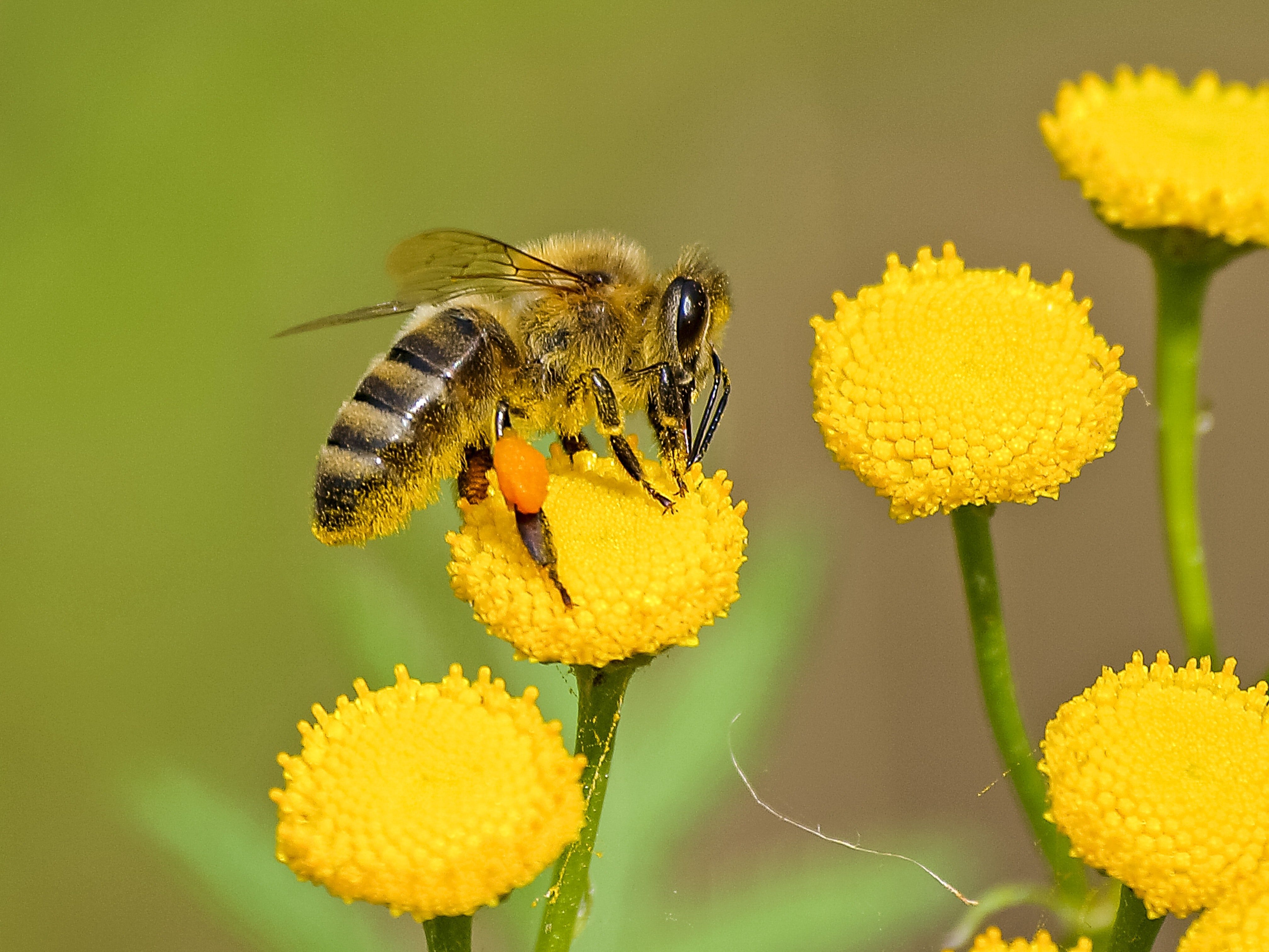

You have heard about the queen bee. How she presides over the hive. Attendants wait on her, antenna and foot. They groom her, feed her, warm her, and protect her from danger and drafts. She takes a risky mating flight once in her lifetime, and after that leads a sheltered life where subjects scramble to pamper her.
This story bears no resemblance to the determined existence a queen actually lives. She lays a thousand eggs a day—up to 2,000 during the busy spring season. Before she deposits an egg, she inspects the cell to make sure it is clean. She drops an egg, and moves on to the next, the next, and the next.
The queen enjoys one privilege. From the very first, and throughout her life, she dines on royal jelly, a high-protein substance manufactured by worker bees. She requires good nutrition to keep up her pace.
Potential queens face challenges, sometimes even before they are born. A rival young queen may sting others before they emerge. The winning young queen may have to deal with a reigning queen.
On her maiden flight, the virgin queen seeks a cloud of drones, and mates with some of them. She may encounter danger—predators or bad weather. When she returns to the hive, she holds up to six million sperm within her, and the relentless egg-laying begins.
Beekeepers hold that the disposition of the queen determines the disposition of the hive. Easy-going workers reflect a queen’s laid-back temperament. Nasty bees with aggressive tendencies mirror their queen’s personality. Usually, one queen reigns, but beekeepers sometimes find a hive where two queens peacefully co-exist.
Hive life, admirable in so many ways, has a few harsh aspects. The fate of queens who lose their mojo is one. Worker bees dethrone her. The queen meets the same end as Shakespeare’s royals—she is murdered. The beekeeper may be the one to make that call. No cushy retirement for an individual who spent her life laboring hard for the hive.
Queens normally live one or two years, but can live to age five, and one study found a queen who was eight. Worker bees spread the queen’s pheromones in the hive, assuring that the hive knows the queen is active and well. Pheromone production goes down in older queens. Many beekeepers replace their queens after a year or two, but some beekeepers let the bees decide whether they need a new queen.
In a cold climate like ours, summer is short and most beekeepers don’t want to lose 16 days, the time it takes for the hive to raise a new queen. Yet, finding a replacement queen may take a few days, and introducing the new queen to the hive a few days more. Older bees may reject the new queen, or a new queen may bring problems of her own. Advocates of natural beekeeping believe bees are better at managing themselves than we are.
The queen bee has greater size than workers and drones. She has a long, slender abdomen and a smooth, reusable stinger, unlike the barbed ones of worker bees, and she has a shiny back, different from the fuzzy workers.
But despite her distinctive characteristics and her importance, I don’t think of her as royalty. I live in a country that rejected monarchy, and that may be part of it. More than that, I regard the large beautiful bee who knocks herself out to ensure the hive’s future as The Mother.

 1000 Reasons to Love Bees
Fascinating. I had no idea the hive was so full of drama.
LikeLike
Very interesting, Patti.
LikeLike