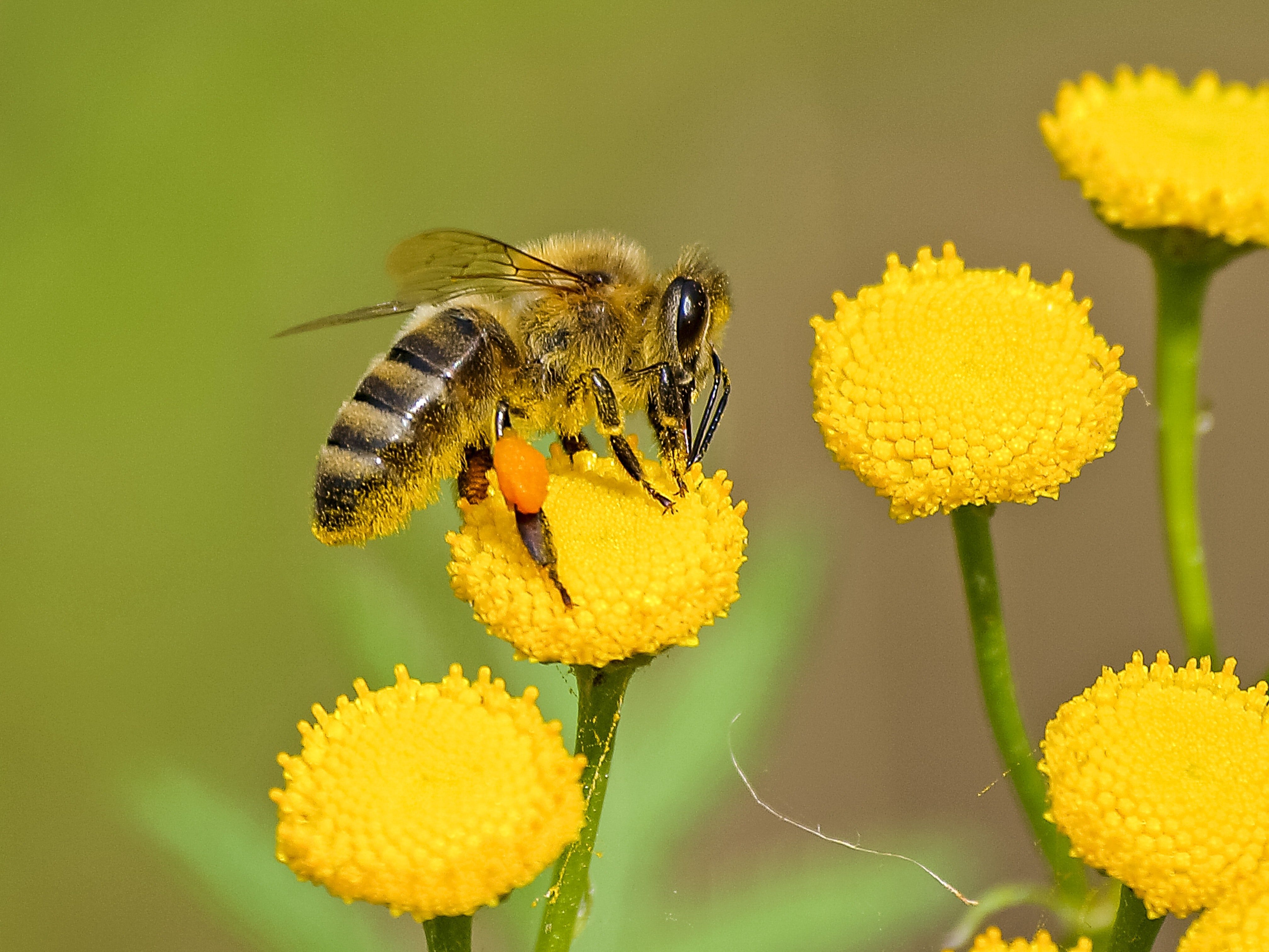

Emily Dickinson wrote:
To make a prairie it takes a clover and one bee,
One clover, and a bee.
And revery.
The revery alone will do,
If bees are few.
I loved this poem from the first time I saw it, long before I had a direct connection with bees. Dickinson suggests that revery—daydreaming and musing—plays an important role in achieving an end. Losing oneself in woolgathering isn’t time wasted; dreaming may be as important to producing a prairie as the seeds blown in on the wind, the sunshine, water, and pollinators coming to assist.
Books on the power of thought sell in the bezillions. Someone said, “Thoughts are things.” Self-help gurus and philosophers insist that beautiful thoughts precede beautiful creations.
I like that. Lost in thought, I blunder into furniture and walk against the light at intersections. Dickinson implies that may not be all bad. Yet, I can’t read her poem as romantically as I once did. At the time she wrote it, bees flourished. Her words, “if bees are few” were whimsy, and the phrase rhymed.
In 19th Century agrarian America, many households kept hives and enjoyed fresh honey. As the century ended, the bee’s role in pollination became more widely understood. People who walked rural pathways came across humming fields of flowers and fruit tree orchards. Many of the bees were wild—the U.S. has thousands of native species.
You may notice when the topic of bees comes up, many adults mention that their grandparents kept bees. The Department of Agriculture says the number of bees in managed colonies dropped from 6 million in 1947, to 2.5 million today. A disturbing figure from the National Resources Defense Council says losses in managed colonies hit 45 percent in 2022.
Colony collapse disorder, which got a lot of press, seems to be abating, but the varroa mite remains an enemy to bee colonies. Loss of habitat, loss of variety of food sources (some garden flowers are unusable to bees), the family of chemicals known as neonics (banned in the EU and other countries, but permitted here), contribute to the losses. Growers who rely on pollinators face trouble. For the first time, the USDA reported that summer losses exceeded winter losses, and no one knows why.
Many groups are studying the problem. Backyard beekeepers continue to buy new bees to replace ones lost, which helps the bee population. Since beekeepers started noticing higher losses in the early 2000s, agricultural agencies, researchers, and the beekeeping industry have been working together to understand the decline and figure out how to stop it.
With all my heart, I believe we can revive the bee population. We have to plant a variety of flowers that pollinators can use. We need continued research, a ban on bee-killing chemicals, and advocacy from people who love and admire bees. Revery alone won’t do.
But I ain’t sayin’ it can’t play a role.

 1000 Reasons to Love Bees