/
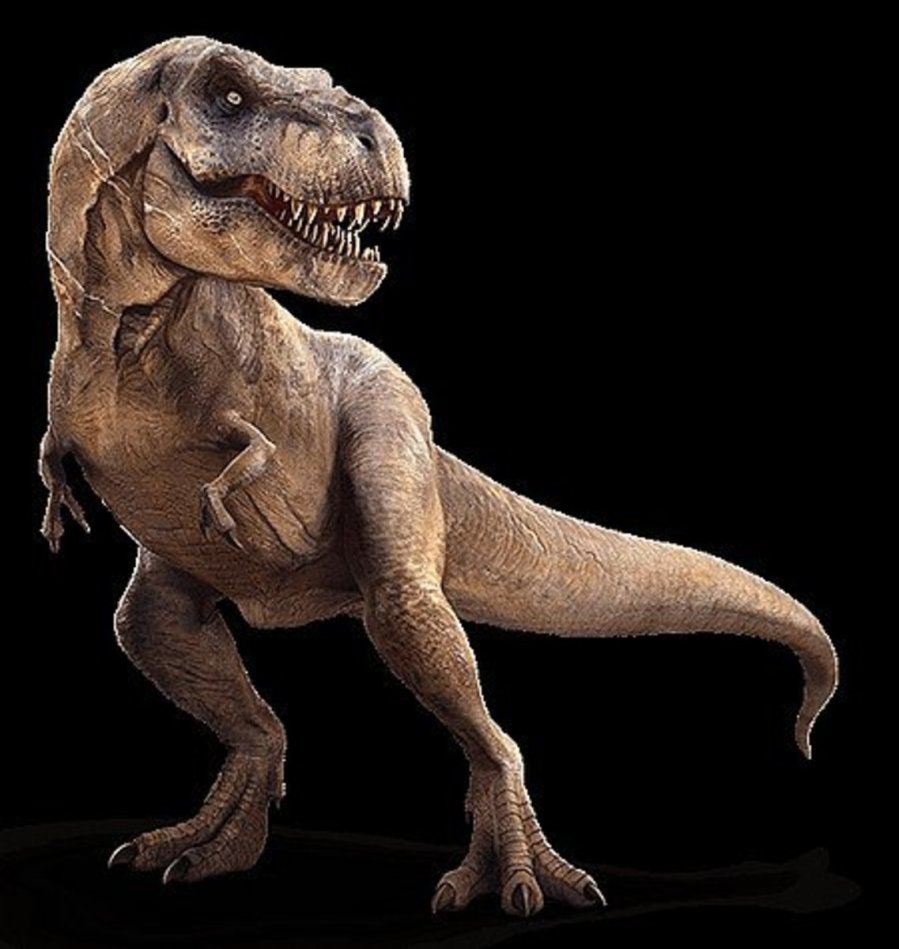
It’s a warm, Cretaceous afternoon when a T-Rex lumbers into view, giant head swaying, throat rumbling. His great, pointed teeth gleam.
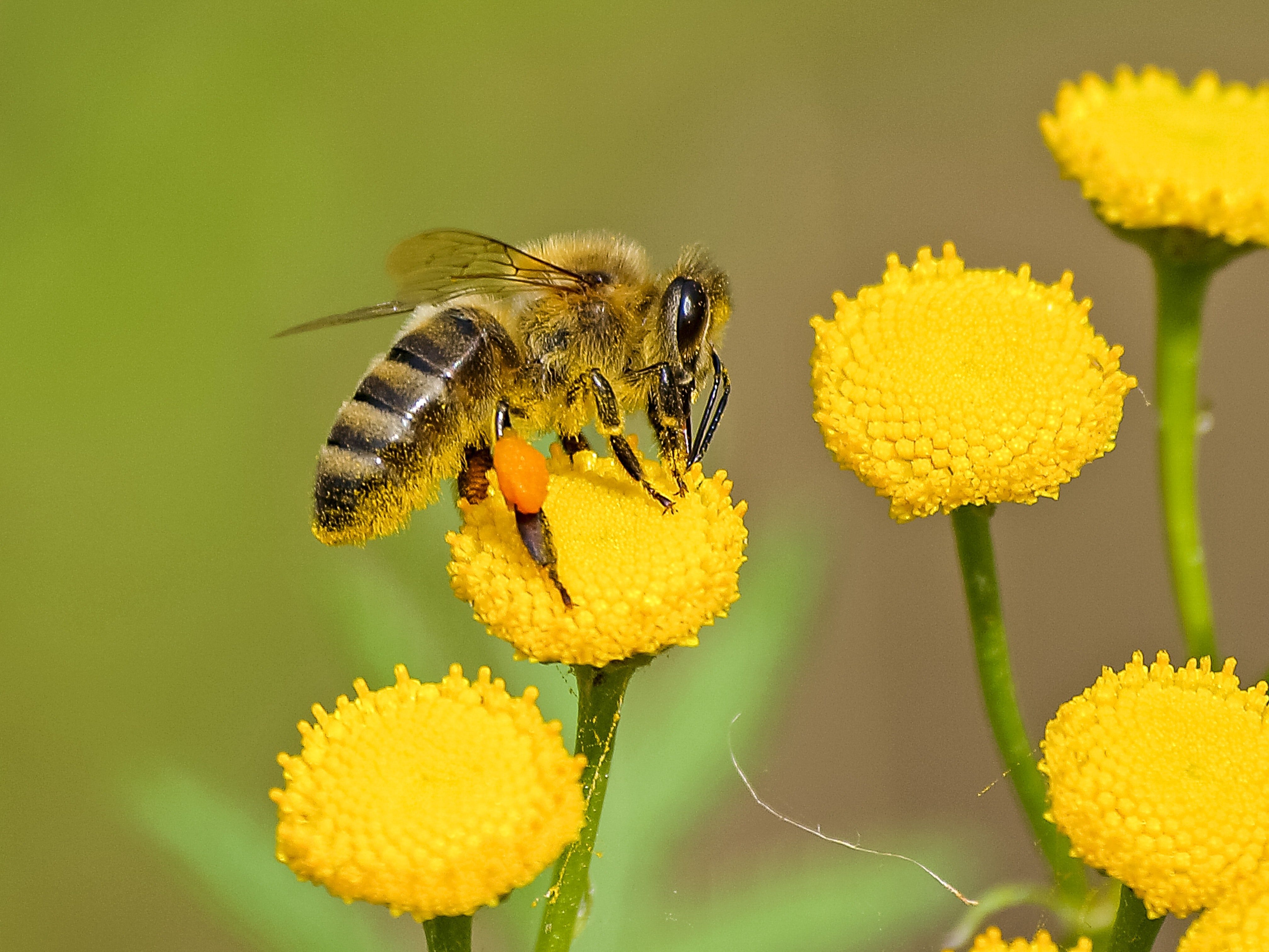
He shakes his head. A bee has landed on the despot’s neck, but T-Rex’s tiny arms can’t reach to slap it. Recent theory says dinosaurs may have been bright enough to use tools, but the flyswatter won’t appear for millions of years, and even if T-Rex puzzles out that he could use a branch for swatting, puny arms still limit his reach. The aggravated T-Rex can’t get rid of the bee.
Did bees and dinosaurs really live at the same time? Do bees go back that far? Yes. Bees lived alongside T-Rex. Bees and various species of dinosaurs co-existed through several geological eras. Fossilized bees from 100 million years ago have been found, but scientists believe bees appeared on the planet 130-150 million years ago.
Bees and flowering plants evolved together. The world had drab, colorless plants for a long time. For reproduction, the plants relied on the wind to carry their pollen. Most of the pollen fell on the ground, far from the female parts of plants where it was needed, or the pollen blew out to sea. Plants needed a more efficient way to multiply.
Insects started visiting plants to feed on nutritious pollen. When they carried it to other plants, that helped the plants propagate. To attract insects, plants started dressing themselves in bright colors and molding themselves into distinctive, attention-getting shapes, to stand out from the surrounding green vegetation.
Bees, who had descended from wasps, changed too, in ways that helped plants. They evolved hairy bodies that pollen would stick to. After a time, the plants upped their game and began offering sweet nectar to insect guests. Bees, flies and butterflies developed modifications to their mouths that helped them suck up nectar.
Bees began to feed the food they gathered to their larva. Bees started to form colonies to raise the young. Scientists think some bees started living in social groups about 80 million years ago. Most species of bees, then and now, remained solitary.
Why didn’t bees get wiped out when the dinosaurs did? Small creatures did better than large ones when conditions on the planet changed. When the planet became hospitable again, insects made a strong comeback.
Social insects like the bee are highly evolved and carry out all kinds of complex tasks. Bees communicate in ways that fascinate the humans who watch and study them. The bees construct nests using sound, architectural principles. They succeed in keeping the hive at a constant temperature, no matter what the outside weather is doing. They have a keen understanding of which flowers supply the best nourishment. They navigate their way back to the hive as human pilots do, memorizing landmarks. They tolerate no messes in the hive. They bravely defend their homes against large adversaries. They thrive together by having an effective division of labor.
We feel awe when we watch how ably a colony cooperates, and wonder why we, with our oversized brains, don’t practice teamwork nearly as well.
It’s probably a lame excuse, but we can point out that bees have had more time to learn.

 1000 Reasons to Love Bees