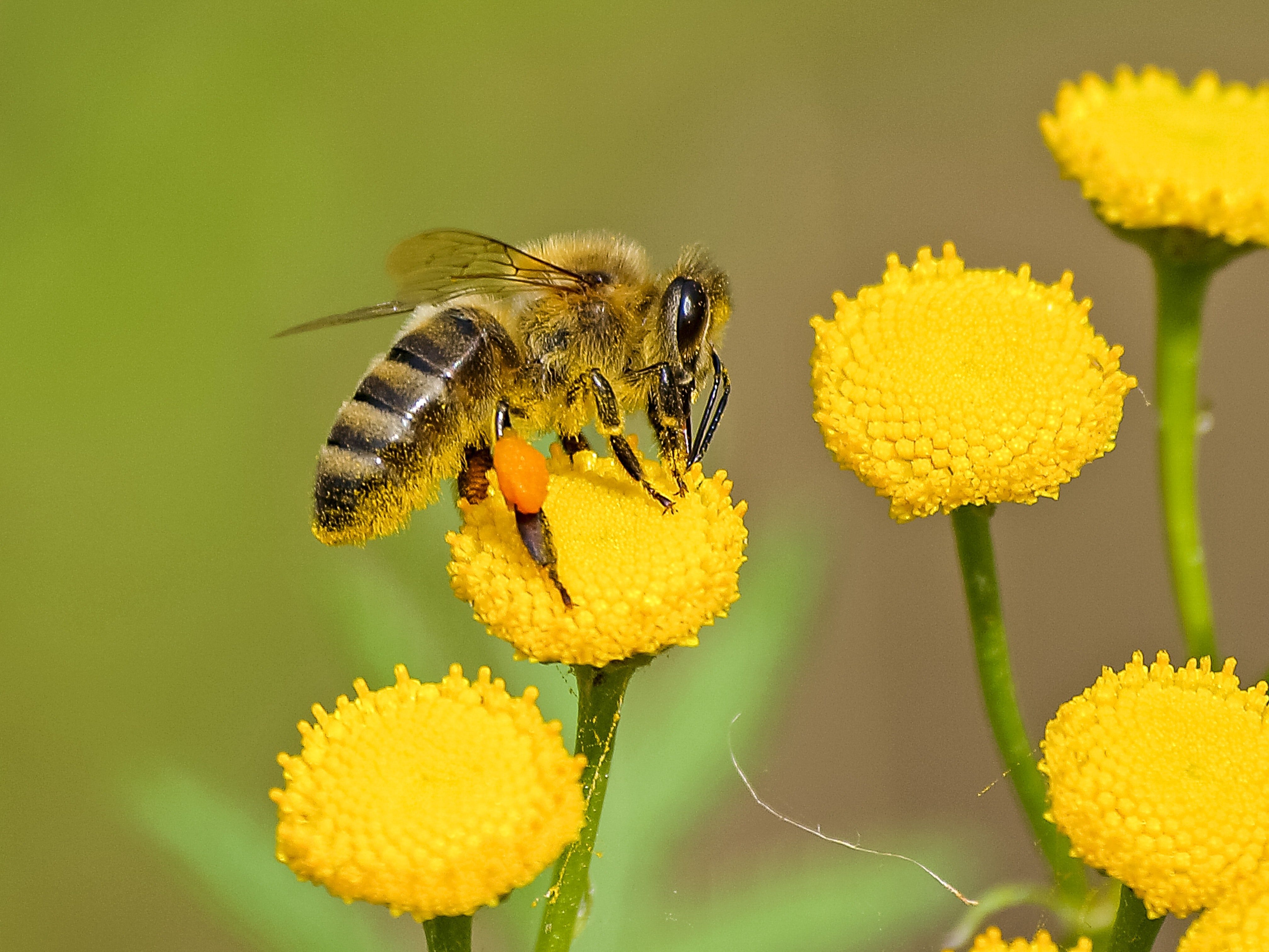
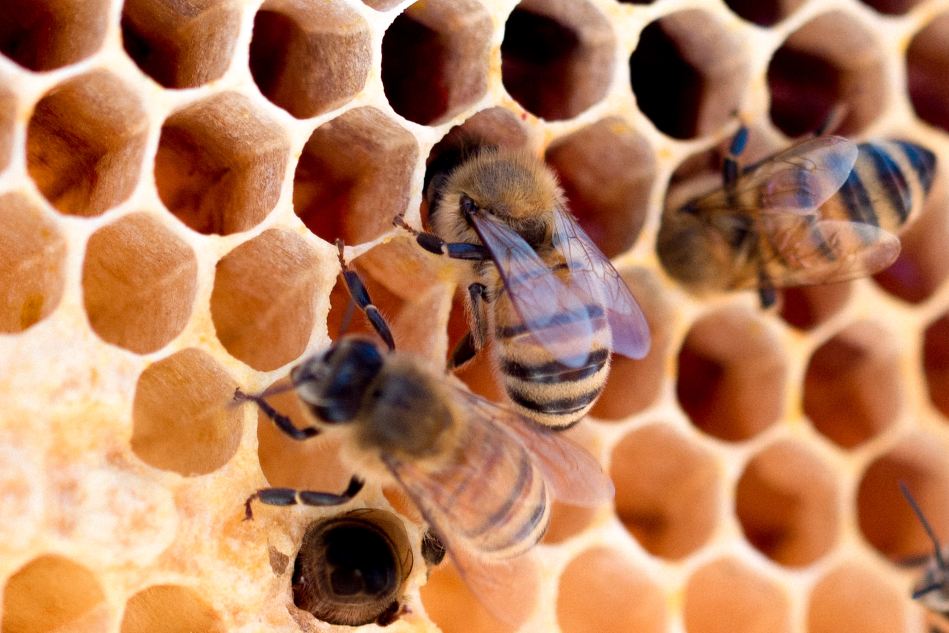
When I peer into a bee hive, it awakens me to something. That I don’t make the most of my large, three-pound brain. The bee boasts a brain the size of a poppy seed, and look what she does with it.
She designs and builds. The hexagon shape she chooses for making comb where she will raise brood and store honey maximizes available space. The hexagon distributes stress across its structure, and is considered the strongest shape.
Bees who build their own comb in trees or in top bar hives construct them in a catenary shape—a curve supported on either end, a design that has fascinated engineers, architects, and even Thomas Jefferson.
She navigates. Receptors make the bee sensitive to scent, so she can find flowers and her way home. Researchers found she also senses the electromagnetic field around flowers. Scientists found that bees appear to observe landmarks as they fly, and remember them to find their way back.
She communicates. When a forager bee finds a good source of food, she returns to the hive and performs the waggle dance. The dance tells the others where the food is, and conveys its quality and quantity. If a dancing bee observes another forager telling about a flower patch, and if her grove is better, she dances faster to draw attention away from the other bee.
She cooperates. In the hive, the worker bees divide labor. Some clean the hive, some groom returning foragers and unload pollen, some work in the nursery, some lay down wax, some patch leaks against drafts, some act as guards, some scout for new locations to live, some feed and groom the queen so egg-laying can proceed with maximum efficiency.
A lot of research goes into bees these days, because bees are in trouble and they’re so important. Interesting findings have come from this. One study found that bees can count. A recent study showed that bumble bees will play games with balls. During Covid, a study showed bees could efficiently detect Covid, and earlier research had shown that bees detect cancer cells earlier than dogs can.
Other species keep surprising us humans. We believed we were the only species that used tools, until we observed birds, monkeys, rodents and insects doing the same. We thought only humans had language, until we found that whales, dolphins, birds, frogs and others convey complex information to each other. Now we know that trees and sagebrush send messages to their communities.
We remained smug about one thing—we alone were self-conscious. Then one morning, Koko, the gorilla who had been taught sign language, announced, “Koko damn fine gorilla.” (Her last message to humans was, “Help Earth. Hurry!”)
I heard a children’s author say that linguists who studied hundreds of indigenous languages found that before colonization, 70 percent of those tongues didn’t have a word for “human being.” Indigenous people didn’t see themselves as separate from other miraculous beings who shared Creation.
Our incredible minds and intricate bodies deserve to be celebrated. We can feel proud of the ingenuity and goodness humans often show. We can agree with the psalmist who said, “What is mankind that you are mindful of them? . . .You have made them a little lower than the angels.”
But when I peer into a hive, this idea comes to me. I think that I shall never see a creature smarter than a bee.

 1000 Reasons to Love Bees