Lisa and Ben met at a school assembly when they were high school juniors. After one date, they declared themselves a couple. On graduation night, Ben gave Lisa an engagement ring.
Ben found a starter home for them near the trade school he would attend. Lisa thought the world of Ben, but wanted to go to art school. The two couldn’t solve their differences, and with many tears parted ways
Ben visited Lisa a couple of years later at her university and tried to lure her home, but college had whetted her appetite for seeing more of the world. For a while, she felt drawn to nonconformist men.
After some failed relationships, Lisa recognized that what she had thought of as free spiritedness in boyfriends had been unreliability. She remembered rock-solid Ben with fondness, and asked her aunt for news of him. “He just got married,” her relative said.
“I may never find anyone like him,” Lisa moaned. “We truly loved each other.” Her aunt said, “Sure. But when it comes to love, timing is everything.”
What does this have to do with bees? Can we describe what transpires between bees and flowers as love?
If love means attraction that brings entities together, benefits all parties, and assures the continuation of the species, we can conclude that bees and flowers are crazy about each other.
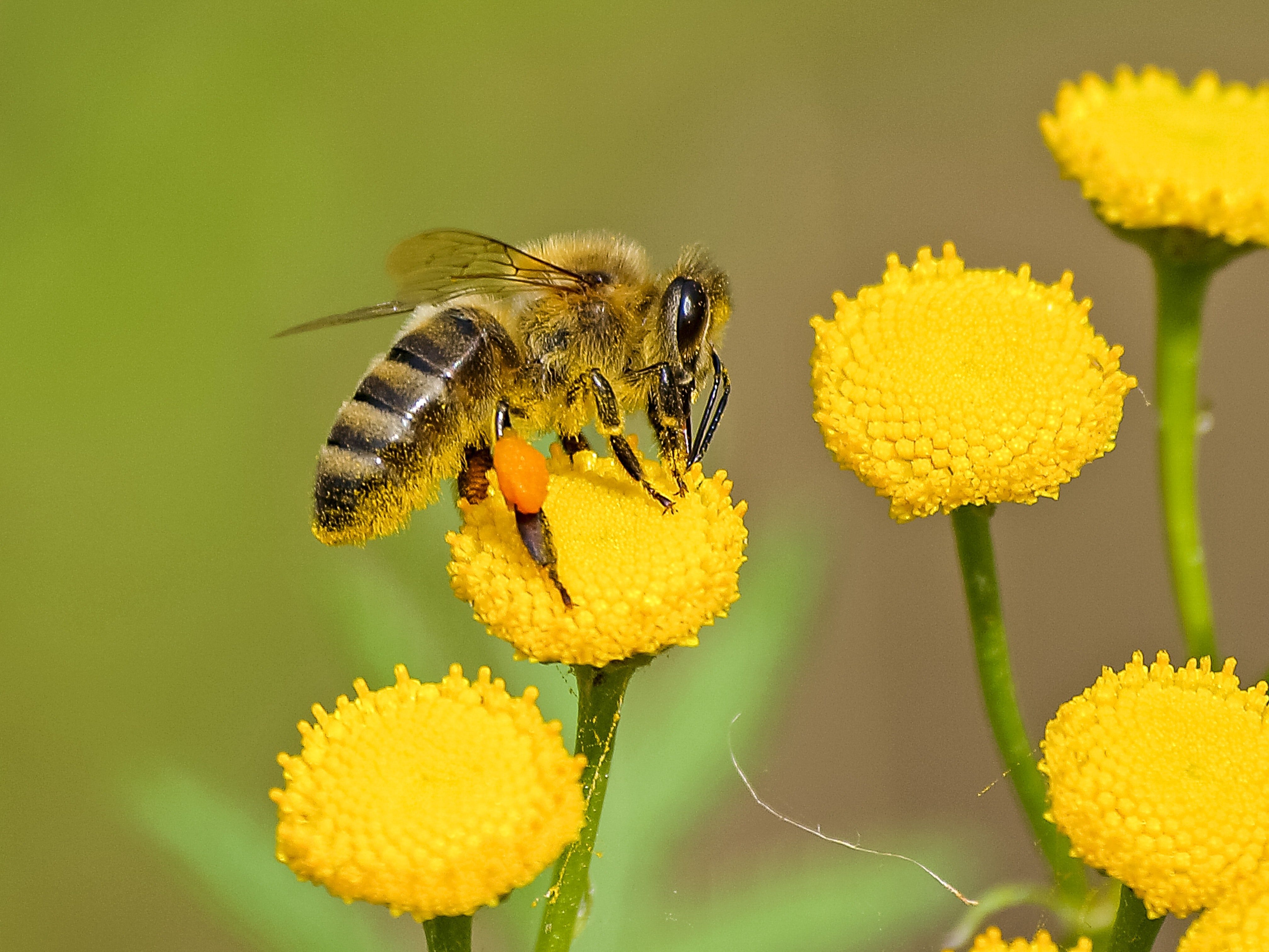
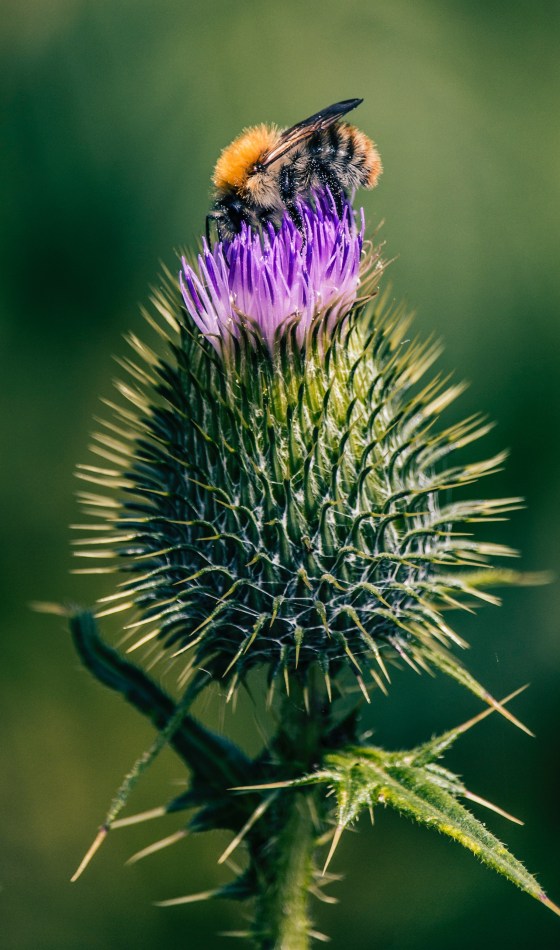
Flowers court bees. They doll themselves up in pretty petals with attractive, noticeable shapes. They produce a cloud of tantalizing perfume, and they make alluring nectar to serve. In addition, they send out an electrical field to attract bees. Bees can discern from that field the distinctive shape of blooms, and whether other bees have recently called on that plant.
As soon as the bee leaves the flower and heads for home, she starts to manufacture honey that will nourish the colony through winter. (What did the bee say to the flower? “Hello, Honey.”)
What does the bee gain from the relationship? Tiny grains of pollen attach themselves to the bee’s hairy body, and the bee carries the pollen to the flower of another plant. The pollen fertilizes the plant and allows it to develop seeds and produce fruit. (What did the seed say to the flower? “Okay Bloomer.”)
Wind can carry pollen, but bees and other pollinators do a much more efficient job and ensure a new generation of plants and crops. Many plants wouldn’t be able to reproduce without bees.
A warming planet and crazy weather alter things for bee/flower affairs. Flowers may bloom before bees come out of their hives. So, the flowers go unpollinated. When the bees come out, they find that blooms have come and gone. Bees are deprived of their usual nutrition sources.
Or spring storms may delay flowers from blooming, or kill blooms, and hungry, emerging bees won’t find adequate food.
Disturbances in the synchrony between flowering plants and their pollinators have always occurred, but plant scientists see them happening more frequently now. Warming has confused species, and that concerns scientists.
Lisa’s aunt had nailed it. “When it comes to love, timing is everything.”

 1000 Reasons to Love Bees