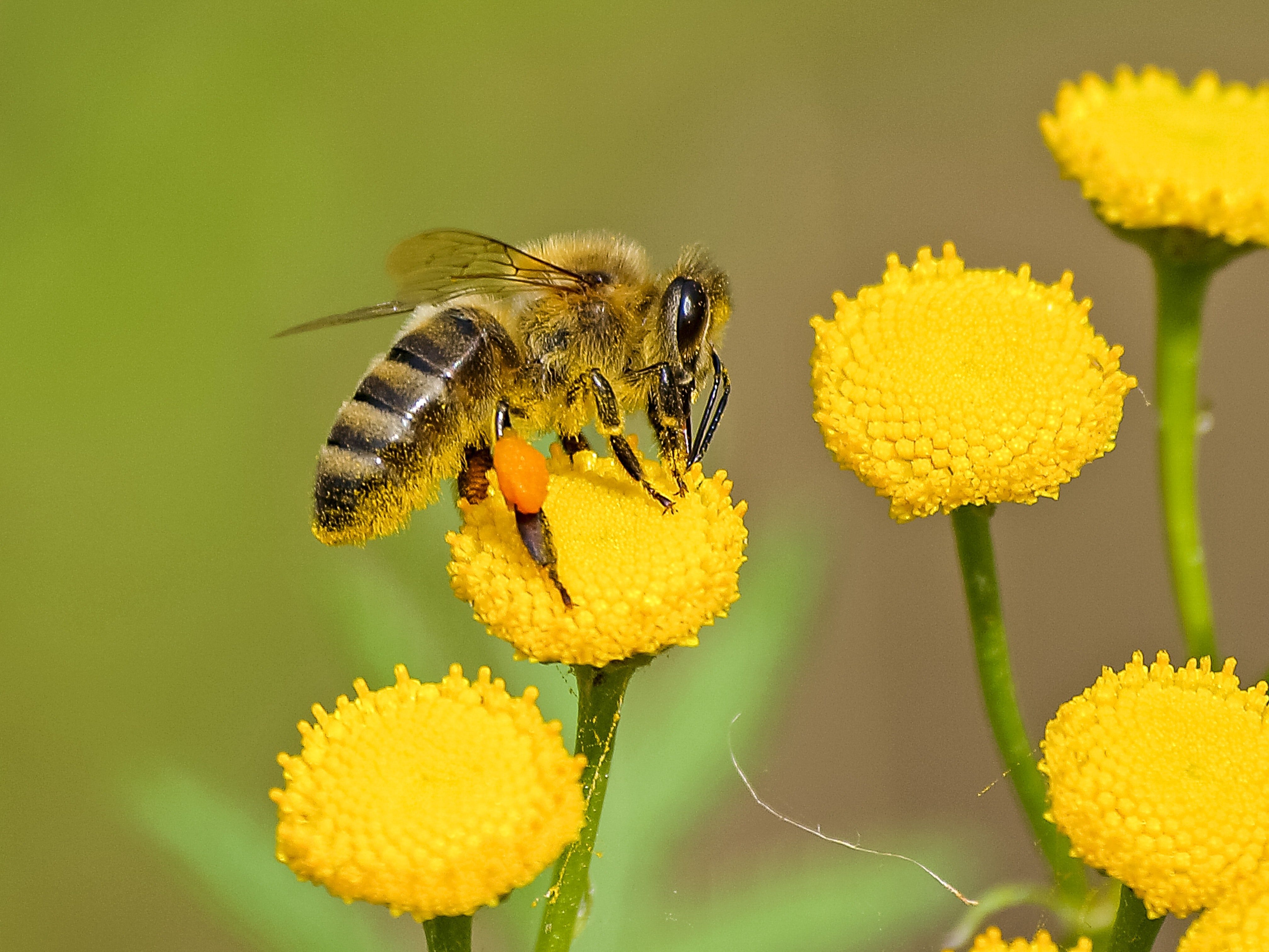
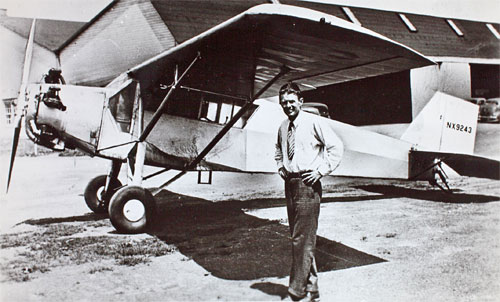
In aviation’s early days, planes lacked navigation systems and pilots had no way to talk to people on the ground. They flew by the seat of their pants. Research shows that bees, too, navigate by the seat of their pants.
A newspaper coined the phrase in 1938 when early aviator Douglas Corrigan flew from the USA to Ireland. His mechanic told a reporter that Corrigan “flew by the seat of his trousers.” Now we use the expression to describe people who operate without a plan and make choices as they go along.
Corrigan became known as Wrong-way Corrigan because he filed a flight plan that said he intended to return to California. His friends said he always meant to go to Ireland. Aviation officials had denied him a permit to fly over the ocean because they saw his aircraft as unworthy. After he landed, Corrigan concocted a bit of blarney about getting lost in fog, and also claimed his plane had caught fire. That part may have been real.
Researchers studying bees concluded that they find their way the same as early aviators did. They take note of the terrain below—streams and roads and walls—and use that knowledge to figure out their return flight.
Scientists in Germany outfitted bees with transponders. (Think how tiny!) They transported the bees to a strange place. The bees called on their observation of landmarks to figure out how to get back to their hives. Scientists think the bees compared features of the new landscape to memories of their home terrain. They flew along familiar-looking features, just like the early aviators who followed roads and railroad tracks.
Bees have several navigational skills. They have a keen sense of smell. They know where they are in relation to the sun, and they understand light patterns. They seem to be connected to the Earth’s magnetic field. And they learn quickly. Bees in the experiment used a mental map of their home landscape to generalize about the new, unfamiliar territory.
Do bees get it wrong sometimes, like pilots did? Some of us paint our hives in pretty, pastel colors to make it easier for bees to distinguish their hives from afar.
Bees usually stay within a mile or two of their hives. Going further to find blooms becomes inefficient. But one experiment showed that bees can travel as far as 25 miles in extenuating circumstances.
The bee method of navigation may resemble what early aviators did, but that doesn’t mean they fly by the seat of their pants. They know what they are doing. They aren’t Wrong-way Corrigans. But then, neither was Douglas Corrigan.

 1000 Reasons to Love Bees
Great article 🐝
LikeLike