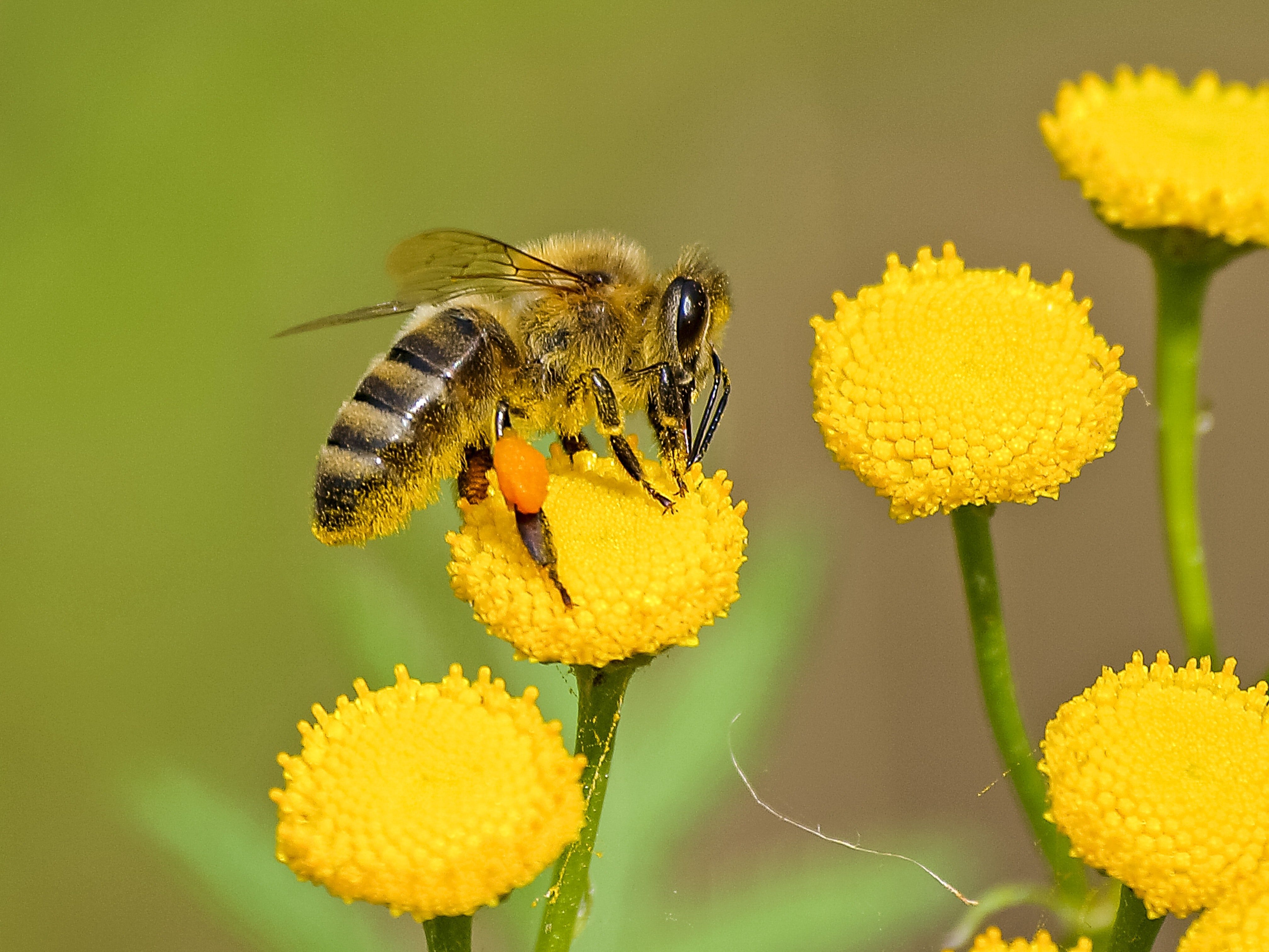
A few years ago, someone took a picture of a bee hanging upside down on a flower petal, apparently asleep. People shared and re-shared the photo. Even those who don’t know much about colony life sensed the rareness of catching a bee at rest. Everyone knows the simile “busy as a bee.”
In a bee colony, the work ethic takes hold early.
When a baby bee emerges from her cell, she gazes at the surrounding comb, then turns around and cleans the cradle where she grew, readying it for the queen to deposit a new egg. This early leap into industry sets the course for her whole, short life.
After cleaning its birth cell, the fledgling bee goes off to work in the nursery, feeding pupae and larvae. Following that, she confronts the other end of bee life. She takes a job as an undertaker. Worker bees, who are the most numerous in the hive, live about 30 days. In a colony of 60,000, numbers of bees die every day and other bees must dispose of them. A cluttered hive would impede efficiency.
Climbing the career ladder, the bee may move on to become an architect. After her wax glands mature, she can build comb. Or she may work at capping honey with wax, or collecting tree resin to make propolis for sealing cracks against drafts. Carrying out various building and maintenance roles, the architects keep the hive homey.
Some mature bees get involved in producing honey. Some groom foragers when they return from flower patches, some unload pollen and nectar and put it in cells for later. Some add enzymes from their bodies to the nectar to help it become honey. Using their wings, some fan the honey in the cells, to remove moisture.
The queen’s job—laying 1,000 to 2,000 eggs a day—means she has no time to feed or groom herself. She enlists a dozen attendants to do that.
Guard bees protect the entrance and the queen. They sting intruders, which can include mice, skunks, raccoons, bears, wasps, robber bees from other hives, and us.
For her last job, the bee may become a forager. Foragers are who we encounter in our flowers and trees. When a bee becomes a forager, a navigation gene goes off in her brain, allowing her to go and seek flowers, or new locations for her colony. Scout bees look for abundant food resources and ready access to water.
Foragers go to work early every day, and keep working until it turns cool or dark. The forager may take her last breath while flying out to flowers or returning home laden with nectar and pollen—ending a life of nonstop work.
Judging by the popularity of the sleeping bee photo, a lot of hard-working folks sympathize with the small forager who was caught napping. Achievers may have gazed at the photo wistfully, wishing they. too, could find a petal to hide under and take a siesta. Lazy folks probably liked the picture, too, for reasons of their own.

 1000 Reasons to Love Bees