My friend Collette owns a nun’s habit, the old-fashioned kind with a white wimple on the forehead and a black cape that covers the head. Collette wears it with chains that swing from her neck and waist.
At a Halloween party, some guests confessed to Collette in low voices their struggles with the Catholic Church. She listened with kindness. One man confided a sin he had been carrying. Though everyone there wore a costume, guests allowed themselves to believe that my friend could deliver spiritual counsel.
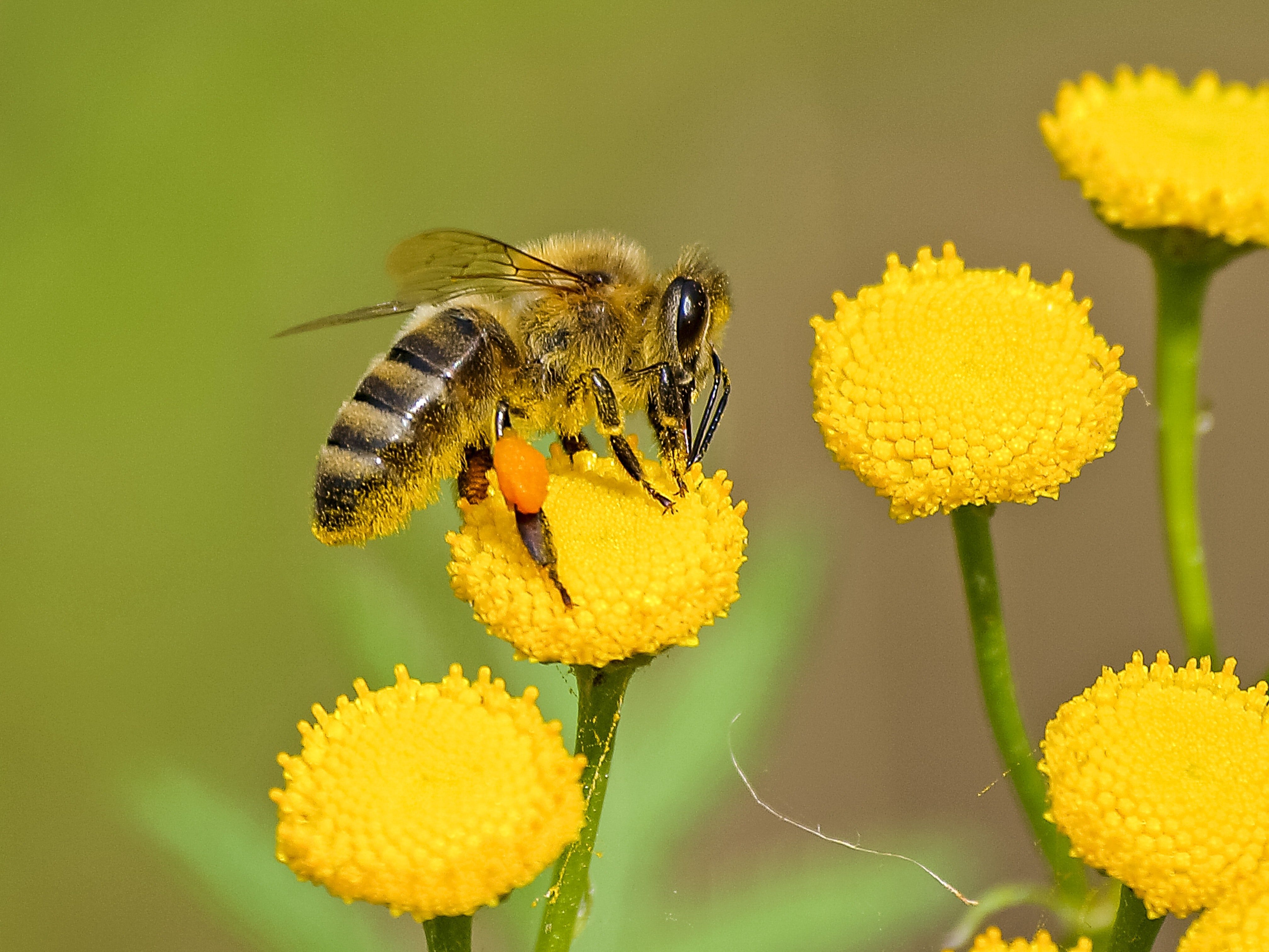
In the insect world, imposters abound, and many pretend to be bees. Other creatures understand that bees sting to protect themselves. Why wouldn’t a bug who lacks a stinger go out into the world wearing a bee disguise?
Hoverflies and drone flies look and sound a lot like bees. Their wings are different—bees have two sets, flies have one. And bees have elbowed (bent) antennae, while flies have stubby, straight antennae, sometimes too thin to see. Making out the difference in wings and antennae on a small, flying insect can be tough, but flies move differently than bees. A fly hovers and darts about, while a bee moves from flower to flower deliberately, and doesn’t hover.
The bee fly resembles bumble bees and honeybees in looks and habits. The furry fly has a long tongue that allows it to mine nectar from flowers. It sneaks into the nests of solitary bees to eat the larvae.
Some beetles try to resemble bees. Painted Locus Borers have black and yellow stripes, and they hang around on goldenrod, as bees do. But a closer look shows they have little in common with bees, other than color. Flying beetles have hardened, shell-like wings.
Many day-flying moths mimic bees in convincing ways. They have four wings, thickened antennae that can appear elbowed, and furry, black-and yellow bodies. But they have slender legs, and lack the pollen baskets bees have on their back legs. The moths have long proboscis that allow them to hover over flowers, like hummingbirds, for feeding. Bees land on flowers to feed and gather pollen.
Do disguises sometimes backfire and get imposters in trouble? Does a perfectly harmless or even beneficial insect lose its life sometimes because someone—human or otherwise—means to protect itself and kills what it thinks is a bee? Seems possible. But overall, mimicking bees works well as a strategy. A predator looking for a meal thinks twice before trying to snatch up a striped insect who might inflict a painful sting.
Unlike my friend Collette, who never intended to mislead others, bee imposters set out to fool the neighborhood. Yesterday, while walking my dogs at the river, a pair of yellow and black striped insects came near. Their size and color implied they might be bees, but something about the way they flew made me wonder.
“Two bees, or not two bees?” That was my question to them. I didn’t expect a straight answer. Not if they were practiced deceivers.

 1000 Reasons to Love Bees