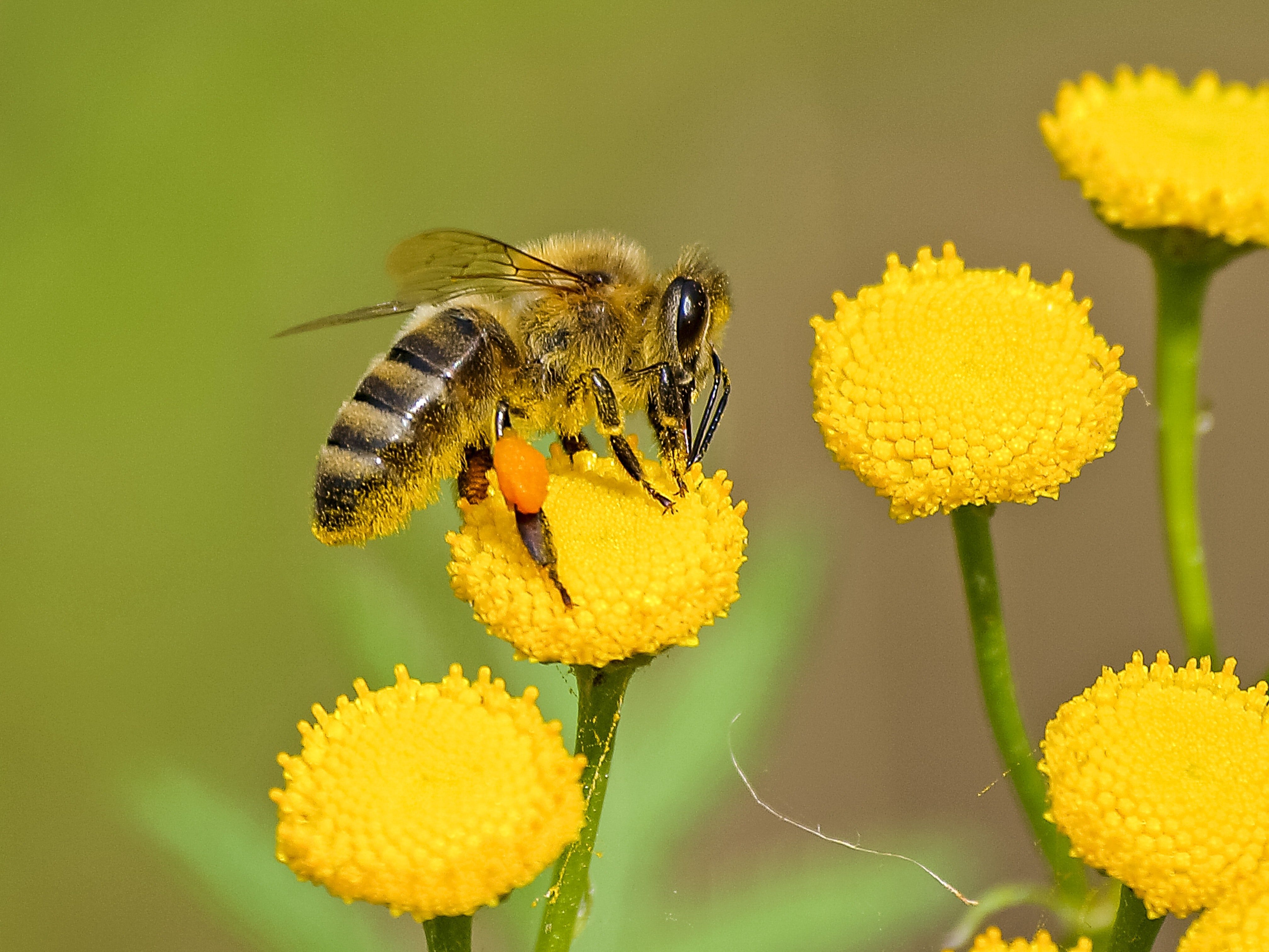

Years ago at a beekeepers meeting, a tall, older woman told me the best part of having bees is watching them. Every morning she takes a pot of tea outside, sits down beside her hive, and observes bees coming and going.
Last fall when my son and his family visited, my nine-year-old granddaughter Kora sat cross-legged in the grass in front of a hive. She called to me, “I saw a bee with pollen on its butt. Look, here’s another.” I stopped my wheelbarrow and watched for a minute. Actually, I only paused a half-minute before I moved on with my wheelbarrow.
One year a Lutheran group came to my house to see the bees. Pastor Gina’s daughter, Naomi, who was 3, sat down before a hive and stared up at bees as they left and returned. Her mama sat down with her.
“Back up a bit,” I said. I didn’t want guard bees mistaking the guests’ intention, but that was overly cautious. The bees took no notice of them.
Every year I promise myself I will take a cup of tea, sit by a hive, and watch bees. This morning, I did. I didn’t take a timepiece, because I would have been tempted to consult it. Just tea and a notebook.
The morning rush, when bees leave to go to work, had passed. The round exit/entrances get crowded in early morning and evening. Hive builders make them small so guard bees have less area to patrol. By the time I sat down, bees who had collected nectar had started to arrive back, a dozen or so at a time.
Some flew directly into one of the two holes. Some arrived and walked up and down the hive wall for a few seconds. Checking to make sure this was their own hive?
The plumber is coming. How much will it cost, I wonder.
The small group of bees makes only a faint buzz. Unlike in the tall lilac bushes and ornamental plum tree, which this week vibrate at high volume from foragers at work.
The people who lace weed and other drugs with deadly Fentanyl—how do they sleep?
The bees use one hole more than the other. Because it’s further from the edge, and seems safer? Or, do they see one hole as an exit and one as an entrance? No, there’s no pattern I can make out.
The book I finished. I would have ended it differently.
A wasp arrives. The enemy. Wasps eat larvae and pupae. A guard flies at the wasp, but the wasp veers around the bee and enters the hive. Bees defend against wasps. Will this wasp’s life end today?
I saw that today’s calendar has 1 p.m. written in blue ink. What happens at 1? Why didn’t I put down more information?
A single bee has started to buzz near my head. She leaves, comes back and dives past my ear. I wonder if my presence has started to annoy her. But she doesn’t return.
I need to do something about the dog’s toenails.
Next to my chair, three dandelions have each attracted a bee. I read an article by someone who believes dandelions aren’t as great for bees as beekeepers think. Bees will choose something else if they have a choice, he insisted. But my lilacs and plum tree hum with bees, and still, all around me, bees dine on dandelions.
Mary Oliver says in her poem THE SUMMER DAY, “I don’t know exactly what a prayer is. I do know how to pay attention, how to fall down into the grass, how to kneel down in the grass, how to be idle and blessed. . .”
My thoughts scatter like seeds in the wind, while the bees stay purposeful and present. Their poppy-seed brains seem to grasp something my three-pound, human brain can’t. They don’t allow distractions to pull them off course; they let them pass. They let them go.
Paul McCartney said it; bees live by it. Whisper words of wisdom. Let it bee.

 1000 Reasons to Love Bees