
I pointed to the honey bowl on the table and told my guests, “For your toast.”
“No thanks,” said one. “I don’t eat bug barf.”
It wasn’t the first time I had heard golden, delicious honey described that way. But it suggests a misunderstanding of how bees make this wonderful food.
We connect barfing with sick or sour stomachs, discomfort, and illness. Honey-making involves stomachs, but has nothing in common with vomit.
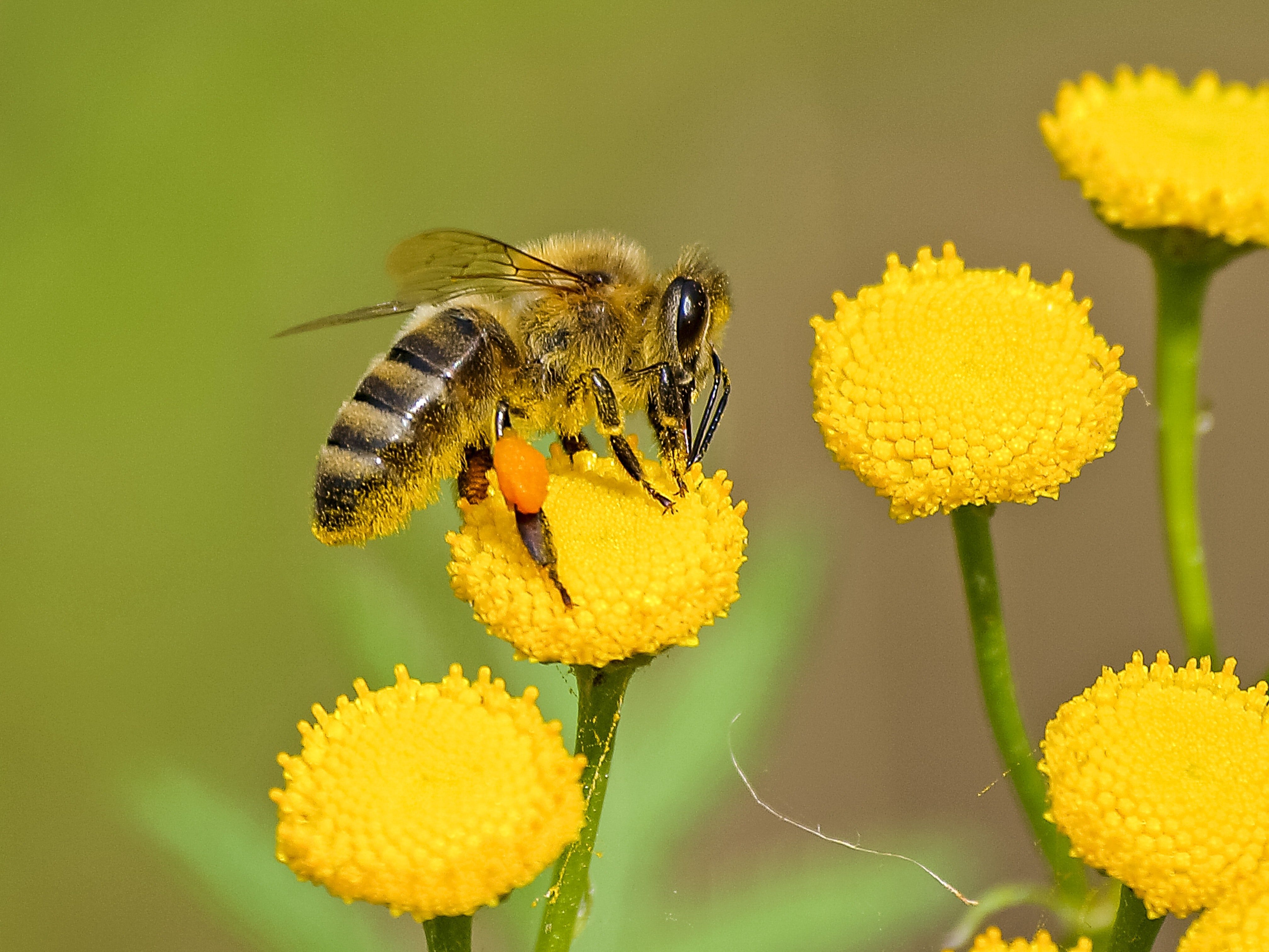
The process starts when the worker bee lands on a flower. She pokes her long tongue into the bloom’s nectar to suck it up. The sticky liquid goes into her honey stomach, separate from her other stomach. (On a high-temperature day, I yearn for a second stomach, or maybe even more, like a cow. I would fill extra bellies with ice cream.)
While the worker collects nectar, pollen from the flower adheres to her hairy body. She has pollen baskets on her rear legs. The bees will combine protein-rich pollen with honey to feed to their young.
Even as this worker collects more nectar, (she visits 50-200 flowers in one trip) enzymes in her honey stomach begin working on the liquid to break up the sugars.
The forager bee returns to the hive carrying her weight in nectar and pollen. At the hive, a householder bee greets her to relieve her of the nectar load. The forager burps up the contents of her honey stomach into the mouth of the other bee. That bee adds its own enzymes to the liquid to make it stickier, then shares that with yet another bee, who adds more enzymes. The honey, like the plot, thickens. About ten bees involve themselves in adding enzymes to the nectar the forager brought home.
Meanwhile, the forager has gone off to collect more nectar, and will work as long as the light lasts.
The bees deposit the honey in octagonal cells, but its water content is still too high. Other bees get busy fanning the cells with their wings to dry out the liquid. It takes about five days for the honey to ripen. At that point, another crew puts a coating of wax atop the cells to keep the honey clean and protect it for winter consumption and for feeding the young.
Once a person understands the work and effort that goes into making honey, it is impossible to let even a drop of it go to waste at the bottom of a jar.
And it becomes harder to think of the transfer of nectar as anything close to barfing. Seems to me, a mouth-to-mouth transfer of sweetness more closely resembles kissing.

 1000 Reasons to Love Bees