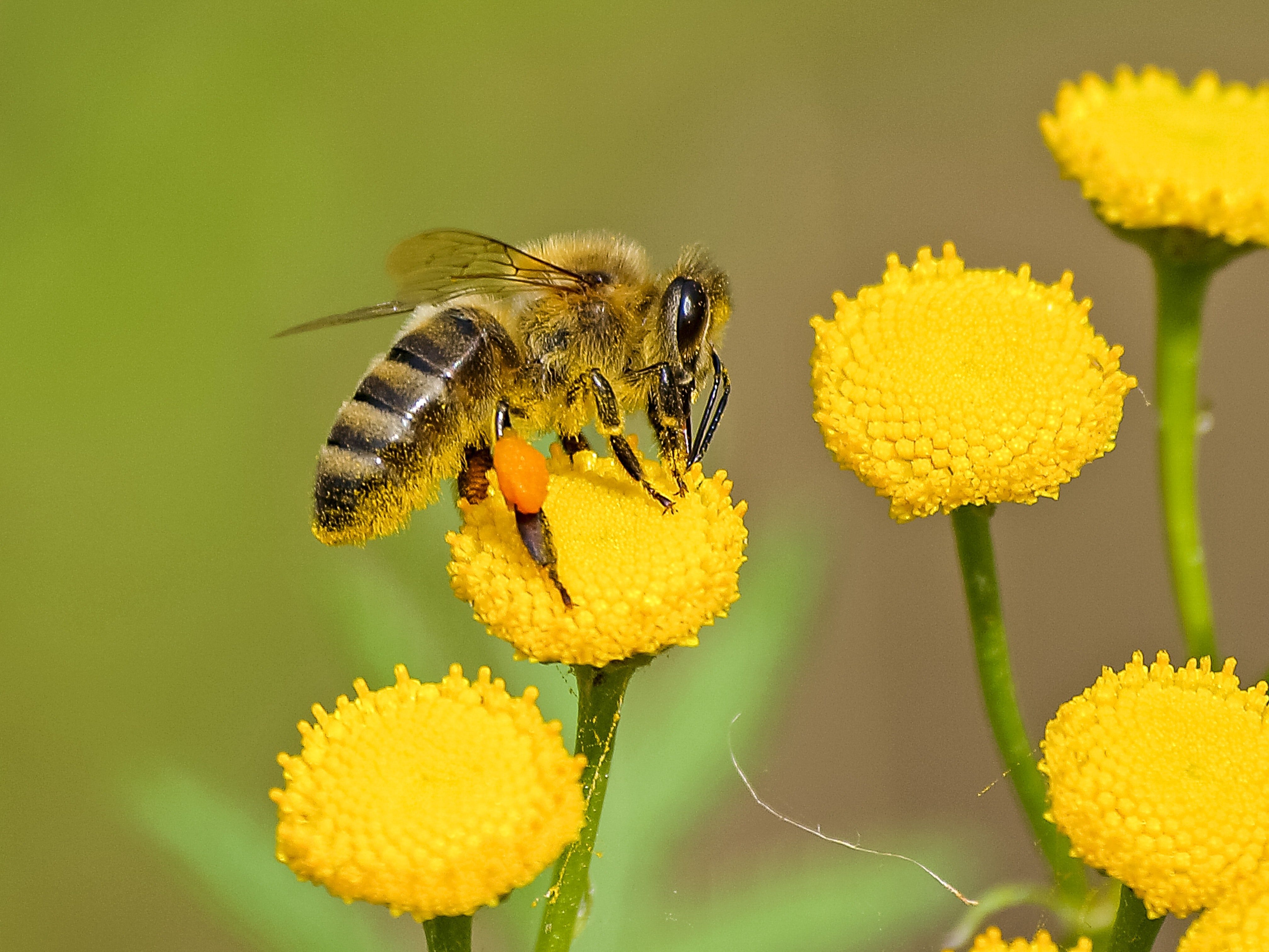

The future that belongs to young people will need a healthy bee population for pollinating crops. Some youth understand that. Here are three of them.
California teen Rory Hu won a science competition for her research with honeybees. The girl became concerned about bee health after reading of the serious decline in their numbers.
Hu learned that pesticides can harm memory in bees, making them unable to find flowers, or find their way home after harvesting nectar. Hu burrowed bees from a beekeeper to run an experiment. She feared the bees at first, but later decided they are “really cute.”
Hu wanted to find out if polyphenols, a plant compound found in tea, and caffeine, a stimulant, could help bees learn. If so, they might be used to help bees regain their foraging abilities. She won $10,000 when she demonstrated they could.
A high school girl in Connecticut put forth a solution to the varroa mite problem that plagues bee colonies. Raina Jain was in high school a few years ago when she became aware of the bee crisis and started visiting beekeepers.
Varroa mites attach themselves to honeybees, feed on them, and weaken them. Bees, also contending with the adverse effects of pesticides and monoculture (planting large areas of one crop, while bees need a variety of nourishing blooms) don’t have the vigor to fight off varroa infestations.
Jain said, “I’ve been brought up with the principle of ‘live, and let live,’ to value every life, no matter how small,” Jain said. “You hear all these things on the news, but you don’t realize how important bees are until you see them firsthand. I kept hearing that bees are in danger, and the population is decreasing, but I didn’t really understand what that meant until I saw a bee farm and saw hundreds of empty and absconded hives and piles of dead bees.”
Jain wanted to design a narrow entryway that would stop the mites. She applied thymol, a naturally occurring pesticide, to the entryway. A forager bee makes 40 trips to the hive in a day, and at each departure and return, the bee had contact with thymol, which is destructive to mites, but did no harm to the bees. The small amount of pesticide did not contaminate the wax, honey, or pollen, either.
In one lab experiment, the treated-entry method caused a 70 percent reduction in mites in three weeks, with no harm to bees.
Covid interrupted further research for a while, but Jain, now a college student, has patented her entryway.
Recently, CBS Sunday morning ran the story of Maine 11-year-old Elizabeth Downs, who started keeping bees at age six and who now acts as an ambassador for them. Her local bee club, made up of adult members, named her the youth outreach person. She gives presentations at school, explaining to her peers how important bees are for the well-being of people.
A neighbor with a large garden started Elizabeth’s education. Another neighbor, a beekeeper, saw her intense interest in bees and gave her a hive of her own and outfitted her in a way-too-big bee suit.
Elizabeth wanted to learn all she could, and at age 8 she enrolled in a university, online beekeeping course.
When she is working with bees, Elizabeth feels calm. “I love the sound of their buzz.” She aspires to one day be the state apiarist.

 1000 Reasons to Love Bees