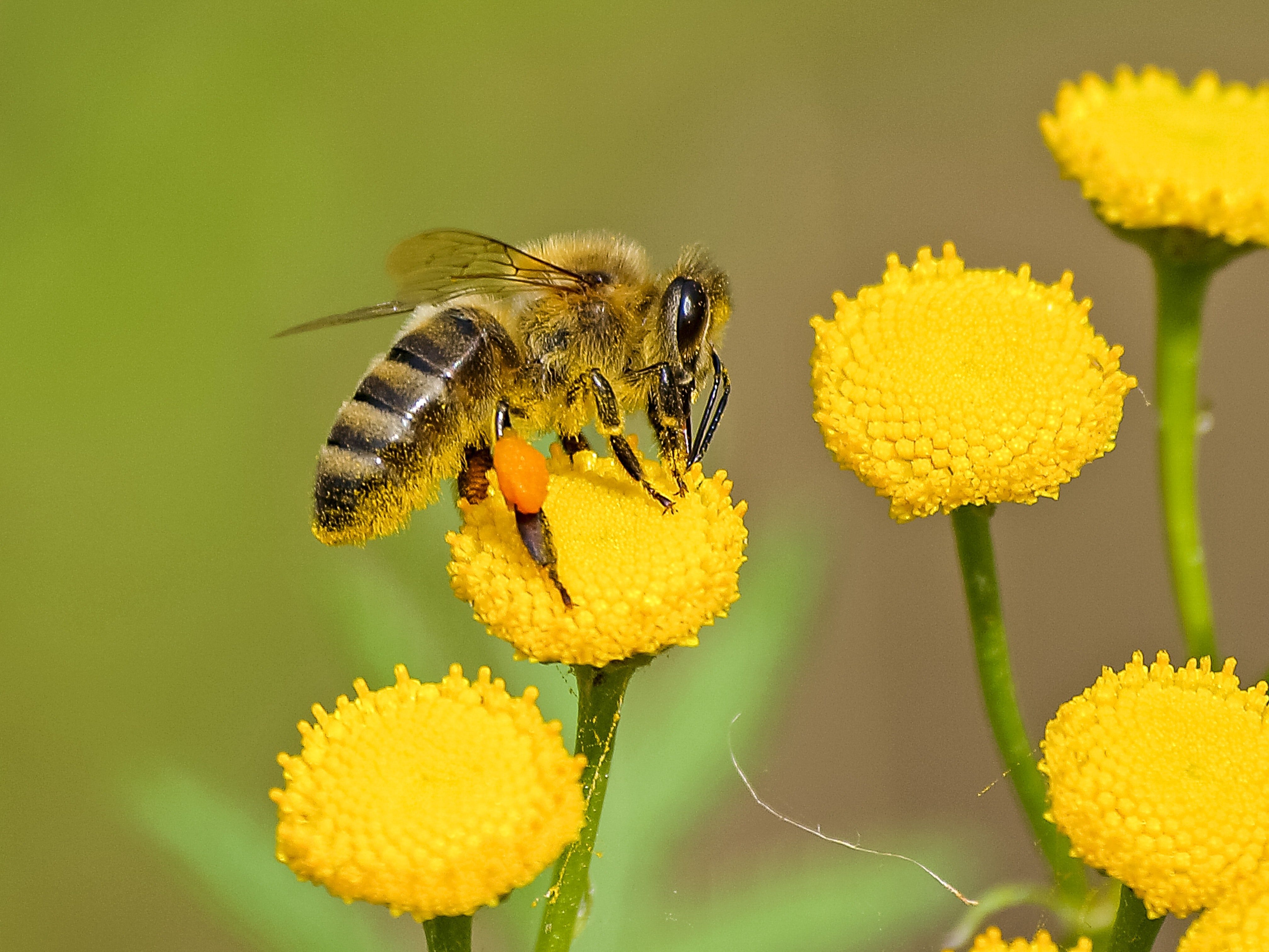
Like most humans, bees labor in the daytime and slumber at night. Like us, they sleep for five to eight hours, and don’t function well if they miss those hours. Like us, they go through different stages of sleep—lighter to deeper. When they awaken, they take a while to get moving—no coffee available. They may stay immobile for a while, or quietly groom themselves or others.
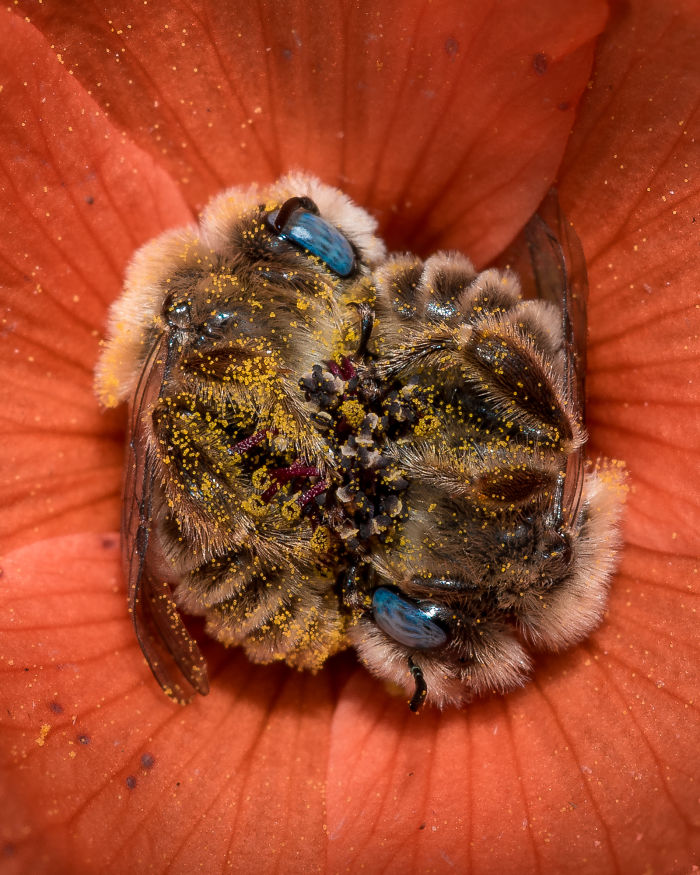
Bees who don’t live in colonies, particularly males, often sleep on flowers. They grab hold of the flower with either their legs or mandibles. If the flower closes, that is all to the good, offering the bee protection from predators. Female solitary bees are likely to make nests. In the daytime, they visit flowers in search of nectar and pollen. The male bees take only quick sips of nectar, and devote their time to searching for a female to mate with, or driving off other males.
Honey bees sleep in their hives or nests. The foragers, who are older bees, generally sleep outside of cells, near the edge of the nest where it is cooler, and away from uncapped brood. Young worker bees usually sleep inside cells, near the center of the nest. They may not sleep consecutive hours, but waken and work at their jobs, sleep for a while, and then return to work.
When bees lose sleep, they become less competent at their jobs. Researchers showed that sleep-deprived bees could not properly perform the waggle dance that tells their sisters where the blooms are. Foragers had trouble navigating a new route home, and showed signs of sleepiness, like, they moved their antennae less.
What disrupts bees and their sleep? Bears, raccoons, skunks, and mice raid at night and alarm the hive. Light and noise from humans can put a colony on edge.
But troubling studies have shown that neonics, chemicals used in pesticides, upset the sleep cycle of bees and flies. One study of bumble bees found that when bees received a dose of neonics, in the amount they would encounter in normal life, it disturbed their usual sleep pattern. The bees slept more in the daytime, and tried to forage at night when flowers were unavailable.
If you come across a bee flitting about, not overly interested in flowers, it may be a solitary male searching for a female, or others males to chase off. Or it could be a normally ambitious forager, wandering about because she is short on sleep.
The World Wildlife Federation tells us that 90 percent of wild plants and 75 percent of the leading global crops depend on pollination. The pollinators have an enormous job. They need their rest.

 1000 Reasons to Love Bees