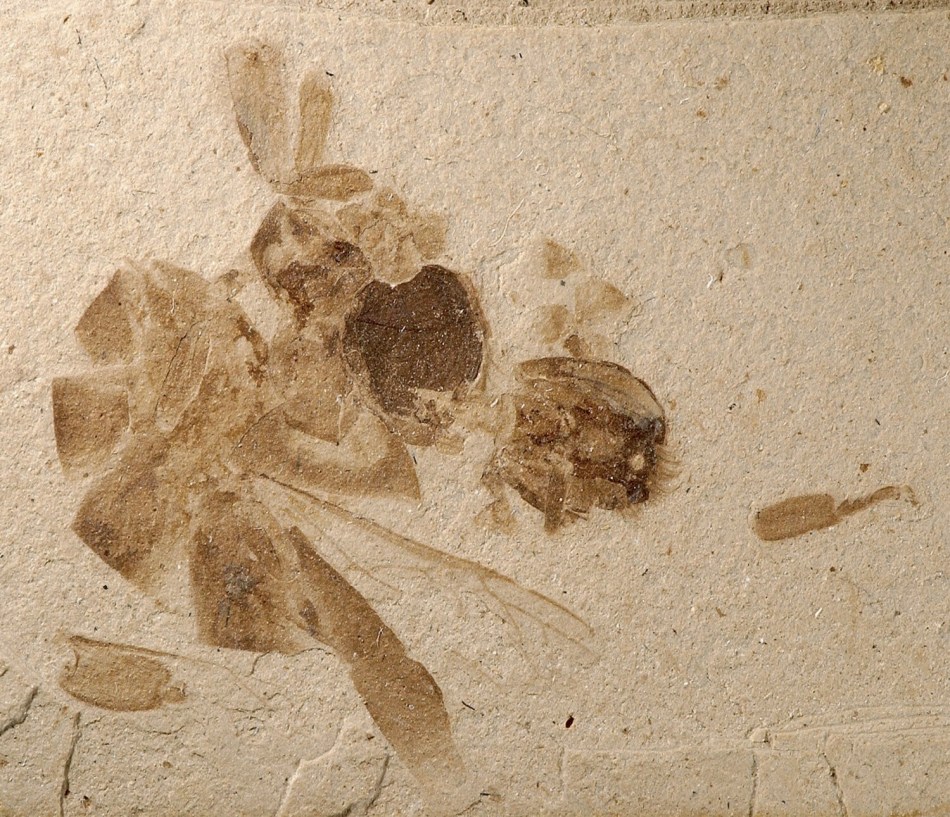
Early North American bee fossil
We appreciate bees because they give us delicious honey. And we bless them for an abundant assortment of fruits, vegetables, berries, and nuts to nourish us. But we forget, or maybe never knew, that ancient bees gave the world something else. Color!
The planet looked much different 130 million years ago. New continents emerged from shifting land masses, new oceans were still forming. Green trees, some of them ancestors of present-day trees, grew in lush forests. Huge, herbivore dinosaurs had plenty of vegetation to consume. Pterosaurs with 40-foot wingspans flew over this ancient scene, and looked down on landscapes that were green, gray, brown and tan. Colorful flowers had not arrived.
Plants reproduced inefficiently. The wind carried pollen, but most of it fell on the ground or was carried out to sea. A tiny percentage of pollen fell on female plants, by chance. Sometimes pollen caught in the hairs of big, clumsy animals and spread that way, but overall, plants reproduced slowly, and took a long time to spread.
Insects liked nutritious pollen. Some insects got good at collecting it. Sometimes, insects accidentally dropped pollen onto female flowers.
Flowers saw an opening. They began to compete for the attention of insects. They started to grow in conspicuous shapes, and wear an array of colors that would stand out in a monochromatic scene, and be visible to insects.
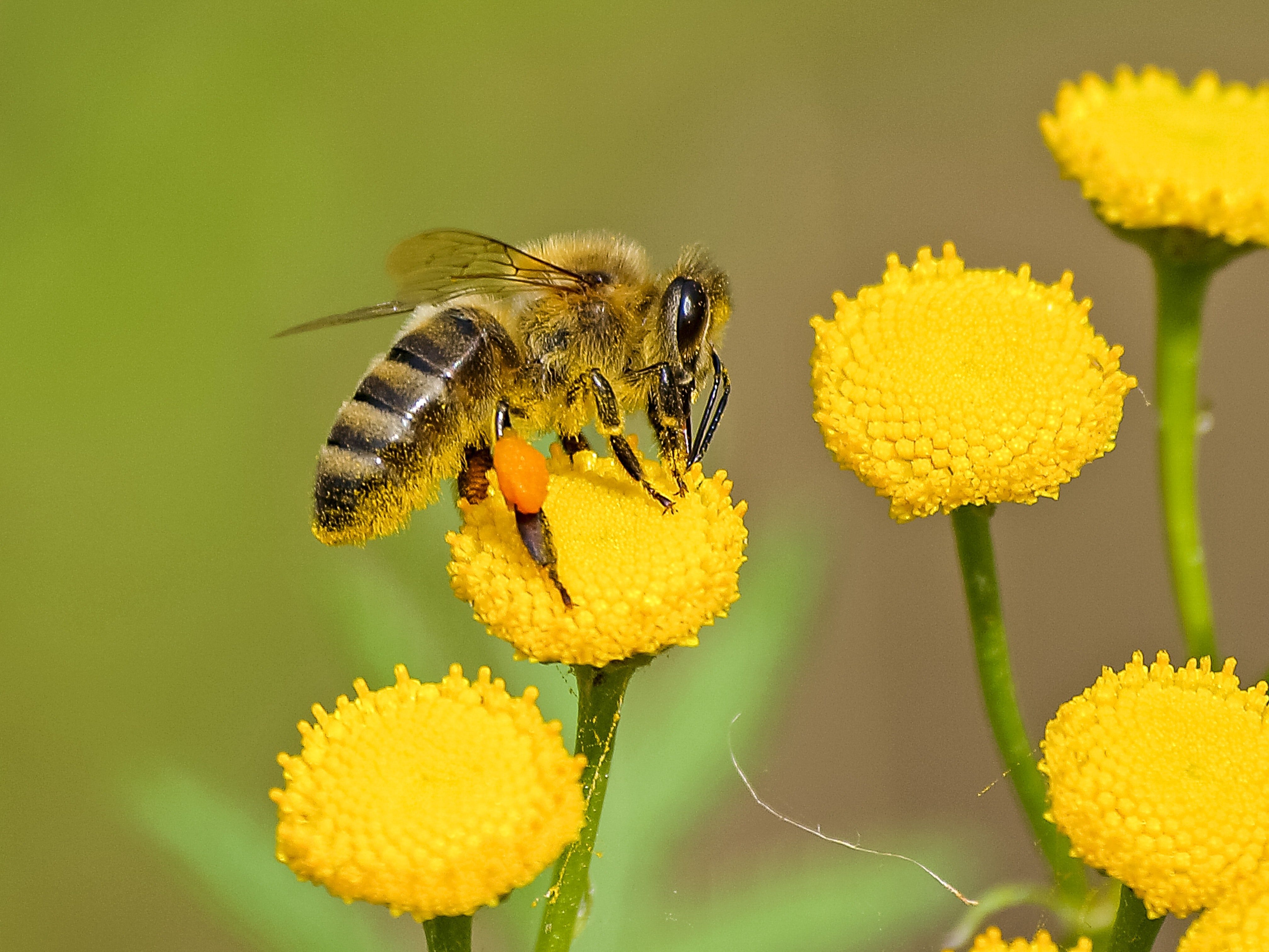
The insects developed modifications, too, such as body hair, to assist them in collecting pollen. Bees and flowers evolved together. Honey bees have hairy areas on their back legs, called pollen baskets. A forager honey bee can carry almost her own weight in pollen.
As an added enticement, flowers became fragrant. Upping their game once more, flowers started to produce nectar to attract pollinators. Flowers hid the nectar so the insects would need to spend time when they visited, and get saturated with pollen. The insects, in turn, evolved long tongues to reach the nectar.
Scientists tell us that an 80-million-year-old bee, fossilized in amber, had already evolved a social lifestyle. Scientists found evidence of picnics and parties, I guess.
Until recently, entomologists believed bees evolved from carnivorous wasps. But now a University of Washington team has a different idea. An extensive genomic project showed that bees evolved more quickly than previously thought in the Southern Hemisphere. That may be one reason that hemisphere has such diverse and vivid plants.
Those of us who endure long winters cherish the spring moment when we walk outside and see a yellow, or ruby red, or purple flower standing tall in a patch of mud-brown earth. We praise that flower with poems and songs.
Let us also send gratitude to the bee, who played an indispensable part in creating a world of vibrant color.

 1000 Reasons to Love Bees