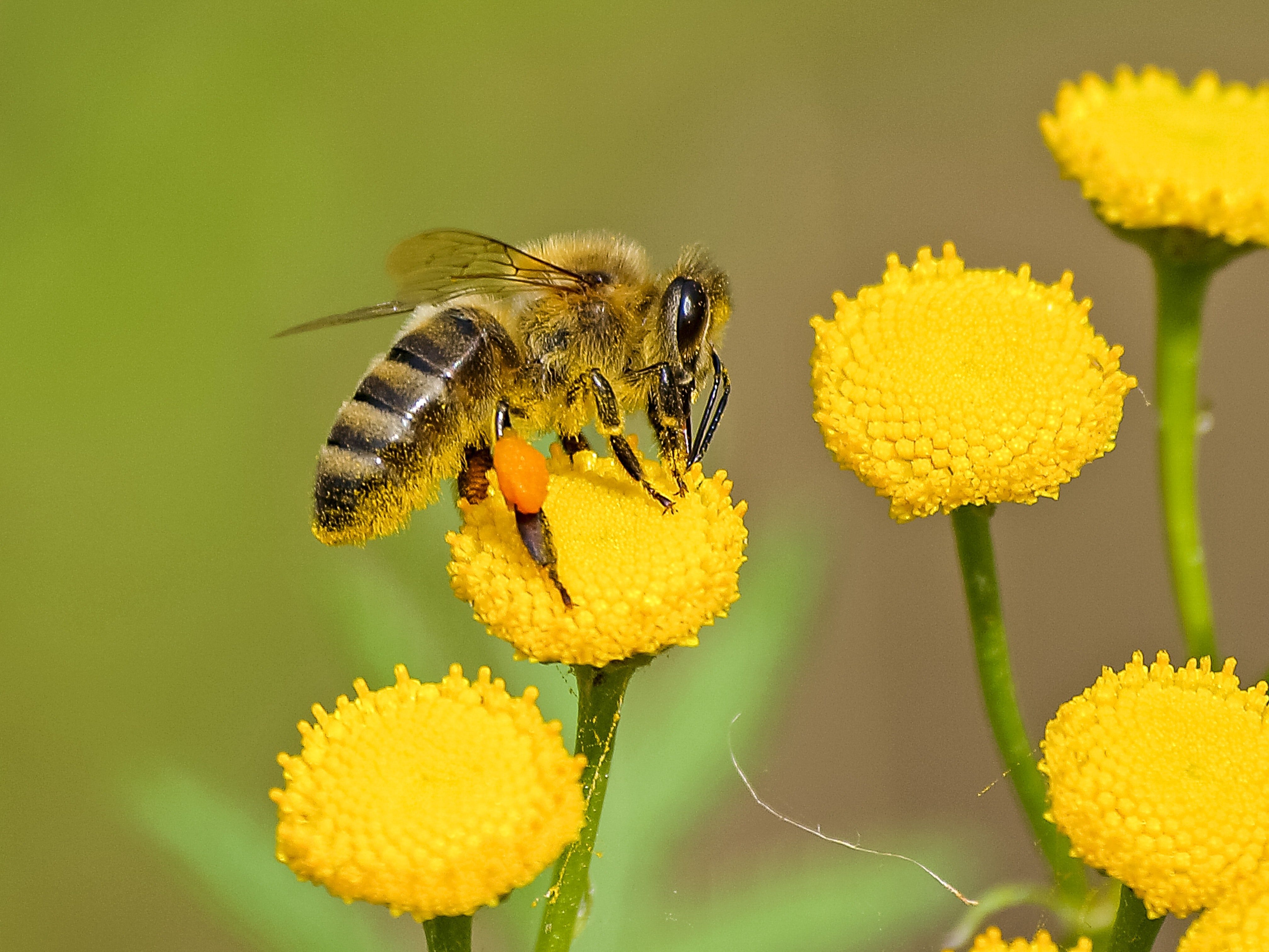

The man who taught Beginning Beekeeping advised us to inform our neighbors that we had acquired bees. In his view, it was the neighborly thing to do.
The first time I raised bees, many years before, we planted our hives on a distant corner of our 40-acre farm. We ignored them. They left, eventually. I planned to do beekeeping with more care this time.
I live on an acre in the country, with lots of room. When I saw my closest neighbors working in their yard, I went over to tell them I had purchased bees and bee houses. I mumbled it, like a confession.
The couple looked at each other. “Yay!” the man said. The woman said, “Let’s plant our garden close to the fence, so they don’t have to fly far.”
The neighbor I share irrigation water with said, “I hope this helps our pear tree. It hasn’t been doing well.” Today, that neighbor calls the pollinators in her productive pear tree “our bees.” “I’m getting rid of wasp nests,” she says, “to protect our bees.”
A summer celebration in our rural community brings together people from acreages and from farms. The first summer I had bees, I sat down to eat at a table of farmers. A man said to me, “Are you the one with bees?” Uh-oh. Had he been stung? Had my bees annoyed his wife as she hung her wash?
A suspenseful silence followed. Finally, he said, “We have the best raspberry crop we’ve had in years. Tell your bees thank you.”
A good friend of mine longs to keep bees, but her across-the-street neighbor has a severe allergy. Bees forage a three-mile radius, so the man likely encounters bees, regardless. But I understand not wanting to increase his risk.
In spring, bees can be a nuisance. They act confused when they first emerge. My neighbors tell me that my bees swarm around their yards. In spring, I can’t go in and out of my house without a bunch of bees following me in.
For years, I tried to capture them individually, with an envelope and a glass. Often, this resulted in accidental deaths. Now I leave the door open. Wasps aren’t out yet, and flies are few. The bees hum around the kitchen for a while, then leave. This investigative phase lasts for only a couple of days.
One year, I bought used equipment from a beekeeper who lives in town. The city allows for four hives, and that’s what he has—four neat hives snugged up against his house. I asked how his neighbors feel about them.
“They don’t know I have them. Bees go up. In the morning, my bees fly up and away, and the neighbors aren’t aware they live here.”
It looks like beekeepers have a choice. To tell their neighbors, or not. A disadvantage in not telling, seems to me, is that the beekeeper misses out on neighbors’ gratitude.
Some people don’t want to be near bees. Some people mistake wasps for bees. But even those who are leery of bees understand their importance to everything—vegetables, nuts, alfalfa hay for dairy cows, beautiful flowers.
People miss bees when they aren’t present, and welcome them when they come to a neighborhood.

 1000 Reasons to Love Bees