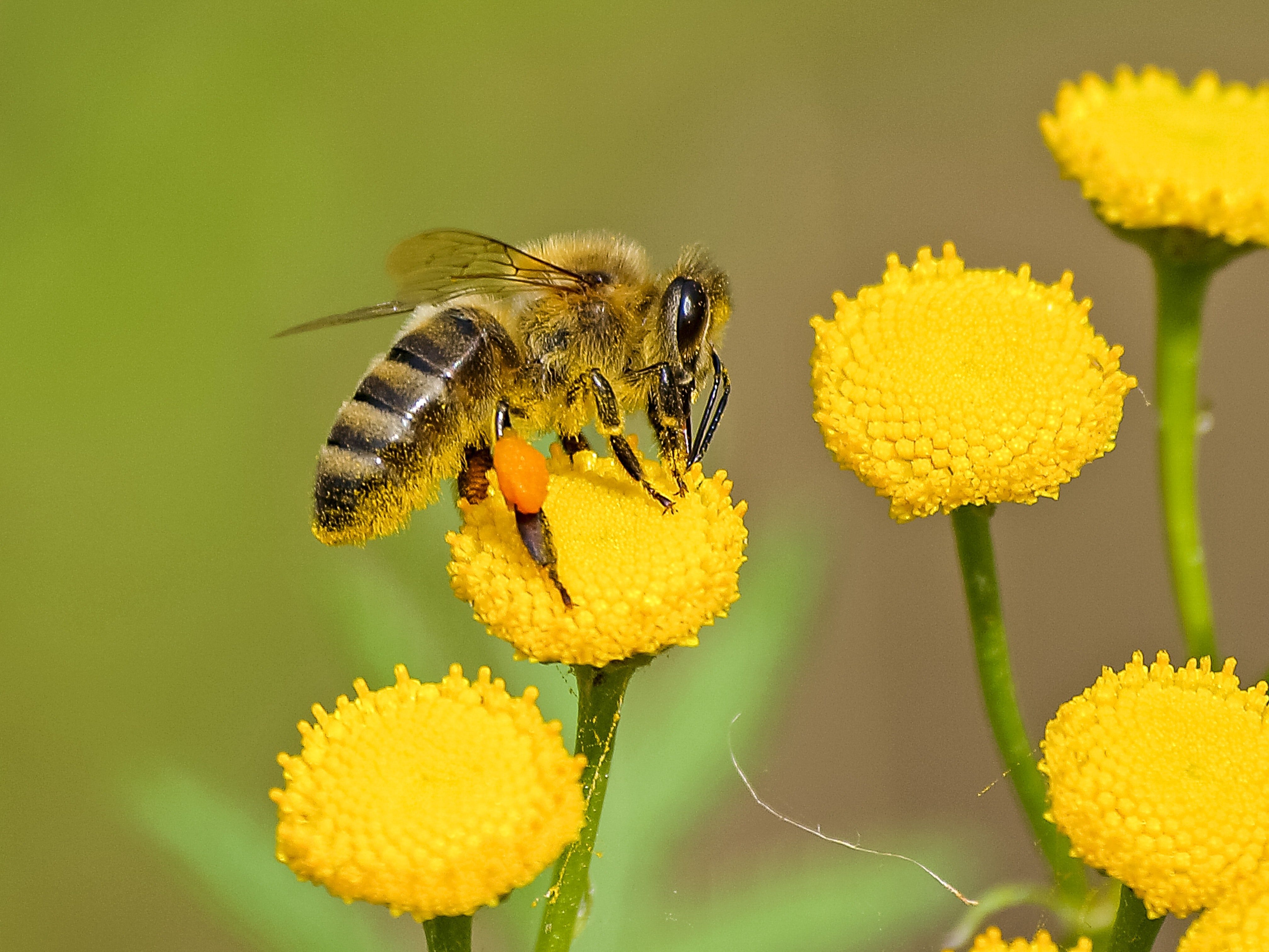

When I used to walk with my friend Mary, she sometimes stopped, closed her eyes, and said, “Listen.”
What? I didn’t hear anything, not at first. But a moment later, the hum of bees would reach my ear.
Mary resisted hurrying on. Instead, we stood listening, on a town sidewalk or on a hiking trail, and as the sound seeped into me, so did a sense of peace.
Mary, an intuitive person, grasped something that folks ancient and modern have believed. The sound of bees can heal us.
Slovenia has a high density of bees compared to other countries. A fire department there recognized the stresses firefighters face—accidents, casualties and disasters, along with fighting fires. The department employed psychological help, but wanted to add something else to promote relaxation. The station took up beekeeping.
Firefighters believe that the sound of bees calms them. “The fragrance the bees emit is also healing,” a firefighter said. Another said, “The demand for mitigating talks after difficult accidents has diminished. The atmosphere is different, more positive.”
At some Slovenian schools, students coexist with bee colonies. Teachers send restless students to care for the bees, and it calms the child.
A beekeeper in Rochester, Massachusetts, has constructed a shed above her hives, where visitors can seek rest. The visitor lies on a wooden bench, separated from the bees by wire mesh, and lets go of tension. The beekeeper says the visitor departs with more energy, and she believes the sound helps asthma, insomnia, high blood pressure, and other maladies. Similar places can be found in California.
Ulleotherapy, the practice of sleeping above bees, is common in Russia as well as in Ukraine, China, Japan, Korea, and Canada. In America, the practice usually is called bee therapy, or sleeping with bees.
Proponents say many factors combine to provide a state of healing for the body. The micro-vibration created by bees fanning their wings, to evaporate moisture from the nectar, is one factor. For the person sleeping above the hive, it is like a light vibro-massage, acting positively on the nervous, circulatory, and muscular system.
Clean, ionized air, as in ionotherapy, is created in the hive and inhaled by the patient sleeping above. The air comes through a fine mesh screen. Advocates suggest that microbes in bronchi and lungs are killed during ten minutes of inhalation.
Aromatherapy offered by the smell of nectar, honey, and propolis, all create a relaxed atmosphere, inducing sleep for many participants.
Bee buzzing induces a mild, meditative trance. Supporters claim this balances the sympathetic and parasympathetic nervous systems, and removes fatigue, stress, and tension. Physical and emotional relaxation trigger an improved emotional state.
Proponents say that numerous studies have reported positive effects in rheumatic, dermatological, urology, gynecology, cardiology, endocrinology, and respiratory systems, as well as the musculoskeletal system. Some say it cures chronic diseases, normalizes potency in men, and eliminates insomnia.
I couldn’t find these studies. Maybe a longer search of the internet would have uncovered one.
Claims for the benefits of sleeping with bees may be exaggerated or may be right on. But those of us who like bees can probably agree on this. Taking time to sit beside a hive, or beneath a blooming fruit tree, humming with bees—just listening—might be the most soul-nourishing thing we do that day.

 1000 Reasons to Love Bees