Photo by Skyler Ewing
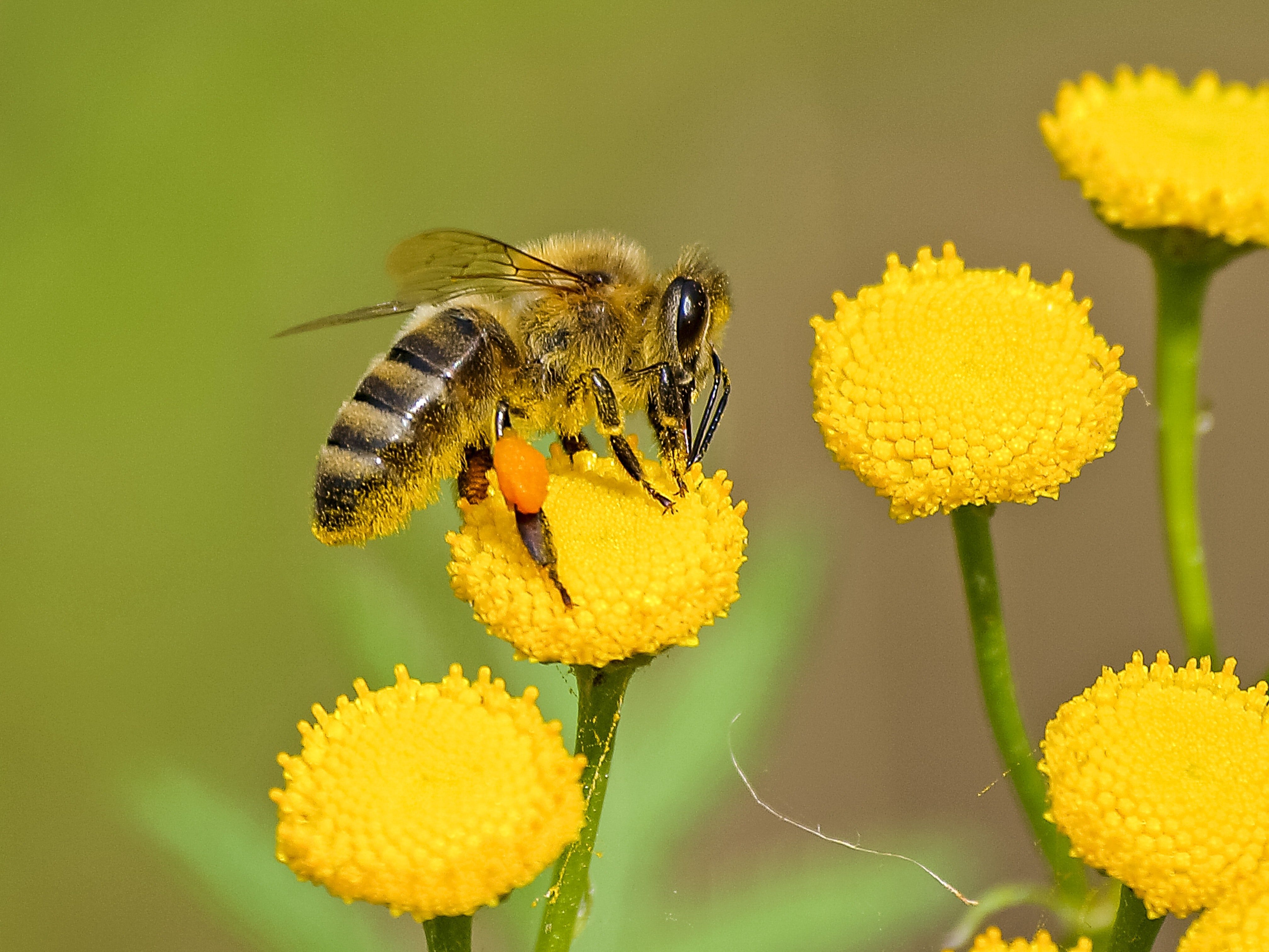
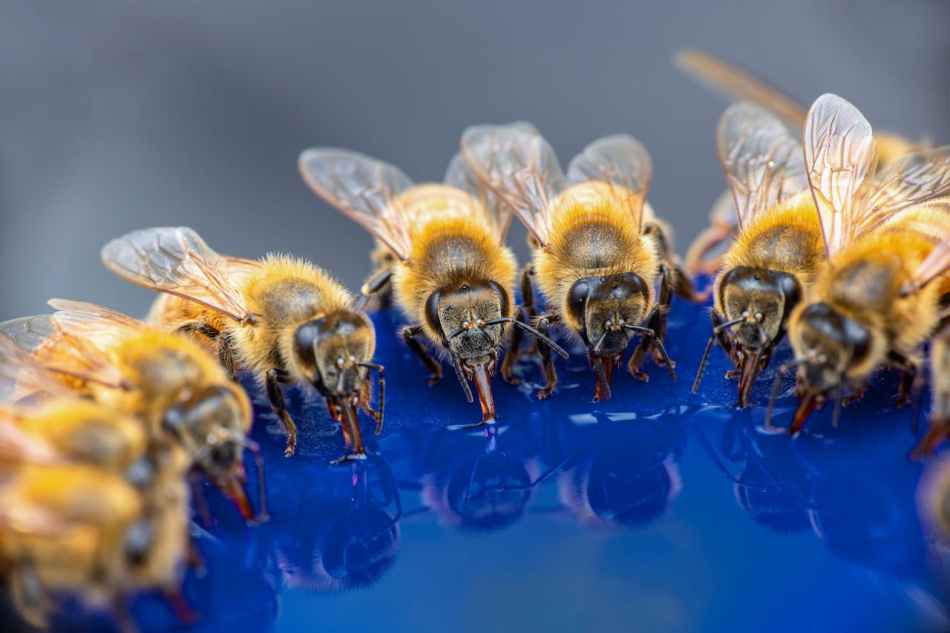
Worker bees put in a hard day flying back and forth from flowers to hive, visiting hundreds of blooms. They can carry almost their weight in pollen and nectar, and they work from sun up to sun down. They get thirsty, and keep their compound eyes out for water.
On a hot day at the hive, bees spread water over honeycomb cells and fan them to help cool the hive. If honey in the comb becomes crystallized and too thick for bees to eat, bees dilute the honey with water to make it soft and edible again.
Anyone who feels friendly to bees can help them by offering them a water source, preferably near blooming flowers. Some precautions are necessary.
Even if a water container is shallow, it should have islands so bees can get a drink without danger of drowning. Small pieces of wood or flat rocks can be slabs where bees can sit and drink. Some people use marbles. My watering bowl has golf balls.
I also have a poultry feeder that contains enough water to last for several days. I put rocks, twigs, and stems in the trough to make bees feel at home. Some people use an upside-down terra cotta planter, and place a saucer or pie pan on top. A section of a bird feeder can be made safe for bees by adding rocks to it. Self-watering pet dishes can be modified to provide water for bees.
Lately, colorful, flower-shaped, irresistibly cute garden decorations meant to hold water for bees have appeared for sale.
No beekeeper wants anyone feeding sugar water to their bees. The bees need to be in the flowers collecting nectar and pollen. Honey from the store should not be fed to bees, either. The honey that bees eat at home is the right one for them. In times of dearth, beekeepers may decide to supplement their bees with syrup, but they know the right mixture, and even beekeepers disagree about when and how that should occur.
Sometimes ideas appear on the internet from well-intentioned people who want to give bees a treat. Open a watermelon and watch bees show up. Shredded apples, they say, could provide bees with nutrition and moisture. Some people ask about putting out fruit juice.
It is unlikely any of these treats can be offered to bees without wasps turning up instantly. Dr. Albert Schweitzer, a Nobel Peace Prize winner, known for his reverence for life, asked a nurse to catch a fly and release it outside, rather than kill it. But some of us feel no such charity toward wasps, partly because wasps prey on bees.
The treats mentioned might also give bees diarrhea. And with ripe fruit comes the hazard of fermentation.
Some tap water, if treated with chemicals, may not appeal to bees. And run-off contaminated with pesticides is deadly.
But the good-hearted person who has good water to share, and a willingness to provide a safe way to dispense it, will be rewarded with close-up viewing of the fuzzy pollinators we depend on.

 1000 Reasons to Love Bees