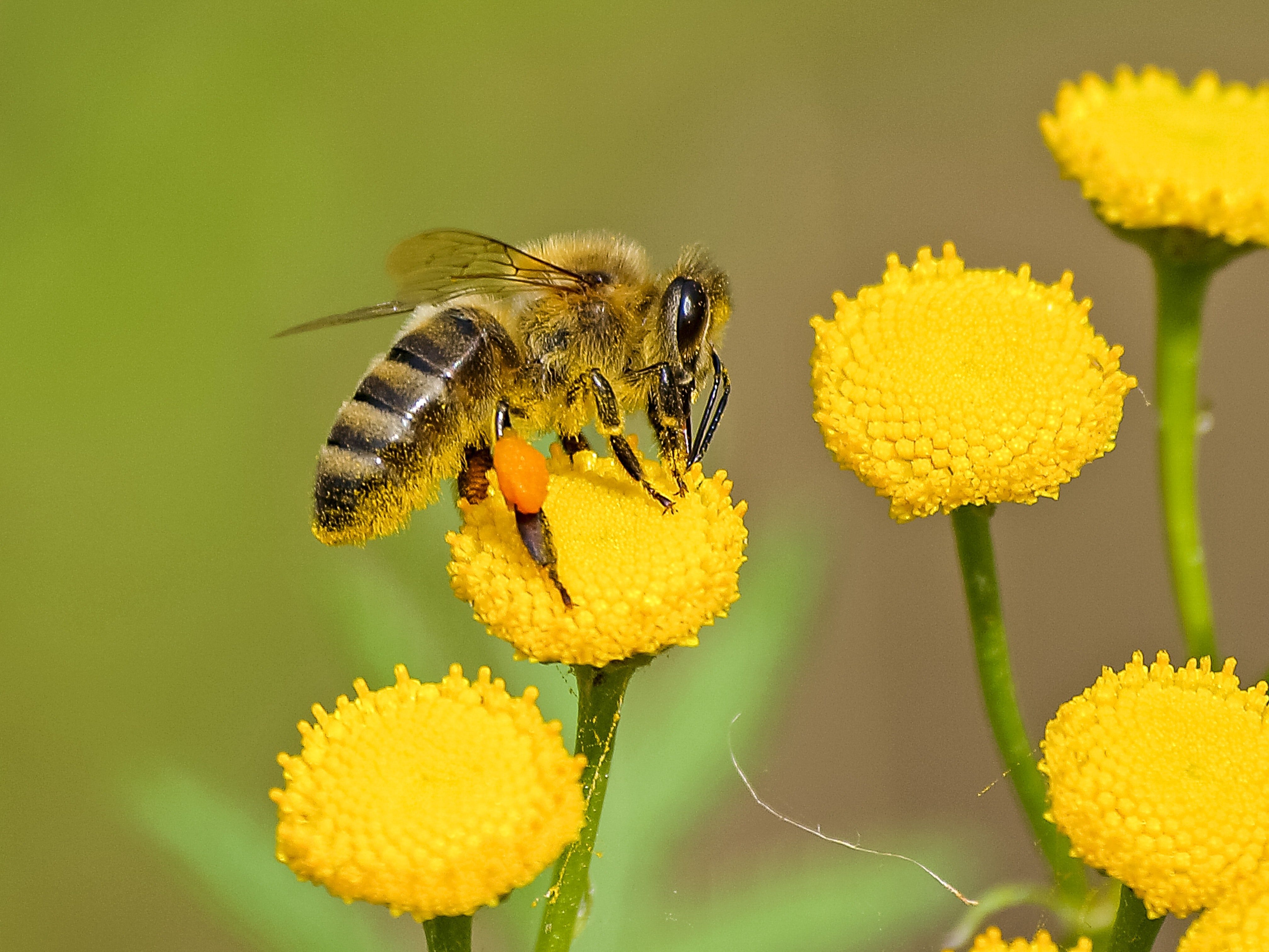

Beekeepers and bee lovers have learned to dread reading news about bees. It is nearly always bad. Poisonous pesticides, habitat loss, disease, and climate change combine to make a gloomy outlook for bees and their future.
But now university researchers have announced a new product that offers hope. They have created a synthetic food that can sustain bees when natural food sources wane.
The artificial food source works similar to power bars for humans. Placed in a honeybee colony, the supplement supplies essential nutrients for larvae and adult bees.
Inadequate nutrition threatens the health of bees, especially those that primarily pollinate one crop. Bees need a variety of blooms to stay healthy. Crops like blueberries and sunflowers don’t supply adequate nutrition. Some beekeepers have stopped renting their bees to blackberry growers because their bees sickened and died from malnutrition.
“Until this study,” a scientist said, “honeybees were the only livestock that could not be maintained on man-made food.”
The researchers discovered that isofucosterol, a molecule found in natural pollen, acts as a vital nutrient for honeybees. Colonies fed isofucosterol-enriched food survived an entire season without access to pollen, and colonies weakened from malnutrition recovered when fed the new food.
The high death rate of colonies makes the development critical. Changes in land use, urban expansion, and extreme weather have impacted available food sources for pollinators.
Three teams cooperated in the research: APIX Bioscience, Belgium; Washinton State University; and prominent beekeepers in California.
The developers express confidence that the new product will have a positive impact for beekeepers and growers who depend on pollinators. They predict the nutritional supplement will be available for purchase in the US in 2026.

 1000 Reasons to Love Bees