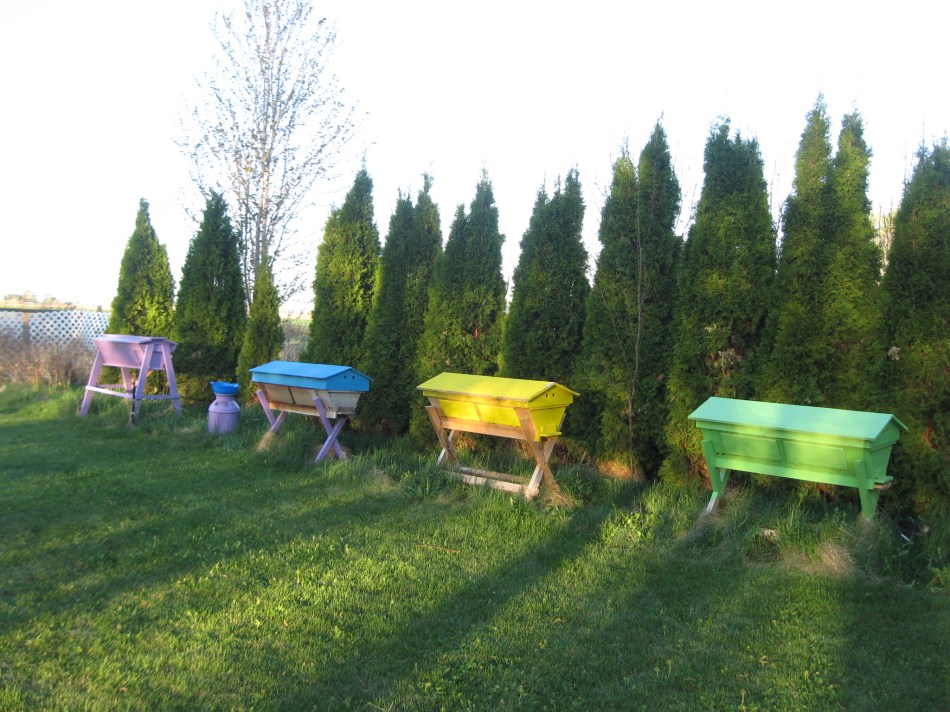
bees, pollinators, beekeeping, environment · nature

The Terribly Tidy Bee

The media reported that Marie Kondo, the queen of clean, has given up on keeping things in order. After her third child was born, she said she had to surrender her perfectionism. 

She had pointed the way for the rest of us. Two years ago, when Kondo’s book was the rage, every item in my house, whether in the kitchen pantry, or bedroom dresser, or on a utility room shelf, had to pass a test. Was it useful? And did its presence spark joy for me? If not, it had to go. For a few months, orderliness prevailed in my life, and I could find things. 

With Kondo no longer a role model, where do we find an example of tidiness? We look to bees.

Bees insist on cleanliness and order. Propolis, which bees use to seal cracks against drafts, has antibacterial properties. In the hive, some bees act as janitors, ridding the hive of clutter, some work as undertakers, getting rid of dead bees, some become groomers, cleaning up other bees. 

A master beekeeper who taught a class I took told this story. In spring, he was inspecting his hives, and saw that a mouse had invaded one. The bees had stung it to death, and tried to get it to the entrance, but the rodent was too large. The fastidious bees found a solution. They coated the mouse in wax. The beekeeper picked up, by its tail, a perfect wax-sculpture mouse.   

Bees won’t poop in their hives. In a cold climate like mine, bees go a long time—months—without elimination. 

When speaking to first and second-graders, I anticipate that at the end of my talk, little hands will shoot up and incredulous children will ask, “Bees don’t poop?!” 

If a warm day comes in winter, bees take a cleansing flight to relieve themselves. A few Christmases ago, when my kids were visiting, a warm day lured the bees out for a cleansing flight. We saw dozens of them buzzing around. Some sat on the warm hood of the car. But next day, we found many dead bees. The temperature probably wasn’t warm enough for them to make it back to the hive—it needs to be about 55 F. for bees to fly.

A few years ago, our winter lasted on and on. When it began to warm, nervous beekeepers posted pictures on beekeeping sites. The exterior of their hives looked yucky. Were the bees sick, their keepers wondered. Veteran beekeepers assured less experienced folks. The bees had waited so long for a cleansing flight that it now created a mess. Little kids would have loved those photos. “Ee-yew!”  

Bees set a good example of recycling and reusing, too. When I first got back into beekeeping, a beekeeper from my area helped me do an inspection. She scraped away pieces of burr comb—wax that bees deposit on the outside of frames. “Don’t throw it away,” she said. “Leave it here, on this stump. They reuse everything.” The burr comb was gone the next day. (People also use it, to make candles.) One man in a beekeeping group said he’d put a jar of home-canned sweet pickles, soon to expire, out for the bees, and the bees cleaned it up. 

I don’t suppose I will ever attain the order in my home that bees achieve in theirs. But I get to peer into those tidy hives now and then, and the order and cleanliness I see there sparks joy in me.

bees, pollinators, beekeeping, environment · nature

If we’re to love bees. . .

If we’re to love bees, we first need to trust them. For that, we need to grasp something.  Bees don’t want to sting us. 

I give talks on bees at elementary schools, and sometimes begin by asking, “Who here is afraid of bees?” Few kids raise their hands. 

But as the hour progresses, I hear something different. A fourth-grade girl, looking at a photo of bees clustered on a comb, said, “When I look at this picture, it makes me want to throw up.” A boy whispered to me that if he had a laser gun, he’d use it on the bees that come into his yard. “I’d get them before they could get me.” 

Despite nature programs and books that convey how necessary and industrious bees are, many kids and some adults aren’t sorry to see fewer of this once-abundant species.  

Bees commonly get a bad rap. Do they sting? Yes. Do they get blamed for stings they don’t inflict? Often. 

A hiking friend and I stopped to rest on a boulder. An insect landed on my friend’s hand. She did the exact right thing. Remained still and calm. The insect stung her, she yelped, and her hand began to swell. She recognized the insect as a yellow jacket. Yellow jackets can sting without provocation. But many people would have presumed the offending insect was a bee. 

My daughter, a rafting guide, told of a guest who bit into a sandwich and got stung. His face swelled, and he cussed bees. Some of the guides referred to the annoying insects as “meat bees,” while understanding they weren’t actually bees, but carnivorous wasps. If an insect goes after the ham on your sandwich, it’s likely a wasp. 

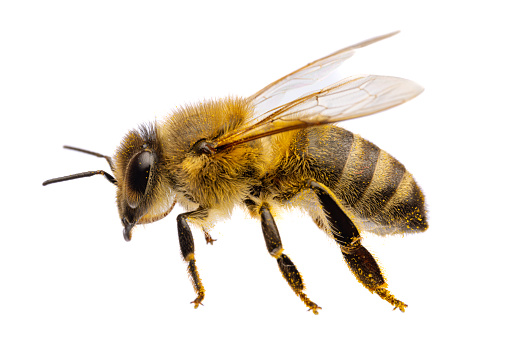
Wasps, hornets, and yellow jackets can be aggressive and can sting more than once. Bees are workaholics, focused on their jobs. Forager bees, and the hive they belong to, make the most of summer, to prepare for winter.

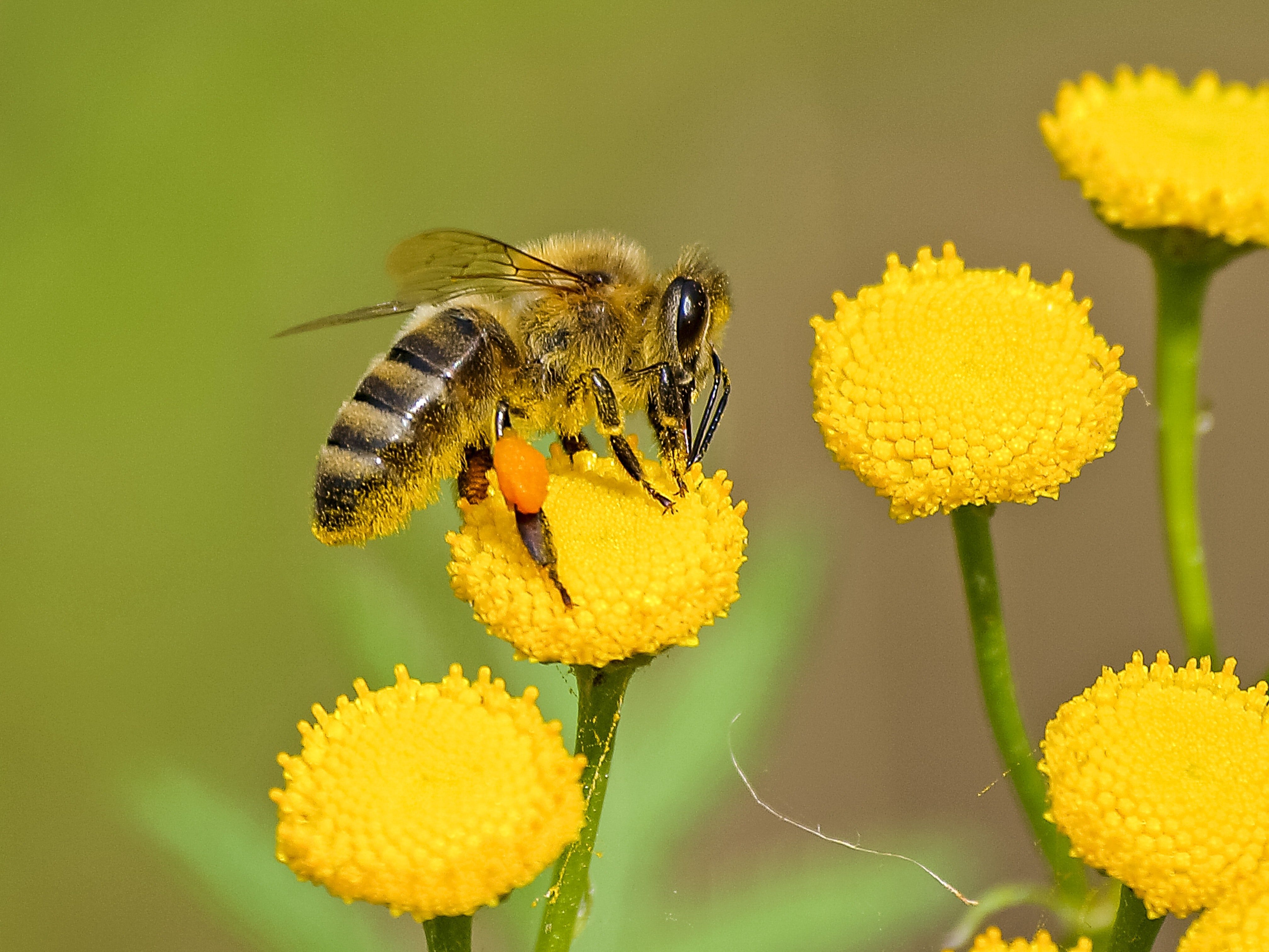
A bee dies if she stings a human. A bee may investigate a person, particularly a fragrant one, but when she finds no food prospect, flies off to find blossoms. 

I have a large raspberry patch. As I collect berries, bees walk over my hands en route to a tasty bud. They have no time to waste picking a fight with a big, clumsy human. 

When do they sting? When someone tries to mess with the hive’s food. As winter approaches, bees get touchy about protecting their honey. Who of us wouldn’t stab our fork into the hand of someone, especially a relative, who tried to take food off our plate? 

If you sit or step on a bee, it will use its last breath to drive a stinger into your foot or rump. Frantic swatting can lead a bee to believe she is in danger. In the U.S. and many other countries, self-defense is a legitimate plea for leniency.  

Precautions can help us avoid encounters with bees. Don’t go barefoot in the clover. Don’t wear pastel or vivid colors when hiking or visiting places with abundant flowers. Wear tan and bland colors, or white. Skip scented soaps, deodorant, and hair conditioners. 

Next time. Tales of bee gentleness 

bees, pollinators, beekeeping, environment · nature

Giving Credit Where It’s Due

People love to recount bee-sting tales. But we seldom tell stories about the times when bees showed restraint. We should.  

When I first raised bees 25 years ago, life wasn’t as tough for them as it is now. We placed a hive at the bottom of our sheep pasture, fairly convenient to water troughs, and let them go about their lives without much interference from us. Sometimes guests wanted to visit the hive. One, a woman from Japan, stood on a rock to get a better look and lowered her head to watch the bees go in and out. “Oooooh,” she said with delight. I told her bees get nervous when someone blocks the entrance, but she was enjoying herself too much to move.  

When the bees tired of her close inspection, they started buzzing around her head. She watched them, smiling, and didn’t try to shoo them. I persuaded her to return to the house with me. 

Once, a neighbor was doing our chores for us while we were away. With two buckets of grain in her hands, she looked up and saw a large, dark basketball heading toward her. It made a loud humming sound. She dropped the buckets and ran for the house. 

Our bees had swarmed. The basketball zoomed into our garage and settled onto the rafters. By the time we returned home, the bees had firmly attached themselves, and an experienced beekeeper told us it was too late to move them. 

Every morning, I encountered bees as I carried hay to our horses. My path apparently intersected with a beeline, because I’d walk through a cloud of them. At first, I felt nervous, but with full hands, couldn’t wave them off. After a few days, walking through a mob of bees became routine. They had their work, and I had mine. 

  We hosted 4-H livestock club meetings at our house. Most of the girls chose not to use the garage entrance. The boys, especially younger ones, liked to stand and gaze at the rafters and listen to the buzzing. “Cool,” they said.

During that summer, not one of us got stung. Honey dripped onto our car, but that was the lone inconvenience. When my husband took the bees down in the fall, he got several stings, but he hadn’t zipped his bee suit all the way up, and angry bees saw an opening. 

In our climate, bees come out in late spring, eager to get started. They search my neighbors’ yards for blooms. They sit on damp clothes hanging on my clothesline. 

Two years ago, I came home with a Great Pyrenees puppy who had been car sick on the trip and thrown up all over herself. My neighbor’s child, Kelly, then 5, asked if she could help bathe her. 

I had just filled a tub with warm water when a small hand touched my back. “Can you help me?” I turned around. A bee was crawling on Kelly’s face. Kelly held perfectly still, as her mother had taught her. 

I could do nothing. If I tried to wave away the bee, it might sting Kelly’s tender cheek. The bee explored at its leisure, walking this way and that. I watched in horror as the bee headed upwards, toward Kelly’s eye. Did bees drink from eyes, like fleas? “You’re doing it just right,” I said, but I worried. Kelly remained a statue. The bee stopped right before it reached her eye, and flew away. Bravery had worked. 

A beekeeper who hosts school visits told me he had warned kindergarten guests not to stand in front of the hive entrance because it makes the guard bees nervous. When he turned his back, a little boy had put his arm into the entrance. “They won’t sting me,” the boy bragged. 

The man said, quietly, “Take your arm out, slowly.” The boy did. He didn’t get stung. 

Some races of bees are more laid back than others. Recent interest in Russian bees has spread because they are supposed to resist disease better. I’ve talked with people who raise them, and they use their smokers more than they used to. But they aren’t getting more stings.  

I raise Carniolans, who originated in Eastern Europe. They are docile. I haven’t used my smoker in years. Beekeepers from the area they come from don’t wear protective clothing.  

The county agent in my region, a second-generation beekeeper, believes it’s good for beekeepers to get a certain number of stings every year to build immunity. I’ve watched the man work bees, and he scarcely takes note of a sting. I trust he knows what he’s talking about, but I still try to avoid stings. 

For a certain percentage of the population, a bee sting is serious, and we need to keep that in mind. But we have a tendency to amplify stories where someone gets stung, and not talk at all about the many times when bees ignore us.   

bees, pollinators, beekeeping, environment · nature

Bees in Legend and Lore   

A statue of St. Gobnait, the patron saint of beekeepers and healers, overlooks a green meadow in County Cork, Ireland. The sixth-century woman, hands folded in prayer, stands atop a stone hive with carved, stone bees. Pilgrims visit her former home on the saint’s feast day, Feb. 11, often to pray for healing. 

An angel, the story says, told Gobnait to undertake a journey to find the “place of her resurrection,” meaning, a site where the eternal and physical coexist. Ireland is known for “thin places” where the human spirit can feel completely at home. 

Churches and holy wells mark places where Gobnait stopped on her travels. When she came to a spot where nine white deer grazed, as the angel had foretold, she founded a religious community there. 

Gobnait, a beekeeper, probably used honey in the healings attributed to her. During the plague, she drew a line in the sand around the village and declared it consecrated ground that sickness couldn’t cross. In another story, when thieves robbed her village, Baile Bhuirne, of its cattle, Gobnait unleashed her bees on the thieves, who then returned the cows. Celtic lore held bees in high esteem, believing the soul leaves the body as a bee or a butterfly. 

When Queen Elizabeth died in the fall of 2022, news outlets carried a story about the royal beekeeper, whose job it was to tell the bees of her majesty’s death. The royal beekeeper followed British tradition and informed the bees, and wrapped the hives in black ribbons.

I knew of this tradition. I’d seen an old woodcut that showed a young man seated on a stool, hat in hand, leaning toward a hive. He was breaking the news that the head of the household had died. Some believe failure to do this would offend the bees, who might swarm and leave, or even sicken. Others believe that all news must be relayed to the hives—births, marriages, moves. In some countries, bees are invited to the funeral and offered funeral cakes. 

The ancient Greeks and Romans believed that bees were messengers of the gods and goddesses. A swarm should be avoided because a swarm on the move was carrying messages at the bidding of the gods. Ancient Egyptians believed the honeybee was created from the tears of Ra, the sun god. The bee was a messenger from the gods, falling from Ra’s face to the earth, to deliver messages. Pharaohs were buried with vessels of honey, to go with the deceased to the afterlife.  

The modern person may rebuff legends of bees who chase thieves, and quaint stories about the need to talk with the bees when the beekeeper dies. But can we appreciate that bees have pushed their way into the human imagination, from primitive times to the sophisticated present, to play a role in rituals, folklore, and songs?

That gives us one more reason to love them.