bee health · bees, pollinators, beekeeping, environment · natural cures · nature

Bees and Humans Go Way Back

Did early humans have sweet tooths? Did they apply honey to wounds on their hairy bodies?  Did they put a protective layer of wax on cave paintings?

We can only guess. But archeologists tell us that Stone Age humans knew the value of honey. An early picture in Spain, thought to be 9,000 years old, depicts people gathering honey.

Some experts say ancestors on our evolutionary tree started using honey much earlier. Anthropologists believe Neanderthals gathered and ate honey for its nutritional value.

As the human brain got larger, it required more fuel. Energy-rich honey may have answered that need. Fossils show that our ancestors started growing smaller molars, which suggests they dined on easier-to-consume food. Honey?

Nearly every language in the world has a word for honey. If not the oldest sweetener, it is one of the oldest, and was found almost everywhere. It has been used throughout history as a medicine for many ailments. Mesopotamia, one of the oldest civilizations, discovered that honey could be used as an antiseptic. The Babylonians and Sumerians mentioned honey in their writings. Egyptians and Greeks used honey cakes as a gift to their gods and even as an ingredient in embalming fluids.

Alcoholic beverages made from fermented honey have been around for 20 to 40 thousand years.

Long before Europeans brought honey bees to the Americas, Mayan beekeepers harvested honey from the log nests of stingless bees native to tropical forests. Mayans were expert beekeepers, and the Yucatan peninsula of Mexico tries to hang on to some ancient bee traditions and ceremonies.  

In India, ancient Hindu Vedic and various Buddhist scriptures mention bees and beekeeping. Ancient rock paintings from the Mesolithic period depicted honey collection from wild combs.

When the British attacked an area of India in the 1800s, a local tribe reportedly used domestic bees as a weapon against the invaders.

Writings on animal bones, dating back 3,000 years, have been found in China. Later writings, from 300 BCE during the Zhou Dynasty, mentioned honey as a dietary recommendation.  

Our dependence on bees to give us a delicious, nourishing food and useful medicine goes way back. Add to that, uses for wax and pollen. We have bees to thank for many vibrant-colored flowers. And consider the variety of fruits and vegetables bees pollinate.   

Bees have been our allies for a long time. We need to do more to protect and nourish them.  
bee health · bees, pollinators, beekeeping, environment · natural cures · nature

Bee-nign Ways to Quench Apian Thirst

Photo by Skyler Ewing

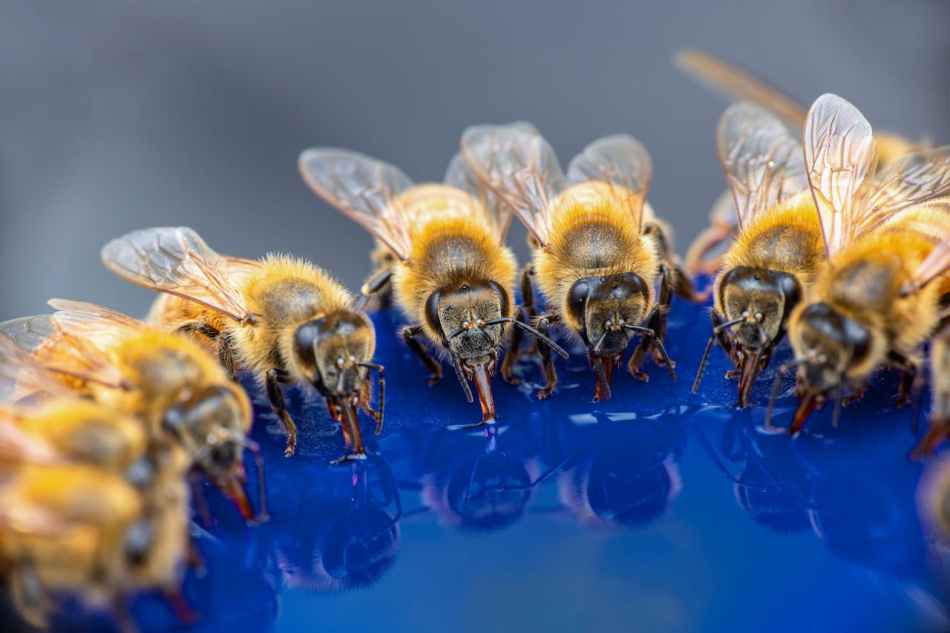
Worker bees put in a hard day flying back and forth from flowers to hive, visiting hundreds of blooms. They can carry almost their weight in pollen and nectar, and they work from sun up to sun down. They get thirsty, and keep their compound eyes out for water.

On a hot day at the hive, bees spread water over honeycomb cells and fan them to help cool the hive. If honey in the comb becomes crystallized and too thick for bees to eat, bees dilute the honey with water to make it soft and edible again.

Anyone who feels friendly to bees can help them by offering them a water source, preferably near blooming flowers. Some precautions are necessary.

Even if a water container is shallow, it should have islands so bees can get a drink without danger of drowning. Small pieces of wood or flat rocks can be slabs where bees can sit and drink. Some people use marbles. My watering bowl has golf balls.

I also have a poultry feeder that contains enough water to last for several days. I put rocks, twigs, and stems in the trough to make bees feel at home. Some people use an upside-down terra cotta planter, and place a saucer or pie pan on top. A section of a bird feeder can be made safe for bees by adding rocks to it. Self-watering pet dishes can be modified to provide water for bees.

Lately, colorful, flower-shaped, irresistibly cute garden decorations meant to hold water for bees have appeared for sale.    

No beekeeper wants anyone feeding sugar water to their bees. The bees need to be in the flowers collecting nectar and pollen. Honey from the store should not be fed to bees, either. The honey that bees eat at home is the right one for them. In times of dearth, beekeepers may decide to supplement their bees with syrup, but they know the right mixture, and even beekeepers disagree about when and how that should occur. 

Sometimes ideas appear on the internet from well-intentioned people who want to give bees a treat. Open a watermelon and watch bees show up. Shredded apples, they say, could provide bees with nutrition and moisture. Some people ask about putting out fruit juice.  

It is unlikely any of these treats can be offered to bees without wasps turning up instantly. Dr. Albert Schweitzer, a Nobel Peace Prize winner, known for his reverence for life, asked a nurse to catch a fly and release it outside, rather than kill it. But some of us feel no such charity toward wasps, partly because wasps prey on bees.

The treats mentioned might also give bees diarrhea. And with ripe fruit comes the hazard of fermentation.    

Some tap water, if treated with chemicals, may not appeal to bees. And run-off contaminated with pesticides is deadly.    

But the good-hearted person who has good water to share, and a willingness to provide a safe way to dispense it, will be rewarded with close-up viewing of the fuzzy pollinators we depend on.  

bees, pollinators, beekeeping, environment · natural cures · nature

I’m Pickin’ Up Good Vibrations. Oom, bop, bop.

 When I used to walk with my friend Mary, she sometimes stopped, closed her eyes, and said, “Listen.”

What? I didn’t hear anything, not at first. But a moment later, the hum of bees would reach my ear.

Mary resisted hurrying on. Instead, we stood listening, on a town sidewalk or on a hiking trail, and as the sound seeped into me, so did a sense of peace.

Mary, an intuitive person, grasped something that folks ancient and modern have believed. The sound of bees can heal us.

Slovenia has a high density of bees compared to other countries. A fire department there recognized the stresses firefighters face—accidents, casualties and disasters, along with fighting fires. The department employed psychological help, but wanted to add something else to promote relaxation. The station took up beekeeping.

Firefighters believe that the sound of bees calms them. “The fragrance the bees emit is also healing,” a firefighter said. Another said, “The demand for mitigating talks after difficult accidents has diminished. The atmosphere is different, more positive.”  

At some Slovenian schools, students coexist with bee colonies. Teachers send restless students to care for the bees, and it calms the child.

A beekeeper in Rochester, Massachusetts, has constructed a shed above her hives, where visitors can seek rest. The visitor lies on a wooden bench, separated from the bees by wire mesh, and lets go of tension. The beekeeper says the visitor departs with more energy, and she believes the sound helps asthma, insomnia, high blood pressure, and other maladies. Similar places can be found in California.

Ulleotherapy, the practice of sleeping above bees, is common in Russia as well as in Ukraine, China, Japan, Korea, and Canada. In America, the practice usually is called bee therapy, or sleeping with bees. 

Proponents say many factors combine to provide a state of healing for the body. The micro-vibration created by bees fanning their wings, to evaporate moisture from the nectar, is one factor. For the person sleeping above the hive, it is like a light vibro-massage, acting positively on the nervous, circulatory, and muscular system.

Clean, ionized air, as in ionotherapy, is created in the hive and inhaled by the patient sleeping above. The air comes through a fine mesh screen. Advocates suggest that microbes in bronchi and lungs are killed during ten minutes of inhalation. 

Aromatherapy offered by the smell of nectar, honey, and propolis, all create a relaxed atmosphere, inducing sleep for many participants. 

Bee buzzing induces a mild, meditative trance. Supporters claim this balances the sympathetic and parasympathetic nervous systems, and removes fatigue, stress, and tension. Physical and emotional relaxation trigger an improved emotional state.   

Proponents say that numerous studies have reported positive effects in rheumatic, dermatological, urology, gynecology, cardiology, endocrinology, and respiratory systems, as well as the musculoskeletal system. Some say it cures chronic diseases, normalizes potency in men, and eliminates insomnia. 

I couldn’t find these studies. Maybe a longer search of the internet would have uncovered one.  

Claims for the benefits of sleeping with bees may be exaggerated or may be right on. But those of us who like bees can probably agree on this. Taking time to sit beside a hive, or beneath a blooming fruit tree, humming with bees—just listening—might be the most soul-nourishing thing we do that day.   

bees, pollinators, beekeeping, environment · natural cures · nature

Please Won’t You Bee My Neighbor?

The man who taught Beginning Beekeeping advised us to inform our neighbors that we had acquired bees. In his view, it was the neighborly thing to do.  

The first time I raised bees, many years before, we planted our hives on a distant corner of our 40-acre farm. We ignored them. They left, eventually. I planned to do beekeeping with more care this time.

I live on an acre in the country, with lots of room. When I saw my closest neighbors working in their yard, I went over to tell them I had purchased bees and bee houses. I mumbled it, like a confession.   

The couple looked at each other. “Yay!” the man said. The woman said, “Let’s plant our garden close to the fence, so they don’t have to fly far.”

The neighbor I share irrigation water with said, “I hope this helps our pear tree. It hasn’t been doing well.” Today, that neighbor calls the pollinators in her productive pear tree “our bees.” “I’m getting rid of wasp nests,” she says, “to protect our bees.”

A summer celebration in our rural community brings together people from acreages and from farms. The first summer I had bees, I sat down to eat at a table of farmers. A man said to me, “Are you the one with bees?” Uh-oh. Had he been stung? Had my bees annoyed his wife as she hung her wash?  

A suspenseful silence followed. Finally, he said, “We have the best raspberry crop we’ve had in years. Tell your bees thank you.”

A good friend of mine longs to keep bees, but her across-the-street neighbor has a severe allergy. Bees forage a three-mile radius, so the man likely encounters bees, regardless. But I understand not wanting to increase his risk.   

In spring, bees can be a nuisance. They act confused when they first emerge. My neighbors tell me that my bees swarm around their yards. In spring, I can’t go in and out of my house without a bunch of bees following me in.

For years, I tried to capture them individually, with an envelope and a glass. Often, this resulted in accidental deaths. Now I leave the door open. Wasps aren’t out yet, and flies are few. The bees hum around the kitchen for a while, then leave. This investigative phase lasts for only a couple of days.   

One year, I bought used equipment from a beekeeper who lives in town. The city allows for four hives, and that’s what he has—four neat hives snugged up against his house. I asked how his neighbors feel about them.

“They don’t know I have them. Bees go up. In the morning, my bees fly up and away, and the neighbors aren’t aware they live here.”

It looks like beekeepers have a choice. To tell their neighbors, or not. A disadvantage in not telling, seems to me, is that the beekeeper misses out on neighbors’ gratitude.  

Some people don’t want to be near bees. Some people mistake wasps for bees. But even those who are leery of bees understand their importance to everything—vegetables, nuts, alfalfa hay for dairy cows, beautiful flowers.

People miss bees when they aren’t present, and welcome them when they come to a  neighborhood.

bees, pollinators, beekeeping, environment · natural cures · nature

The Good Word on Honey from Regular Folks

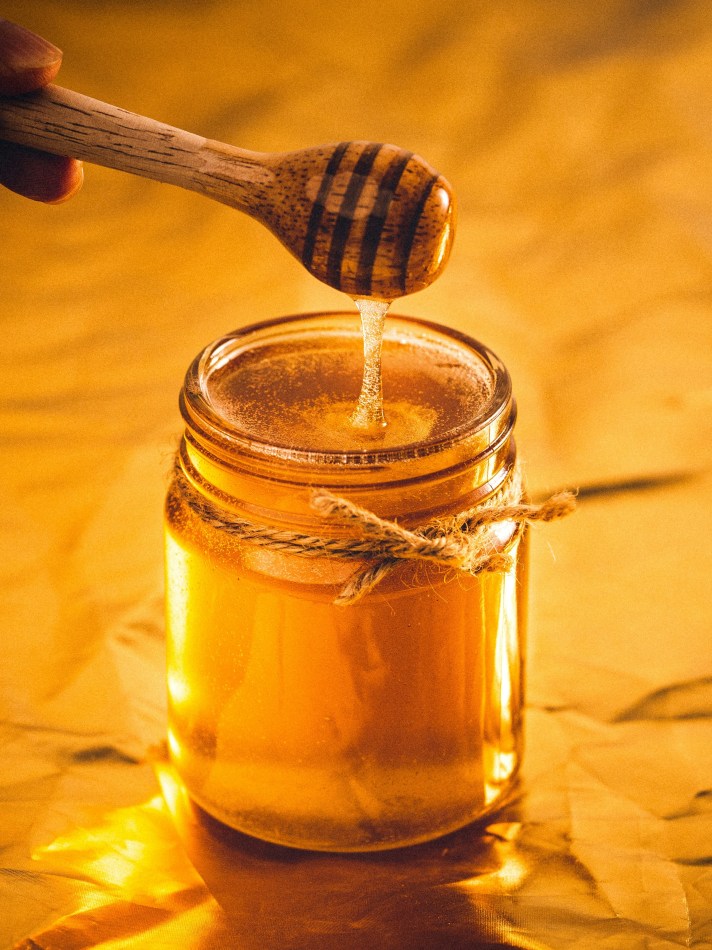
Photo by Art Rachen/Unsplashed

When I hear a hard-to-believe story or theory, I check with Snopes to see if it is real.  And when someone tells me about a miracle cure, I search for lab studies that back up the claim.    

But when it comes to honey, I love hearing the opinions and experiences of regular folks. A belief that has not been tested in a laboratory can still be valid.   

While waiting for a friend at a coffee shop, a cheerful man at the next table wearing a Vietnam veteran hat started telling me his recipe for good health. Honey. A tablespoon every morning. The man buys expensive manuka honey, which is loaded with healthful properties, but gets it at Costco where the price isn’t as steep.

“I feel great. I have longtime medical issues, but they don’t slow me down. Honey helps many systems in the body. I have a positive mental attitude, too, which honey has played a part in.”

A woman I knew suffered from severe allergies and asthma, year after year. She went from one specialist to another. One doctor advised her to find a source of local honey, which she did. After taking it for a while, she experienced the best spring she could remember.

A man who owns a thriving honey company here said he depends on a spoonful of honey every day for health. He takes his at night.

 “Our brains work all night. I want to send my brain nourishment, so I take a spoonful of honey at bedtime. I sleep like a child.”

 Here are other testimonials I have heard or read.

A man who had chronic digestive issues since he was a child had tried enzymes and probiotics and all kinds of cures. But honey worked for him, and right away. He felt like a new man within a week.   

Several people report that they apply honey to cuts, even deep ones, and the area heals without scarring.

A family that has various ailments, including high cholesterol, diabetes, an anxiety disorder, and high blood pressure enjoys breakfast together, one that is healthful for all of them. Oats cooked with raisins and cinnamon. When it cools slightly, they add honey.  

A woman makes sure her 89-year-old mother has a teaspoon of honey three times a day.

Some people report honey aids with weight loss. They say their cravings for sweets went away when they added honey to their diet. Some mix the honey with other ingredients like lemon juice, apple cider vinegar, or ginger, and subsequently lose weight. Sometimes 20 pounds or so.   

Many rely on honey and tea to quiet coughs. When my children were little, our general practitioner told me that no cough medicine from the store could equal honey and hot tea.  

I appreciate that prestigious laboratories are studying honey and its health benefits. I’m happy their findings back up what people for centuries have believed—that honey is a boon for humans, because it is delicious, and also contributes to human well-being. Science bolsters honey’s reputation.  

Still, you can’t beat a personal story from someone who credits honey for a positive impact on their health. That person is apt to care about bees and their welfare.    

bees, pollinators, beekeeping, environment · natural cures · nature

Wee Wildlands Outside Our Doors

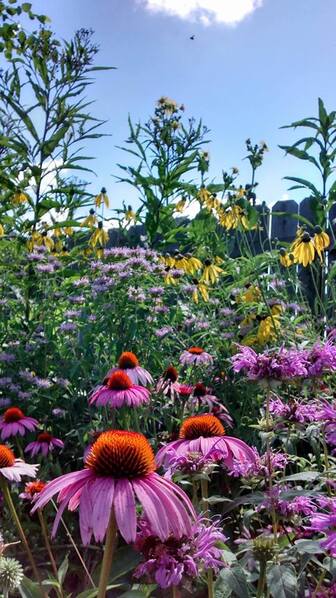
I converted part of my lawn to native, pollinator friendly plants so my bees don’t have to go searching for flowers, or forage where plants have been sprayed with harmful chemicals.

But some folks are replacing lawns and restoring native plants for a selfless reason—to create miniature sanctuaries where native plants, insects, birds, and small mammals can thrive.

Natural spaces perform vital functions. They provide for the food web, supply clean water, pull carbon out of the air, and shelter native insects, pollinators, birds, and animals. 

We in the West take public spaces for granted. Many of us live within easy driving distance of great expanses of open land or forest. It surprises us to learn that ninety-five percent of the natural landscapes in the U.S. have been transformed. In the lower 48, half of the land holds cities and streets, airports and shopping malls. Farms cover much of the other half. Only about 13 percent of U.S. land enjoys some kind of protection.

That is not enough to sustain wildlife, birds, and insects. In half a century, 3 billion, or 30 percent of the bird population, has disappeared. The loss of insects, including beneficial ones, has been staggering. Caterpillars who turn into beautiful butterflies depend on certain native species, and cannot reproduce amid ornamental plants and invasive species.

Ecologists, botanists, and nature lovers want to persuade owners of private land, which makes up 83 percent of the total, to turn their yards into miniature national parks. That can range from tiny plots, even container gardens, to corporate headquarters and school campuses. One proposal sees half of the 40 million acres of lawn in the United States returned to native plants and trees.

Doug Tallamy, author of the Homegrown National Park concept, said, Our national parks, no matter how grand in scale, are too small and separated from one another to preserve species to the levels needed.” The Homegrown National Park idea is a bottom-up call to action, to restore habitat where we are, creating wee national parks in our yards and neighborhoods. Tallamy says, “Our landscapes must enable ecosystems to produce the life support we and every other species requires.”

 Activists concede it will take time, and advise converting one area of property at a time. They offer suggestions for how to make changes acceptable to neighbors and home owner associations (HOAs). Put a curving walkway through a native plant area. Leave areas of manicured lawn around borders. A small, inexpensive fence around native plants signals that the plants are intentional. Trim bushes.  

 Some places have weakened HOAs. Maryland law prevents HOAs from prohibiting environmentally friendly yards, and other states and some cities have similar laws, or are considering them.

Mini wildlands would change the outlook for our honeybees and for native bees.

In 1949, Aldo Leopold, the father of modern conservation, urged us to have an ethic that allows us to see land as more than a commodity.

“When we see land as a community to which we belong, we may begin to use it with love and respect.”

bees, pollinators, beekeeping, environment · natural cures · nature · Uncategorized

Bring Back the Bugs

We didn’t like living with insects. Spiders startled us, flying insects smashed themselves against windshields, and ants showed up minutes after we spread the blanket for a picnic.

It turns out, insects did not like living with us, either, and decided to check out. In the last 40 years, insect populations decreased by 45 percent. Just as we started to appreciate that everyone has a place in the choir and the ecosystem. The insects who promote health in agriculture, forests, and plains disappeared along with the ones who bugged us.

The plight of bees gets a lot of attention. The measures we take to help them will benefit other insects, too. Bringing back native plants, ones that evolved with the ecosystem where we live, helps bees, domestic and wild, and their six and eight-legged buddies. Eschewing chemicals helps, too. 

Not everyone can comfortably replace their lawn. People have neighbors with expectations. Some homeowners are governed by HOAs. Renters would seem to have no opportunity to help. But this week I heard of practical suggestions that almost anyone can adopt.

Designate a certain area of yard to native plants. If the neighborhood is strict, a small, inexpensive fence around the native-plant area will signal that the plants are intentional. Many native plants are attractive, and can add to a yard’s beauty. Some plants attract pollinators, but are not native and won’t interact with the animal and plant life around them. 

Some varieties of caterpillars fall from trees, and spend the next phase of their life in vegetation at the base of trees. Trouble is, caterpillars fall onto naked ground. Most yards and all parks have barren circles at the base of trees.

Native species planted around trees invite insects back. To many eyes, the plants bring extra beauty.

Renters or apartment dwellers can offer to adopt a single tree and cultivate plants around it. The expert I heard said most landlords don’t object to a person getting involved with the yard. The same can go for HOAs. A person can start with a single tree, rimming it with plants, and then add more.

Expensive fogging for mosquitoes doesn’t work, but does harm other insects. People can build a mosquito trap in a half-bucket of water, and add an inexpensive mosquito dunk pill, available at hardware stores. 

Some folks resent honeybees. They say the European honeybee has pushed native and wild bees aside.

Those of us who keep honeybees like how useful they are. We love and revere honey, and know that honeybees are vital to fruit trees, berry bushes, vegetable gardens, and nut groves. I see many native bees in the pollinator-friendly flowers I have planted, and the plants also attract butterflies, moths, and hummingbirds.

We can work together to bring back the bugs.

bees, pollinators, beekeeping, environment · natural cures · nature

Ugly Lawns and Gray Hair

A six-person panel of international judges gave first place in the World’s Ugliest Lawn Contest to Kathleen Murray of Tasmania.

The competition started in Sweden as a way to reward water conservation. Lawns require a lot of water.

Murray’s dusty yard, pocked with holes dug by animals, placed first. I was struck by something she said.

“It’s a bit like women (she could have included men) who choose to stop dyeing their hair and let it go gray.” Sometimes a person freaks out and goes back to dyeing, but she chose to “let my lawn go gray.”

I have done both. Let my hair go gray, and tried to rid my front yard of grass. I think Murray’s comparison works.   

We who embrace gray hair enjoy how easy it is. No more visits to a salon or time-consuming do-it-yourself sessions at home. It may be healthier to avoid chemicals on our scalp.   

But some people like to see the brunette, blonde, or red-haired person they have always known looking back at them from the mirror. Colored hair usually looks younger, which may be a benefit in certain occupations.   

A friend and mentor of mine kept dyeing her hair until she left this world at 94. No one who knew her would call her shallow or vain. She had a reputation for being wise, loving, and lovable.    

Back to lawns. For years, I have been trying to replace my front lawn with plants useful to pollinators. I have variously suffocated the grass with black plastic, cardboard, or straw. One year, I hit it on all fronts. I used black plastic, straw, and had it plowed. I sprayed with a chemical. I thought I had seen the last of it.    

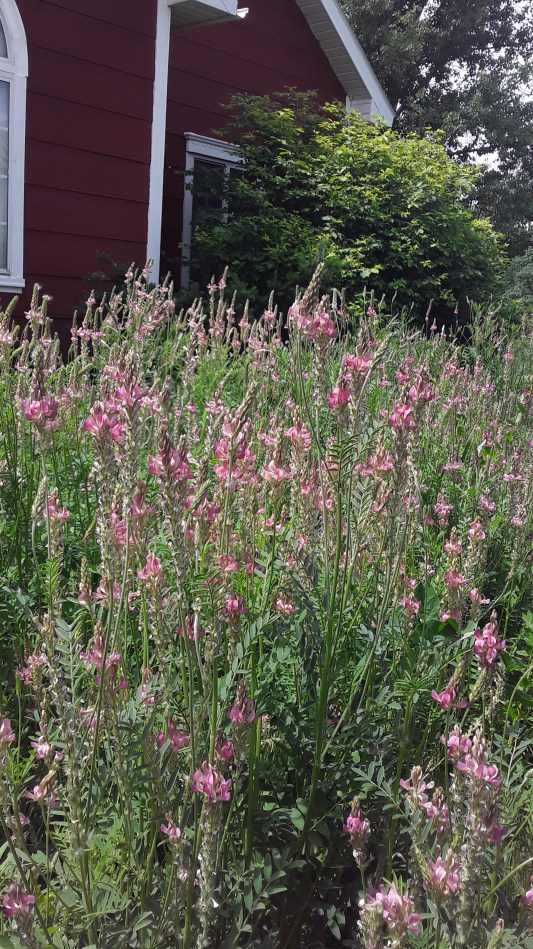
A satisfying crop of sainfoin, a cousin of alfalfa, bloomed where the lawn had been, and flowered for months. The bees loved it. I considered it beautiful, with its multiple pink flowers on every stalk, loaded with bees. But when a friend visited, he asked, “You planted this? Looks like a bunch of weeds.”

Morning glory (bindweed) wound its nasty self around the sainfoin stalks, choked it, and killed it. I turned my battle to getting rid of bindweed, a labor-intensive effort.

Just when I thought I had won, grass returned and pushed out the sainfoin. Grass puts up a fight. I turned to cardboard and tarps again, and starved the grass of water. By then, I had learned that sainfoin requires more water than some alternatives, and planted clover.

I live in a rural area with lax zoning regulations and no HOAs governing lawn care. It would be harder for me if disapproving neighbors scowled my way. 

Advocates for native plants talk about the advantage of not mowing lawns. That may be true once the grass has been vanquished and native plants have established themselves. I have struggled to learn how much water native plants need, and which ones agree with my kind of soil. My back yard, still in grass, seems easy to care for by contrast.   

I am not giving up. The clover I planted last fall peeked through before the snows came. I’m told it will give grass a run for its money. And we know how bees feel about clover.  

The manager at the garden center where I bought clover seed had just returned from a national conference. He told me it is only a matter of time until lawns disappear. He sells lawn seed and lawn products, and anticipates modifying his inventory. Extended drought in the Western U.S., and the world-wide shortage of water mean that drought-tolerant plants will replace lawns.   

We will learn to see them as beautiful. Sort of like gray hair.

bees, pollinators, beekeeping, environment · natural cures · nature

Bees and Our Colorful World

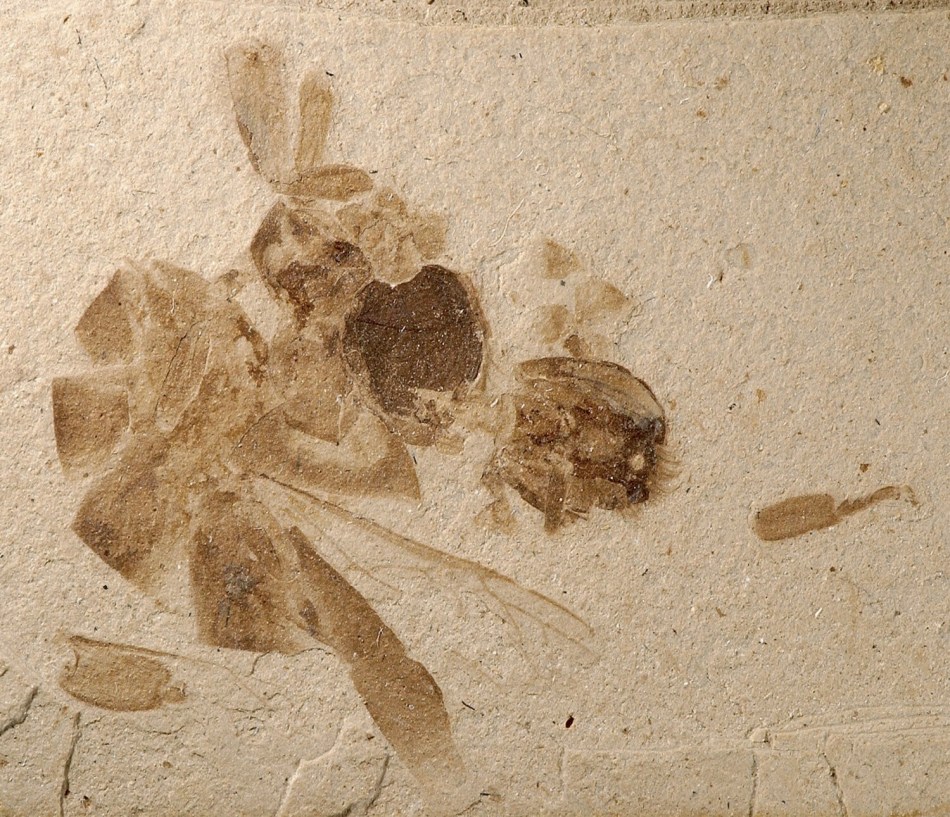
Early North American bee fossil

We appreciate bees because they give us delicious honey. And we bless them for an abundant assortment of fruits, vegetables, berries, and nuts to nourish us. But we forget, or maybe never knew, that ancient bees gave the world something else. Color!   

The planet looked much different 130 million years ago. New continents emerged from shifting land masses, new oceans were still forming. Green trees, some of them ancestors of present-day trees, grew in lush forests. Huge, herbivore dinosaurs had plenty of vegetation to consume. Pterosaurs with 40-foot wingspans flew over this ancient scene, and looked down on landscapes that were green, gray, brown and tan. Colorful flowers had not arrived.  

Plants reproduced inefficiently. The wind carried pollen, but most of it fell on the ground or was carried out to sea. A tiny percentage of pollen fell on female plants, by chance. Sometimes pollen caught in the hairs of big, clumsy animals and spread that way, but overall, plants reproduced slowly, and took a long time to spread.  

Insects liked nutritious pollen. Some insects got good at collecting it. Sometimes, insects accidentally dropped pollen onto female flowers.

Flowers saw an opening. They began to compete for the attention of insects. They started to grow in conspicuous shapes, and wear an array of colors that would stand out in a monochromatic scene, and be visible to insects.

The insects developed modifications, too, such as body hair, to assist them in collecting pollen. Bees and flowers evolved together. Honey bees have hairy areas on their back legs, called pollen baskets. A forager honey bee can carry almost her own weight in pollen.

As an added enticement, flowers became fragrant. Upping their game once more, flowers started to produce nectar to attract pollinators. Flowers hid the nectar so the insects would need to spend time when they visited, and get saturated with pollen. The insects, in turn, evolved long tongues to reach the nectar.

Scientists tell us that an 80-million-year-old bee, fossilized in amber, had already evolved a social lifestyle. Scientists found evidence of picnics and parties, I guess.

Until recently, entomologists believed bees evolved from carnivorous wasps. But now a University of Washington team has a different idea. An extensive genomic project showed that bees evolved more quickly than previously thought in the Southern Hemisphere. That may be one reason that hemisphere has such diverse and vivid plants.    

Those of us who endure long winters cherish the spring moment when we walk outside and see a yellow, or ruby red, or purple flower standing tall in a patch of mud-brown earth. We praise that flower with poems and songs.  

Let us also send gratitude to the bee, who played an indispensable part in creating a world of vibrant color.   

bees, pollinators, beekeeping, environment · natural cures · nature

A New Year, and Hope

As we walk into the new year, bee lovers see pockets of good news to smile about. Those include: reports of a promising vaccine against disease, bumble bees who fight off Asian hornets, and states adopting measures to limit the use of neonics, a family of chemicals that wreaks havoc on pollinators.   

Scientists had long believed that insects don’t create antibodies, so vaccines wouldn’t work on them. But researchers discovered that bees have a primitive immune system. A queen bee had an immune response when exposed to bacteria. The University of Georgia, partnered with a private animal health corporation, discovered that a vaccinated queen will pass immunity to her numerous offspring. A scientist said it was “like magic.”

The vaccine can combat foulbrood, a bacterial disease that until now has been incurable. Our government, along with those of other countries, requires infected bees, hives, and all beekeeping equipment, to be burned and buried. The disease can wipe out a commercial or backyard beekeeper.  

The new vaccine is expected to protect against other diseases and viruses, too. And maybe some pests.     

So far, negative side effects have not been observed in colonies, and the vaccine hasn’t had an impact on the honey.

The yellow-legged Asian hornet has invaded mainland Europe, where it has no natural enemies, parts of east Asia, and for the first time has been spotted in the US. Sightings in the UK and mainland Europe are at an all-time high, and people fear for the bees.

But scientists in the UK found that a certain species of bumblebee will fight back, and defeat the hornets. The bumblebees drop to the ground when the hornets attack, and carry the pests with them. Hornets lose their grip as they drop, or the bee raises its stinger and fights until the hornet gives up.
Surprised scientists watched 120 attacks that had the same outcome. The bumblebees triumphed.

Hornets hover outside the nests of bees, and attack returning foragers. But when the hornets try the same thing with bumblebees, they fail.

But the attacks are energetically costly for the bumblebees. And if hornet populations are high, it can be a major problem for foraging bees.

“Hornets consume nectar from flowers, meaning they compete with bees for food and harass them at flower patches,” a scientist said.

The team has placed colonies of the buff-tailed bumblebees in several locations in Spain, where Asian hornets have invaded.

California became the latest state to restrict the use of neonics. The new law takes neonics out of the hands of homeowners, but allows lawn care companies to continue using them. California law falls short of the strongest state laws in Nevada, New Jersy and Maine, which have eliminated all outdoor, nonagricultural uses of these chemicals, even by lawn care companies.

In June, 2023, Nevada became the third state to ban lawn and garden use of neonics. Colorado prohibits homeowner use of land and garden neonic products, which resembles laws in Maryland, New York, Massachusetts, Rhode Island, and Vermont. Minnesota recently banned neonic use on state lands and granted home-rule subdivisions the authority to ban “pollinator-lethal pesticides.”  

Bee advocates who worry about declining bee population celebrate these steps in the right direction. But the state-level restrictions pale in comparison to robust protections in the European Union (EU). The EU has banned neonicotinoid pesticide use on all outdoor areas, allowing use only in enclosed greenhouses.

bees, pollinators, beekeeping, environment · natural cures · nature

The House by the Side of the Road

Friends of bees love to hear good news.

The radio announcer said the guest from the Idaho Transportation Department would speak about making highways friendly for wildlife. I assumed the spokesperson would talk on a well-publicized subject—protecting migratory routes for deer, elk, and pronghorns.

Instead, the person talked about the agency’s efforts to establish habitat for pollinators around highways.

Idaho has millions of acres planted in farm crops, and many leading crops rely on pollinators. The transportation department has partnered with the Idaho Department of Agriculture to come to the aid of ants, butterflies, beetles, and of course bees, by planting pollinator-friendly plants at rest areas, around state buildings, and next to highways.

Predictions of extended drought here in the West have increased the interest in native plants to replace water-loving, non-native species. State employees have planted native species that fit the arid environment at a rest area on I-84.

Plants that attract pollinators will help other wildlife species, because little creatures get eaten by larger ones.   

The Idaho Transportation Department (ITD) understands the public may need to adjust its expectations. Some popular ornamental flowers do nothing for pollinators. Tidy, well-groomed plots of grass near roadways look orderly, compared to native flowering plants that can look helter-skelter.

Revegetating areas that have been highly disturbed can be a challenge, too. Employees are using compost to amend the soil in those places. The native plants may need to be watered at first, too, to help them send down the deep roots that will stabilize the soil. The agency gives preference to plants that bloom from early spring until fall.

The ITD pollinator wellness program also includes evaluating when and where to mow.

In another state, Illinois’ Department of Transportation has adopted new mowing procedures aimed at creating and protecting habitat for pollinators, including the monarch butterfly. Their strategy regulates when mowing occurs, and reduces the amount of land mowed.

The ITD also participates in Operation Wildflower, where districts distribute native wildflowers to volunteer groups for seeding selected areas. The ITD and Idaho Fish and Game are cooperating to make pollinator waystations, seeding roadsides with native flowers and grasses.

This goes beyond supporting pollinators. The native flowers and grasses beautify the roadways and reduce maintenance costs. The ITD uses a variety of native seeds for revegetating around construction and maintenance projects.

It is cheering to picture deep-rooted, drought-tolerant flowers and shrubs taking hold along the roadways, stabilizing the soil and attracting pollinators. Hardworking bees might sympathize with the words of the 19th Century poet, Sam Walter Ross, who wrote,

Let me live in a house by the side of the road

And be a friend to man.

bees, pollinators, beekeeping, environment · natural cures · nature

Honey. Weapon of War?

Designed by Freepik.

We use honey as a term of endearment. When we chat with a child at the grocery store, we call them “Honey.” “It’s your birthday? Happy birthday, Honey.”

When our hair turns gray, clerks at the grocery store call us “Honey.” “Find everything okay, Honey?” (I hate this. I am not eight.)

We regard the wonder food that bees manufacture as dependably sweet and healthful. But at least once in history, an ancient army used toxic or “mad” honey to disable enemy troops and win a battle. A foretaste of chemical warfare.

Pliny the Elder, a Roman naturalist and philosopher, raved about the excellent honey of the Mediterranean region. He also wrote about “mad” honey, which came from nectar collected from a toxic species of rhododendron. Consuming a dose of it caused blurred vision, dizziness, hallucinations, nausea, numbness, fainting and seizures. In Turkey, this honey bore the name “crazy honey.”

Rhododendron ponticum grew in abundance in Turkey on the coast of the Black Sea. Local bees collected much of their nectar from the dense concentration of those plants. It did not appear to harm the bees.

King Mithridates became aware of toxic honey’s potential when his own Greek soldiers found and ate it and suffered horrible effects. Some went out of their heads. But they didn’t die.

The King schemed to use the honey against enemy soldiers. He laid toxic honeycomb along a roadway that invading Roman soldiers would travel. The Romans saw the honeycomb as a gift from the gods, and eagerly consumed it. The honey made them horribly sick and disoriented, and the Greek soldiers moved in and killed them. It is ironic and sad to think of honey, valued for its healthful properties throughout the world, making soldiers so ill they lost their lives.  

This toxic variety of rhododendron bush has spread to the British Isles, but a program is in place to eradicate it. It appears that bumble bees pollinate the plant, and local honey bees avoid it.

We cannot let this account of bad honey taint our appreciation for how often honey has benefitted soldiers. Russians used honey in WW I to prevent infections in wounds and assist in healing. During the U.S. Civil War, medics on both sides relied on honey because of a scarcity of salves and ointments. Those are famous cases, but we can assume that warriors from the earliest times and in the most remote places have relied on nourishing honey for use, internally and externally.      

bees, pollinators, beekeeping, environment · natural cures · nature

The Incredible Buzzy Body-Part Three

A friend loaned me a novel where a woman beekeeper tells much of the story. The book had great pacing, and the author showed a knowledge of beekeeping and honey collection. For a while, I wondered if the writer might be a beekeeper. But at some point, I decided she wasn’t. I read up on her, and it appears she isn’t. 

Yesterday I saw an email from a beekeeper that included the statement, “Nothing humbles me like observing bees.” That was it! What I found missing in the novel. The author had a ton of information, but didn’t convey the awe that beekeepers feel for bees. 

I’m generalizing. Some beekeepers may have a strictly practical outlook on beekeeping. But the ones I know rhapsodize about the small creatures in their care.  

The bee body perfectly suits the role the bee plays in nature. Previously, we looked at the bee’s antenna, mouthparts, and brain. Now we’ll look at the rest of the body.

Some animals and insects try to hide from predators. That would not work for bees, considering their occupation. They advertise their presence with light and dark stripes, warning predators and intruders to be careful—they can sting. Workers have a barbed stinger. Extracting it from mammalian skin usually kills the bee. Queen bees don’t have barbed stingers and could sting repeatedly, but humans seldom encounter a queen, and being stung by one is rare. Drone bees don’t have stingers.

 The honeybee has a layer of hair on its body to aid in gathering pollen and regulating body temperature.

The thorax (midsection), with its six legs and two pairs of wings, focuses on locomotion. Muscles in the thorax control the movement of the wings during flight, and rapid contractions control the movement of the wings. Lift-off happens when the bee does a propellor-like twist of its wings. A bee can fly at 15 miles per hour. Though a bee’s normal range is a three-mile radius, researchers found that bees can fly up to 25 miles in extenuating circumstances. 

Honey bee’s legs have six sections, making them flexible. The legs have taste receptors on the tips. The legs have claws for gripping, and sticky pads for landing on slick surfaces.

The front legs clean antennae; the rear legs have what are called pollen baskets, concave structures where pollen accumulates. The bee on a flower brushes the pollen that sticks to her body toward her hind legs. She mixes in some nectar to help keep the pollen together during flight.

The honeybee has two stomachs, one for collecting nectar, sometimes known as the crop. A special structure at the end of the crop prevents food from the other stomach entering and contaminating the nectar. When people call honey bee barf, that misunderstands the process. The crop can swell the abdomen to twice its size when transporting nectar.

The rectum also can swell. Bees won’t poop in the hive, so in northern climates like Idaho, bees  go months waiting for a warm day to take a cleansing flight. 

In queen bees, the abdomen holds the spermatheca, which stores an infinite number of sperm collected during her single mating flight. She goes home to lay 1,000 to 2,000 eggs a day until she dies, or the hive deposes her.

Most drones never mate. The few who do die in the act. The drone’s ejaculation is so explosive, the human ear can hear it. After that, the drone’s internal organs are ripped from him and he falls to his death. Sometimes a person comes across a drone in his death throes, and it is pitiful to see.

Young worker bees have the job of creating wax. Wax-producing scales located on the underside of the abdomen secrete liquefied wax, which hardens into thin scales when exposed to air. A worker creates about eight scales in a 12-hour period. A thousand scales make a single gram of wax. As a new beekeeper, I admitted at a beekeeper’s club that I threw away the wax. People turned and looked at me with horror. I don’t waste it now.

The next time you see a honey bee, consider how intricate, efficient, productive, and marvelous that tiny body is. And be humbled.

bees, pollinators, beekeeping, environment · natural cures · nature

The Incredible Buzzy Body, Part 11

The last post, describing the bee’s marvelous body, got only as far as their crazy mouths and multi-talented antennae. On to the brain and eyes.

Scientists like to study bees because of their cognitive abilities. The honeybee brain, small as a poppy seed, manages complex tasks and social interactions that guide colony life. Like the waggle dance, which forager bees perform to tell others where the blooms are. The dancer conveys location, quantity, and quality of her discovery.

A worker bee becomes a forager after holding many other jobs in the hive, and when she does, a navigator gene switches on in her brain. Researchers have found that bees rely not only on scent and air pressure to find their way—they also memorize landmarks. Bees remember patterns and faces as well, and understand concepts such as above/below, and same/different.

One citizen-scientist experiment showed that bees learned faster when treated with caffeine than bees treated with dopamine, and the control bees. A study in the European Union showed that bees can count – at least up to five. And similar to humans, bees process information differently in the two hemispheres of their brains.

Those of us who react with fear when Math rears its complex head may feel uneasy about the results of an Australian study. That research showed that bees can learn to add and subtract.  

To find flowers, bees need good vision. Bees pick up odor cues, but only if they are close. They need to see them from a distance.  The bee has five eyes—two, large compound eyes made up of many tiny lenses, and three simple eyes located on the top of the head that detect light. A bee can sense a predator approaching from above.

The two larger eyes have tiny hairs that detect wind direction and allow bees to navigate when it is windy. Bees can see polarized light (light that goes through a filter), so bees can view the sun on a cloudy day.  

Bees can detect motion in as little as 1/300th of a second. This allows them to see flowers swaying in the smallest breeze. Humans detect movement if it happens for longer than 1/50 of a second.

Bees can see in the ultraviolet spectrum, which humans cannot. Flowers that depend on bees for pollination have ultraviolet color patterns that catch the bee’s eye.  

Bees can distinguish dark from light, which allows them to see edges, which helps them identify shapes.  

Bees cannot see the color red, and interpret it as black, which they associate with predators. Bears, skunks, and raccoons have black noses. There is agreement that bees can’t see white, which is why beekeepers wear white bee suits and veils.    

Next time. More on the Incredible Buzzy Body.

bees, pollinators, beekeeping, environment · natural cures · nature

The Marvelous Buzzy Body

bees, pollinators, beekeeping, environment · natural cures · nature

Is Cooking with Honey Healthier?

A joke in beekeeping circles is, “Ask four beekeepers a question, and you will get five answers.”

I find beekeepers a congenial lot, but it’s true they hold conflicting opinions on many subjects. Like, how best to house bees, mite control—natural or chemical? —and frequent hive inspections vs. leave-bees-the-heck-alone. It is not surprising that the bee community, which includes bee researchers, disagrees about whether using honey in cooking and baking has health benefits.  

I don’t think anyone disputes that dishes and baked goods made with honey taste better. Custards made with sugar taste fine; custards made with honey taste glorious. Same for granola, and vegetable and meat glazes made with honey.

Many frontier recipes call for honey. Our great-grandmothers cooked with it because rural people kept bees.

When sugar was cheap, natural food advocates wanted to give people a reason to use expensive honey in cooking. Honey had antibacterial properties and antioxidants, vitamins, and minerals. Beekeeping sites and honey producers run food recipes that call for honey, along with recipes for honey-based beauty products like facial scrubs, and health remedies like wound ointments. But many people believe that the good properties in honey don’t survive heating.    

Practitioners of Ayurvedic medicine, an ancient health system still honored in India, claim that heating and cooking honey changes its natural composition. This, they believe, allows for toxic molecules to stick to mucous membranes of the digestive system, which can convert to a toxin called Ama, which leads to upset stomach, affects respiration, insulin sensitivity, skin diseases, and weight gain. For those who do not buy that, Ayurvedic proponents still advise—don’t heat honey, because it wastes honey’s health benefits. Don’t even put it in hot liquids. What? Morning tea without honey?

But what about the university research that validated the old-time remedy of honey in hot liquids? They found it beneficial for coughs and sore throats.  

It gets confusing. An article circulated by extension services laid down guidelines for heat and honey. Honey should not be heated rapidly over direct heat. The hotter the heat, the more potential for reducing nutritional value.

Honey begins to lose its healthful properties at 113F, and worsens at 122 F. It doesn’t say how long it takes for that damage to occur. One site recommends letting tea or coffee cool to a drinkable temperature before adding the honey.

As with most arguments, we can find evidence to support the theory we like best. Some articles say heat destroys the beneficial elements in honey, some say honey has a multitude of healthful components, some of which survive cooking. Some people point out that honey, even cooked, has a lower glycemic index and is better for people with diabetes and hypoglycemia. Some concede that honey loses some of its bioenzymes with cooking, but still imparts a nice aroma and flavor to baked goods.    

We may wish to consider the Placebo Effect and the Happiness Factor, too. When we believe a substance or pill helps our body, it does, even if the pill is worthless. Machines and tests have measured that in labs. And when we enjoy something, it triggers all sorts of health benefits, also verifiable in the lab. A recent study proclaimed ½ cup of ice cream per day as a surefire way to bolster health.

Take that, naysayers!  

bees, pollinators, beekeeping, environment · natural cures · nature

Up on the Roof, with Bees

Movies and TV shows sometimes set romantic scenes on rooftops.

Elegant food appears on a table laid with a linen cloth and fancy crystal. Lovely music plays on a speaker. After dining, the lovers nestle at the roof’s edge and gaze down on blinking lights.  

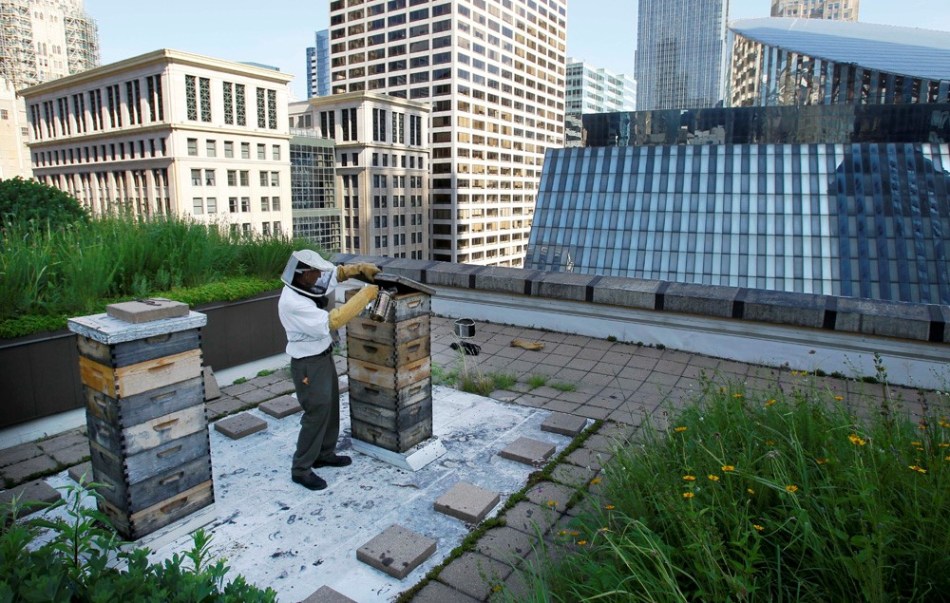
A rural person like me may think, “What is romantic about noise, crowding, and light pollution that obliterates the stars?” But it is all about what you’re accustomed to. These days, bees who formerly lived in meadows, trees, and yards are getting used to living on rooftops.  

Beekeepers in urban places have started to locate hives on top of buildings. Some studies report urban bees can be stronger and healthier than suburban and rural bees. It relates to diet. A variety of blooms makes bees healthier, and sometimes cities and towns offer a greater variety of flowers. In the suburbs and rural places, bees may harvest only one or a few kinds of blooms.  

In many places, towns and cities that had rules against beekeeping have changed their minds.  The local food movement helped jettison laws and codes that prohibited bees. Urban gardeners applaud the change; urban shopkeepers like to stock local honey.

Urban children who have bees living atop their building are brought closer to nature. They have the opportunity to observe bees coming and going, and they also learn to be careful around them.  

In response to the decline of bee numbers, the General Services Administration adopted the Pollinator Initiative that encourages federal facilities to locate bee hives on their roofs. Bee raisers contract with the government to locate hives atop courthouses and other federal buildings. One such facility is the Warren B. Rudman courthouse in Concord, New Hampshire.

The hives serve a research role, too. Program directors collect data on subjects like what plants are most beneficial to bees, and whether bees on rooftops benefit the flora of the entire area. The program hopes that if bees thrive, lessons learned can be passed along to other facilities, private and governmental.   

 A roof top must offer the bees a close source of water, so bees don’t have to expend a lot of energy travelling. And the roof should offer optimum temperatures in summer and winter.

But when too many hives live in an area with limited green spaces and flowers, bee health will suffer. This has been observed in London and New York City.

Urban settings can also be incubators for disease. Urban beekeepers must treat their hives for disease more often than rural beekeepers do, which is costly. And honeybees may pick up contaminants from city environments, which will appear in the honey. Beekeepers have found that sometimes honey produced by their bees was made from artificial sugars gathered from the urban environment.

Despite those hazards, rooftop beekeeping may help reverse the decline of bees. One bonus of the federal program has already come to pass. When bees produce more honey than they need, the excess goes to local food banks.

bees, pollinators, beekeeping, environment · natural cures · nature

Bees Need Their Zzzz’s

 Like most humans, bees labor in the daytime and slumber at night. Like us, they sleep for five to eight hours, and don’t function well if they miss those hours. Like us, they go through different stages of sleep—lighter to deeper. When they awaken, they take a while to get moving—no coffee available. They may stay immobile for a while, or quietly groom themselves or others.

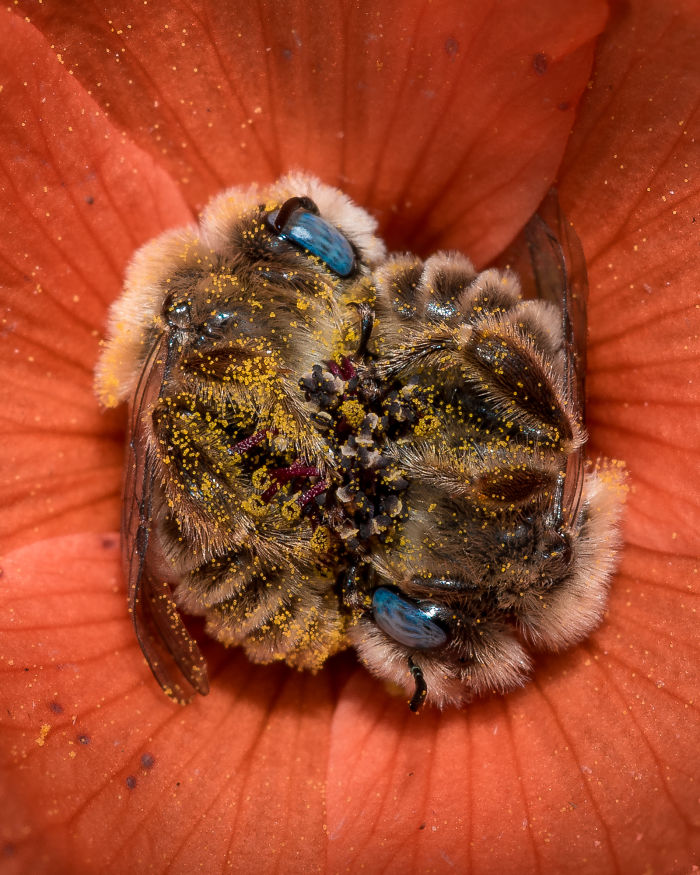
Bees who don’t live in colonies, particularly males, often sleep on flowers. They grab hold of the flower with either their legs or mandibles. If the flower closes, that is all to the good, offering the bee protection from predators. Female solitary bees are likely to make nests. In the daytime, they visit flowers in search of nectar and pollen. The male bees take only quick sips of nectar, and devote their time to searching for a female to mate with, or driving off other males.

Honey bees sleep in their hives or nests. The foragers, who are older bees, generally sleep outside of cells, near the edge of the nest where it is cooler, and away from uncapped brood. Young worker bees usually sleep inside cells, near the center of the nest. They may not sleep consecutive hours, but waken and work at their jobs, sleep for a while, and then return to work.   

When bees lose sleep, they become less competent at their jobs. Researchers showed that sleep-deprived bees could not properly perform the waggle dance that tells their sisters where the blooms are. Foragers had trouble navigating a new route home, and showed signs of sleepiness, like, they moved their antennae less.

What disrupts bees and their sleep? Bears, raccoons, skunks, and mice raid at night and alarm the hive. Light and noise from humans can put a colony on edge.  

But troubling studies have shown that neonics, chemicals used in pesticides, upset the sleep cycle of bees and flies. One study of bumble bees found that when bees received a dose of neonics, in the amount they would encounter in normal life, it disturbed their usual sleep pattern. The bees slept more in the daytime, and tried to forage at night when flowers were unavailable.

If you come across a bee flitting about, not overly interested in flowers, it may be a solitary male searching for a female, or others males to chase off. Or it could be a normally ambitious forager, wandering about because she is short on sleep.

The World Wildlife Federation tells us that 90 percent of wild plants and 75 percent of the leading global crops depend on pollination. The pollinators have an enormous job. They need their rest.

bees, pollinators, beekeeping, environment · natural cures · nature

Housing the Honey Makers

“Why are your hives painted different colors?” my neighbor asked.

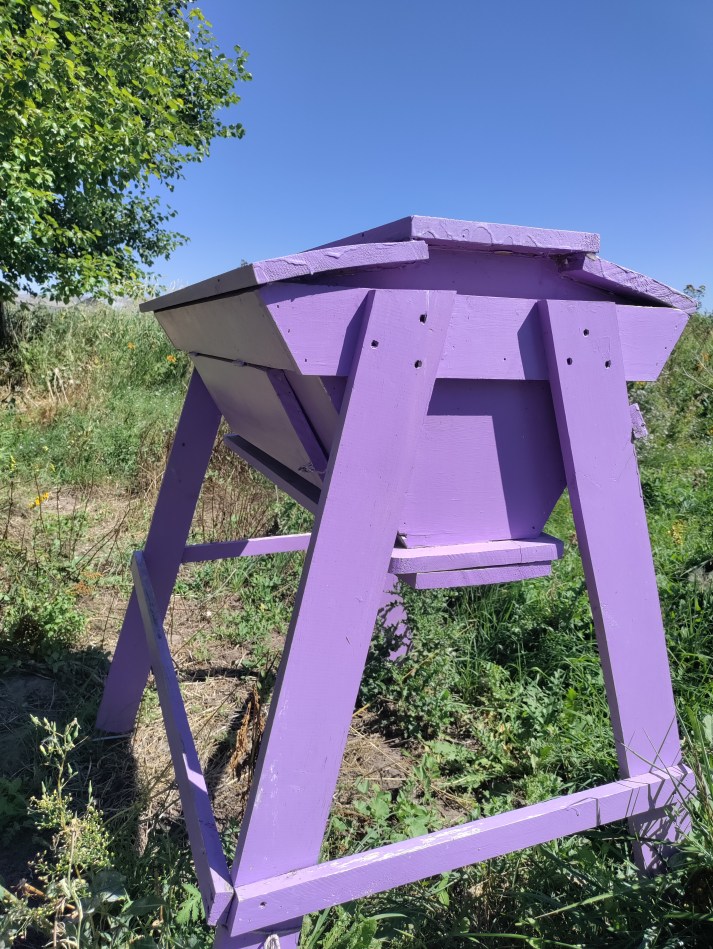
I told her someone theorized that if hives are different colors, it helps the bees find their way home. That was all the excuse some of us needed to pretty up our bee houses.

When I asked the young clerk at the Lowe’s paint desk for lavender outdoor paint, he protested. “No. Lavender isn’t an outdoor color.” Even after I explained it was for a bee house, he frowned while mixing it. It went against his grain.

Some beekeepers go beyond simple painting—they add flowers, designs, and stripes to the hives, and the bee yard becomes almost as attractive as nearby flower plots.  

Painting hives in assorted pastel colors is not practical for commercial bee keepers, and big producers also have less choice in what kind of structure to house their bees. Commercial outfits use the Langstroth hive, the box-like hive people see from their car windows, sitting side-by-side in fields or on hillsides. This is the most popular hive for backyard beekeepers, too, and has proven itself over time.

Rev. Lorenzo Langstroth, a Presbyterian minister, invented the Langstroth hive in l851. In one version of the story, he wanted to build a hive that allowed people to harvest honey without driving the bees out with fire. The more common version says the reverend discovered “bee space,” the distance between combs that bees prefer, and he designed his hive accordingly.  

Langstroth hives come with premade frames that hang side-by-side. Bees can go right to work filling combs with brood and honey.

Some backyard beekeepers like top bar hives. The beekeeper merely places bars at the top of the hive, and bees build the combs themselves. This takes longer, though some energetic hives can produce a triangular-shaped comb very quickly. But in northern climates, every warm day counts, and top bar hives don’t produce as much honey as Langstroths do.

Today, many honey producers supplement their incomes by sending their bees to the California almond groves to pollinate them. The Langstroth hive is portable, and its square shape means many fit on a semi-trailer. Top bar hives are stationary.     
Fans of top bar hives, and the similar Warre and Kenyan hives, like that their bees put brood and honey on comb freshly made by the bees, rather than on plastic frames that may contain a variety of chemicals. No expensive extracting equipment is needed. The beekeeper simply removes a single comb at a time and puts it in a squeezer made of two triangular-shaped pieces of wood, suspended over a large bowl. Every day, the beekeeper tightens clamps, until all the honey is squeezed out. The wax can be rendered for candles and other uses.

Top bar advocates believe the top bar design promotes good air circulation, making condensation, which can be a problem, less likely. Langstroth fans point out that their hives can expand—they merely add a box atop their full one. Top bar hives run out of room.
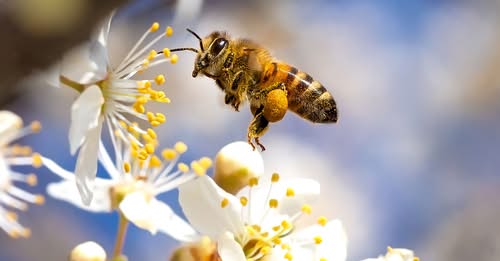
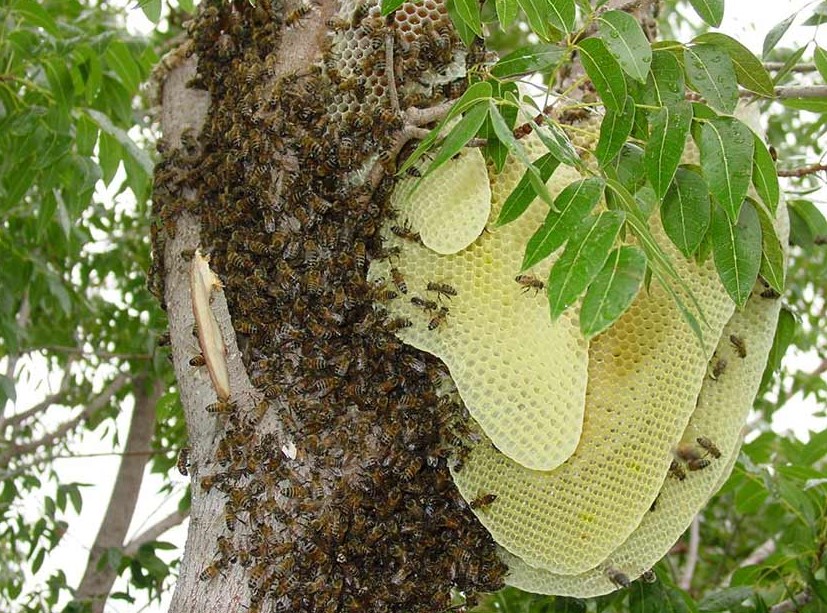
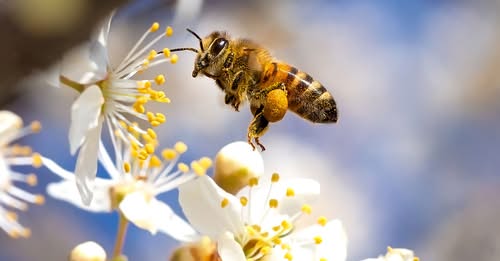
For all our preferences and debates about the best way to raise bees, we see that bees settle nicely into cavities of trees and under edges of objects to hide from predators. It appears they have less disease in the wild.
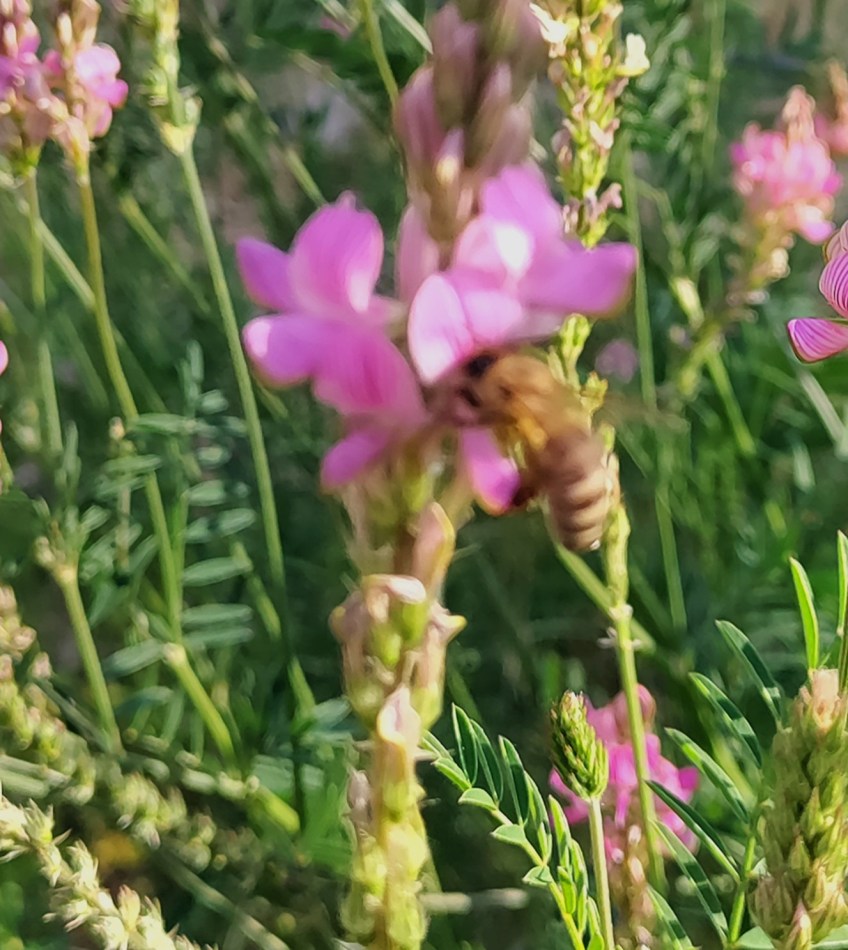
Bees get along nicely without us. But we can’t do without them.  

bees, pollinators, beekeeping, environment · natural cures · nature

Who is Humankind’s Best Friend?

Most folks designate The Dog as humankind’s best friend. Stories abound that tell of dog loyalty, usefulness, bravery, and intelligence. Dogs pull sleds in the North, guide the blind, guard perimeters, detect seizures in humans before they happen, help children learn to read, and lick the hands of hospice patients. The least clever dog, who hasn’t a smidgen of agility, can change the course of a child’s life just by loving her.

Cats rank second in popularity in the U.S., but they give dogs a run for their money by starring in legions of YouTube videos. Cats rid barns and basements of rodents, purr against our necks, and remind us to put away our clean laundry.

Horses have their partisans. The Percheron crowd brag that their breed built young America. Horses have fulfilled all kinds of roles dating back to ancient times. Artists, photographers, and videographers never tire of trying to capture their beauty.

Oxen, sheep, cattle, hogs, poultry, and fish supply us with food. Yaks, water buffalo, camels, and elephants play vital roles in various cultures. Reptiles and amphibians also impact human communities. Birds enchant us when they sing, and inspire us when they soar.

Because she is small, and a bug, the bee does not come to mind when we think about close, nonhuman allies. But we cannot do without her.  Bees pollinate our key food crops, from delicious fruits to healthful vegetables and nuts. Even dairy producers depend on bees, because cows eat nourishing alfalfa.  

Bees share honey with us. While tasting great, honey also has antimicrobial and antioxidant properties. Studies continually find more ways that honey helps combat illnesses and ailments.

We enjoy the variety, beauty, and fragrance of flowers and trees that bees pollinate.   

 I am not suggesting we knock dogs off their pedestals as humankind’s Best Friend. But when we list True Friends, bees ought to be in the Top Five.  

Most of us want to do right by our friends. And bees are dying in droves.

Two things nearly anyone can do for bees: 

1. Find online the NRDC petition that asks the EPA to ban neonics, a family of harmful chemicals that wreak havoc on bees. Some of these chemicals are 5 to 10 thousand times more toxic to bees that DDT was, and they pose a threat to us, also. The EU and other countries have banned them. Or, find a petition against Bayer, their producer, or send Bayer a letter.  

2. Nourish bees. Even if you have just a window box, plant flowers that bees love.  

bees, pollinators, beekeeping, environment · natural cures · nature

Kids Helping Bees

The future that belongs to young people will need a healthy bee population for pollinating crops.  Some youth understand that. Here are three of them.

California teen Rory Hu won a science competition for her research with honeybees. The girl became concerned about bee health after reading of the serious decline in their numbers. 

Hu learned that pesticides can harm memory in bees, making them unable to find flowers, or find their way home after harvesting nectar. Hu burrowed bees from a beekeeper to run an experiment. She feared the bees at first, but later decided they are “really cute.”

Hu wanted to find out if polyphenols, a plant compound found in tea, and caffeine, a stimulant, could help bees learn. If so, they might be used to help bees regain their foraging abilities. She won $10,000 when she demonstrated they could.

A high school girl in Connecticut put forth a solution to the varroa mite problem that plagues bee colonies. Raina Jain was in high school a few years ago when she became aware of the bee crisis and started visiting beekeepers.

Varroa mites attach themselves to honeybees, feed on them, and weaken them. Bees, also contending with the adverse effects of pesticides and monoculture (planting large areas of one crop, while bees need a variety of nourishing blooms) don’t have the vigor to fight off varroa infestations.

Jain said, “I’ve been brought up with the principle of ‘live, and let live,’ to value every life, no matter how small,” Jain said. “You hear all these things on the news, but you don’t realize how important bees are until you see them firsthand. I kept hearing that bees are in danger, and the population is decreasing, but I didn’t really understand what that meant until I saw a bee farm and saw hundreds of empty and absconded hives and piles of dead bees.”

Jain wanted to design a narrow entryway that would stop the mites. She applied thymol, a naturally occurring pesticide, to the entryway. A forager bee makes 40 trips to the hive in a day, and at each departure and return, the bee had contact with thymol, which is destructive to mites, but did no harm to the bees. The small amount of pesticide did not contaminate the wax, honey, or pollen, either.

In one lab experiment, the treated-entry method caused a 70 percent reduction in mites in three weeks, with no harm to bees.

Covid interrupted further research for a while, but Jain, now a college student, has patented her entryway.

Recently, CBS Sunday morning ran the story of Maine 11-year-old Elizabeth Downs, who started keeping bees at age six and who now acts as an ambassador for them. Her local bee club, made up of adult members, named her the youth outreach person. She gives presentations at school, explaining to her peers how important bees are for the well-being of people.  

A neighbor with a large garden started Elizabeth’s education. Another neighbor, a beekeeper, saw her intense interest in bees and gave her a hive of her own and outfitted her in a way-too-big bee suit.            

 Elizabeth wanted to learn all she could, and at age 8 she enrolled in a university, online beekeeping course. 

When she is working with bees, Elizabeth feels calm.  “I love the sound of their buzz.” She aspires to one day be the state apiarist.  

bees, pollinators, beekeeping, environment · nature

Teach the Children Well

A friend posted a troubling story on Facebook about a beekeeper who came across children killing a swarm of bees by spraying them with a garden hose.

The beekeeper put a stop to it and rescued bees that might still be alive, and laid them on a dry surface to try to save them. With little luck. Usually, a wet bee is a dead bee.

We know kids can be cruel. But I would like to think something else was going on. The kids may have seen the bees as enemies. They may have thought they performed a service, saving themselves and others from stings.

It’s not like erroneous reports don’t circulate about someone who was “chased by a swarm of bees.” TV and movies show bee swarms arriving from a dark sky, accompanied by ominous music.

But swarming bees are temporarily homeless, and have little to protect. The hazard of getting stung is small. The internet posts abundant videos of beekeepers coaxing bee swarms into cardboard boxes or other containers to move them to hives. Some beekeepers do this with little or no protective clothing. Nonprofessionals should not try it. If a person gets close to the queen, guard bees may see this as a threat, and sting. 

Erica Thompson, called the Queen Bee of Tic Toc, appears in many videos scooping up handfuls of bees with bare hands. They cover her skin. She likes working without a bulky suit and gloves, she says, and thinks it is safer for the bees. She handles honeybees, and regards them as a gentle species. Thompson, who trusts the bees fully, probably communicates a scent of confidence, not fear, and bees are all about pheromones.    

Bees swarm to start a new colony. Nature built this into them for reproducing. When the hive begins to feel crowded, or inconvenienced, or short on resources, scout bees go looking for a new locale. They want to find a place with good shelter, adequate water, and abundant blooms.

If you encounter bees nosing around a tree cavity, they may be scouts. Scouts visit several places, and then decide together which is best. People who observe hive life closely tell us that bees democratically choose where and when to go.

Beekeepers watch for signs that a hive is about to swarm, and take measures to prevent it. They used to clip the queen’s wings, but that practice has mostly gone away. Beekeepers now try to separate a single hive into two, to keep the bees on the beekeeper’s property.

You may wonder, if bees are particular about finding a new home, why do swarms sometimes settle on the undercarriage of cars, in the eaves of an urban gas station, or on a well-used sidewalk? I haven’t read a satisfactory explanation. Sometimes bees check out a location for a short time before moving on. Or, do they, like us, sometimes make bad choices?   

When we consider the preparation and organization that goes into the decision to leave the hive, we need to mourn for the swarm that children drowned with a garden hose.

Whitney Huston left us good words. She pointed out that children are our future, and urged us to “teach them well, and let them lead the way.”

Next time: Youth Who Are Leading the Way.   

bees, pollinators, beekeeping, environment · natural cures · nature

The Making of Honey

I pointed to the honey bowl on the table and told my guests, “For your toast.”

“No thanks,” said one. “I don’t eat bug barf.”

It wasn’t the first time I had heard golden, delicious honey described that way. But it suggests a misunderstanding of how bees make this wonderful food.

We connect barfing with sick or sour stomachs, discomfort, and illness. Honey-making involves stomachs, but has nothing in common with vomit.

The process starts when the worker bee lands on a flower. She pokes her long tongue into the bloom’s nectar to suck it up. The sticky liquid goes into her honey stomach, separate from her other stomach. (On a high-temperature day, I yearn for a second stomach, or maybe even more, like a cow. I would fill extra bellies with ice cream.)

While the worker collects nectar, pollen from the flower adheres to her hairy body. She has pollen baskets on her rear legs. The bees will combine protein-rich pollen with honey to feed to their young.

Even as this worker collects more nectar, (she visits 50-200 flowers in one trip) enzymes in her honey stomach begin working on the liquid to break up the sugars.

The forager bee returns to the hive carrying her weight in nectar and pollen. At the hive, a householder bee greets her to relieve her of the nectar load. The forager burps up the contents of her honey stomach into the mouth of the other bee. That bee adds its own enzymes to the liquid to make it stickier, then shares that with yet another bee, who adds more enzymes. The honey, like the plot, thickens. About ten bees involve themselves in adding enzymes to the nectar the forager brought home.

Meanwhile, the forager has gone off to collect more nectar, and will work as long as the light lasts.

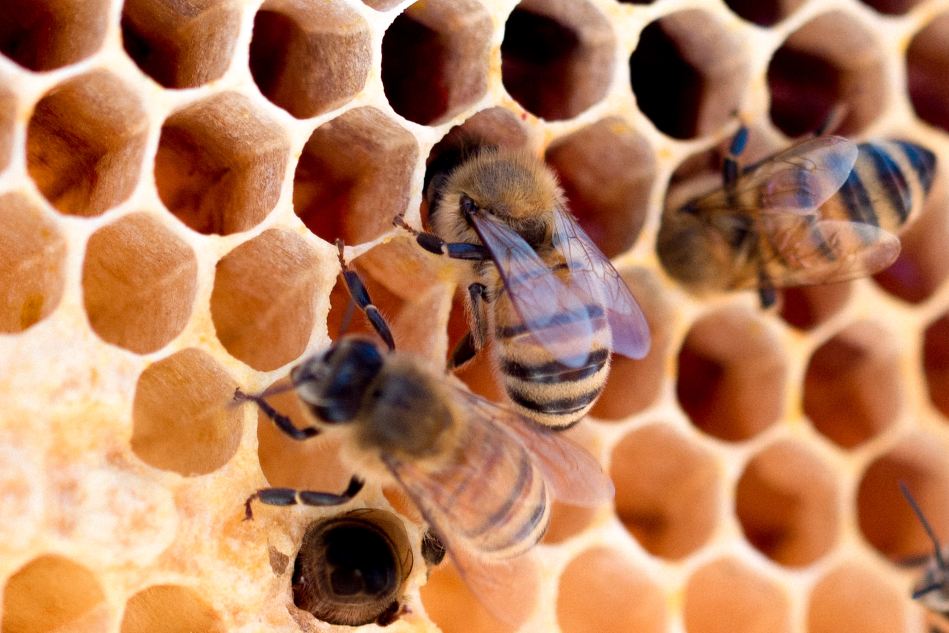
The bees deposit the honey in octagonal cells, but its water content is still too high. Other bees get busy fanning the cells with their wings to dry out the liquid. It takes about five days for the honey to ripen. At that point, another crew puts a coating of wax atop the cells to keep the honey clean and protect it for winter consumption and for feeding the young.

Once a person understands the work and effort that goes into making honey, it is impossible to let even a drop of it go to waste at the bottom of a jar.

And it becomes harder to think of the transfer of nectar as anything close to barfing. Seems to me, a mouth-to-mouth transfer of sweetness more closely resembles kissing.    

bees, pollinators, beekeeping, environment · natural cures · nature

Honey Snobbery

A well-dressed gentleman lifts a tiny, crystal glass from a lace-covered table. Several goblets sit side by side, holding amber goo. The man picks up a doll-size silver spoon, dips it into the goblet, and smears the spoon’s contents onto his lips. His tongue runs around his mouth. He sighs.

“Robust, though delicate. Retains a memory of August berries and morning dew.” He sets the goblet down, gulps water from a regular glass, and moves to the next one.   

A woman in elegant silk similarly raises a goblet and dunks a spoon into it. She places the goo on her tongue and clamps her mouth shut. “Hmm,” she says. “Somber, yet hints at gaiety.  A warbler’s song lingers in the back of the throat.”

I don’t know whether formal honey tastings occur. But when food, taste, and flavor enter the picture, snobbery often follows. Wine, tea, coffee, and chocolate have fierce enthusiasts who champion favorites. Even milk, our first and most basic food, attracts zealous fans. Full or reduced fat? Pasteurized or raw? Can products derived from oat, coconut, almond and soy claim to be milk? Are yak, camel, and goat milk more healthful? Be sure to check around for purists before bringing up the subject of milk.        

I have been to two honey tastings—both connected to beekeeping classes. Paper pill cups held the honey, and we dipped toothpicks in them. It was fun and enlightening.

A thick, black variety that looked like molasses surprised me. The placard said Buckwheat. Tiny buckwheat flowers require the bees to work hard. Flowers often come in dark colors, but buckwheat honey can be reddish or amber, too. It isn’t as sweet as most other honey, but its strong flavor makes it great for baking. Buckwheat honey advocates say it may be better for you and help keep blood sugar levels down in diabetics.

Manuka honey has attracted a following. Native to New Zealand, this honey comes from the Manuka bush and contains methylglyoxal, which may strengthen its antibacterial properties.  Fans say its health benefits have been proven in studies. Those include improvement in digestive health, soothing coughs, ulcers, acne, and gingivitis, and even mitigating some symptoms of cystic fibrosis. Generally, this honey costs more.  

More than 300 varieties of honey have been identified. Clover may be the most popular kind. Harvested in New Zealand, Canada, and North America, clover honey tastes sweet and light, and works well in recipes.  

 Elvish honey, the most cherished in the world, comes from a cave in northern Turkey and has been called the true nectar of the gods. Elvish honey costs $6,800 for a gram.

Here are a few of the others:

Dandelion honey, a strong honey, has a dandelion aroma and is considered medicinal in China, Tibet, and India.  

Mesquite honey, from the southwestern United States, has a smoky aroma.

Lavender honey has a woody and floral taste.

Fireweed honey, a premium honey, comes from Western Canada and the Northwestern U.S.

Orange blossom, from a combination of citrus fruits, has a fresh, fruity taste, and is made and consumed in many countries. In the U.S., Florida, California, and Texas produce it.

Alfalfa honey, mostly produced in the United States and Canada, has a mild, sweet taste and combines nicely with beverages like tea and lemonade.   

Eucalyptus honey is valued across the world for protection against colds and headaches. It can vary in taste, but has an herbal flavor and slight aftertaste of menthol.

With so many and varied kinds of honey, the opportunity for honey tasting events seems endless. Along with the prospect of pretentious metaphors.  

bees, pollinators, beekeeping, environment · natural cures · nature

Healthful Honey-The Sequel

Imagine that you are a soldier, wounded during the American Civil War. The medic treating you served only a brief apprenticeship, and few medicines are available to put on your wound. Carbolic or nitric acids. Turpentine. Whiskey could be poured on your injury, but you would rather it go down your throat to dull your pain.

To your relief, the regiment has run out of bromine. The other remedies sting horribly, but bromine is excruciating.

Anesthetics are rationed, so you brace yourself for a painful treatment. Instead, the medic smooths warm honey on your wound. The antibacterial properties of honey are not yet understood, but the medic has had good success applying it.  

That was then. Today, we have a myriad of patented medicines available. So why is the medical community studying whether honey has a place in wound treatment? Because the overuse of antibiotics has made germs drug-resistant.

Studies in Germany showed that a specific kind of medical-use honey helped heal wounds when other medicines had failed. Honey has been found to be effective against a strain of flesh-eating Staphylococcus. The medical-honey business now brings in millions of dollars. Honey-infused bandages and wound dressings have become readily available. (Disclaimer. Doctors remind us that burns and open wounds require prompt medical attention.)

Honey-based ointments have made their way into the world of veterinary medicine, to treat animals small and large.      

What claims do members of the natural medicine/folk-cure community make? They say honey soothes stomach aches. Nips colds in the bud. Is good for eczema, insect bites, and sunburn. Prevents acne. Soothes dry skin. Aids in foot care. Treats bed sores.

Some believe honey helps prevent tooth decay and gingivitis. A study in New Zealand involving manuka honey (raw, unpasteurized honey made from the manuka plant found in New Zealand) supported this claim.  

Cleopatra, the story goes, took milk and honey baths. Folks desiring pretty skin give themselves honey and oatmeal facials, use honey and baking soda masks, or use just honey. Commercial skin products abound that feature honey as an ingredient.   

Beekeepers insist that consuming honey has a positive health impact. They understand that medicine with a great flavor has appeal.     

I think we shouldn’t overlook the honey/happiness effect. A piece of wholesome bread, warm from the oven, slathered with butter and drowning in honey, has to bolster the health of the person eating it. I feel better just imagining it.  

bees, pollinators, beekeeping, environment · nature

Medicine That Tastes Good

It was easy for ancient peoples to think that the golden, delicious food given to them by the gods had the power to heal. Cultures from widely different locales believed that honey could cure a variety of ills.

In frontier America, medicines came from available sources. Like plants. And honey.

When the Scientific Age came along, researchers identified the chemical makeup of honey. They undertook studies to test whether honey had an impact on assorted maladies. Instead of disproving the folk claims for honey, science verified that honey can help restore us to health.

When my children were little, our family doctor told me that cough syrups worked okay, but they were not as effective as tea and honey. (Some folks prefer a whiskey/honey mixture.) Probably the most common medicinal use for honey is to quiet coughs. But doctors also advise patients who suffer from allergies to consume a spoonful of local honey every day. I know several people who say this has helped them when other medicines didn’t.   

Honey can have a positive impact on other health issues. It acts as an anti-inflammatory, antioxidant, and antibacterial agent. Research has shown the following:

Honey may help prevent cardiovascular disease. Antioxidants in honey may help reduce the risk of heart disease.

It can help relieve gastrointestinal complaints such as diarrhea associated with gastroenteritis. Honey might also be effective as part of oral rehydration therapy.

It may help with neurological disease. Studies suggest that honey might offer antidepressant, anticonvulsant, and anti-anxiety benefits. In some studies, honey has been shown to help prevent memory disorder.

It is useful in wound care. Topical use of medical-grade honey has promoted healing of wounds, particularly in burns.

Medical experts advise parents not to give honey to infants under one year of age. Babies face a slight risk of contracting a serious intestinal virus. After that, honey can appear on the menu in all kinds of pleasant ways.  

I eat at least a teaspoon of honey every day, and I have dodged colds for years. I’m aware that as we get older we contract fewer colds , and I’m not often around small children who carry and spread germs. Yet, even during a winter when I visited many schools, I sailed through without catching a cold.

On a recent river trip in Southern Utah, I forgot to take the small packets of dehydrated honey a friend had given to me for travel. I came home coughing and blowing my nose, with a sore throat. Something blooming in the desert may have triggered an allergic reaction, though I’m generally not allergic. Or it may have been a cold. 

When I got home, I hit the tea and honey, which soothed my throat right away. The next day, I felt much better. It could be I had left a possible allergen behind. Others folks might vote for the placebo effect—I have faith in honey, so it cures me. The scientific community would point out that the experience of a single person hardly confirms a theory.   

But we don’t have to swallow someone’s claims. Not anymore. Studies about honey and its benefits abound. You can pull up dozens with the touch of a finger. Those studies support what my wise little auntie and your sweet old granny told us. Eat honey. It helps us stay healthy.              

Next time:  More Benefits of Honey.

bees, pollinators, beekeeping, environment · nature

Whisper Words of Wisdom

Years ago at a beekeepers meeting, a tall, older woman told me the best part of having bees is watching them. Every morning she takes a pot of tea outside, sits down beside her hive, and observes bees coming and going.    

Last fall when my son and his family visited, my nine-year-old granddaughter Kora sat cross-legged in the grass in front of a hive. She called to me, “I saw a bee with pollen on its butt. Look, here’s another.” I stopped my wheelbarrow and watched for a minute. Actually, I only paused a half-minute before I moved on with my wheelbarrow. 

One year a Lutheran group came to my house to see the bees. Pastor Gina’s daughter, Naomi, who was 3, sat down before a hive and stared up at bees as they left and returned. Her mama sat down with her.

“Back up a bit,” I said. I didn’t want guard bees mistaking the guests’ intention, but that was overly cautious. The bees took no notice of them.

Every year I promise myself I will take a cup of tea, sit by a hive, and watch bees. This morning, I did. I didn’t take a timepiece, because I would have been tempted to consult it. Just tea and a notebook.

The morning rush, when bees leave to go to work, had passed. The round exit/entrances get crowded in early morning and evening. Hive builders make them small so guard bees have less area to patrol. By the time I sat down, bees who had collected nectar had started to arrive back, a dozen or so at a time.

Some flew directly into one of the two holes. Some arrived and walked up and down the hive wall for a few seconds. Checking to make sure this was their own hive? 

The plumber is coming. How much will it cost, I wonder.

The small group of bees makes only a faint buzz. Unlike in the tall lilac bushes and ornamental plum tree, which this week vibrate at high volume from foragers at work.  

 The people who lace weed and other drugs with deadly Fentanyl—how do they sleep?

The bees use one hole more than the other. Because it’s further from the edge, and seems safer? Or, do they see one hole as an exit and one as an entrance? No, there’s no pattern I can make out.

The book I finished. I would have ended it differently.  

A wasp arrives. The enemy. Wasps eat larvae and pupae. A guard flies at the wasp, but the wasp veers around the bee and enters the hive. Bees defend against wasps. Will this wasp’s life end today?

I saw that today’s calendar has 1 p.m. written in blue ink. What happens at 1? Why didn’t I put down more information?

A single bee has started to buzz near my head. She leaves, comes back and dives past my ear. I wonder if my presence has started to annoy her. But she doesn’t return.  

I need to do something about the dog’s toenails.    

Next to my chair, three dandelions have each attracted a bee. I read an article by someone who believes dandelions aren’t as great for bees as beekeepers think. Bees will choose something else if they have a choice, he insisted. But my lilacs and plum tree hum with bees, and still, all around me, bees dine on dandelions.

Mary Oliver says in her poem THE SUMMER DAY, “I don’t know exactly what a prayer is. I do know how to pay attention, how to fall down into the grass, how to kneel down in the grass, how to be idle and blessed. . .”

My thoughts scatter like seeds in the wind, while the bees stay purposeful and present. Their poppy-seed brains seem to grasp something my three-pound, human brain can’t. They don’t allow distractions to pull them off course; they let them pass. They let them go.

Paul McCartney said it; bees live by it. Whisper words of wisdom. Let it bee.    

bees, pollinators, beekeeping, environment · nature

Sanctuary Cities for Bees

 What do Ashland, North Carolina, Sneem, Ireland, and Hermanus, South Africa, have in common? They are places that have decided to side with the bees.  

Around the world, many cities have taken measures to become havens where bees can flourish. Some cities have sought official designations through organizations like Bee City USA, Bee Campus USA, or World Bee Project. Across the globe, people who worry about the disappearing bees have taken forward-looking steps to foster bee health. They want to avoid the situation some orchard owners in China face—orchards have to hire peasants to pollinate their groves.  

In far-away Hermanus, South Africa, at the southern tip of the continent, visitors come to watch right whales and other sea life. Now, in addition to the diverse marine eco-system, tourists also see floral diversity made possible by lots of hives.

Bee City USA started in Asheville, North Carolina, after beekeeper Phyllis Stiles became fully aware of the important role pollinators play. She saw that pollinators were in trouble, and that someone needed to do something. She and her friends started Bee City USA, a program that encourages affiliates to reduce pesticide use and incorporate native flowers, shrubs, and trees into urban landscaping.   

Asheville launched the project in 2012, and became the inaugural harbor for pollinators. Cities who want to join the program must get the sanction of their local officials. Affiliates across the country and Puerto Rico have brought native vegetation into public spaces and encouraged residents to plant flora that attracts beneficial insects.  

Cities commit to creating and adopting a pest management plan designed to prevent pest problems, reduce pesticide use, and expand the use of non-chemical pest management methods. Some cities practice No-Mow May and refrain from mowing their public spaces (and residences) until beneficial insects get well-established.

Looking at the list of U.S. bee cities, one might conclude that it’s easier for smaller communities (Bismarck, ND, Apalachicola, FL, Talent, OR) to pass support for bee-friendly initiatives than it is for sprawling metropolises. Yet, Seattle, WA, manages to support a large human population and also act as a refuge for pollinators. Seattle limits the use of insecticides, and it instituted a pollinator pathway at the Seattle-Tacoma International Airport. The open space houses honeybee hives. Portland International Airport has considered doing something similar. In cities, rooftop apiaries show promise and are catching on.

In 2021, botany specialists put these ten world cities at the top for bee-friendliness, based on the amount of green space provided, species of pollinators, air pollution, and average temperature: Johannesburg, Shanghai, (this surprised me—I saw no insects, not even flies on meat hanging in outdoor markets. Also, I had to throw away a jar of nasty-tasting honey.) Warsaw, Buenos Aires, Lisbon, Paris, Austin, Los Angeles, London, and Moscow.

Countries can disagree with each other, and rural folk and urbanites don’t always see eye-to-eye. But people everywhere can agree on this. Life without flowers, fruits, and vegetables would be drab. To continue to enjoy them, we need to support sanctuaries for bees.  

bees, pollinators, beekeeping, environment · nature · Uncategorized

Conversations with Bees

Last week I watched a Zoom presentation by Vicki Hurd, author of Re-bugging the Planet: The Remarkable Things that Insects (and Other Invertebrates) Do – And Why We Need to Love Them. The author loves and admire insects, and lists numerous ways that insects help Mother Earth.

As a child, the author found insects fascinating. She watched them and tried to imagine what role they played in the ecosystem. Bees helped her decide that she wanted to study insects as a career. 

As a young girl, Hurd got a job helping with bee research. Her job was to count bees as they returned to the colony. Some people may have found this tedious—clicking a counter whenever a bee entered the hive, but she liked it. After a long time, a single bee began circling her head, making a different noise. Loud. Insistent. She interpreted the sound as, “Time’s up. This has gone on too long.” She stopped counting. Realizing that an insect could convey a message to her set her future course. 

In beekeeping classes, I’ve seen veteran beekeepers who work a hive suddenly stop and say, “That’s enough.  I need to close this hive.” The beekeeper can tell when bees are exasperated.    

Hurd says bees communicate not only with humans, but with other mammals, reptiles, other insects, and even fungi.

I have noticed something myself. I keep water on a stand near the hives. I put golf balls in the bowl to give bees a place to rest and drink, and I keep the water level low. Yet, on the first warm day in spring when bees emerge, some of them drown despite the golf-ball islands. That’s Day One. On Day Two, I find no dead bees, and none after that. It’s like the message has gone out. Don’t drink and dive.  

It’s gratifying when science confirms what little children and nature watchers already know. That species can talk to each other. A recent study in the UK demonstrated that bumble bees learn from each other. Cultural learning, they call it.

The researchers taught bumblebees to push a lever to open a box that held a reward. The knowledge spread through the colony.

The study involved ten bumblebee colonies. The researchers privately taught a single bumblebee to open a box that held a sugary solution. When they released the demonstrator bee back into its colony, the bee transmitted the information to others. The researchers saw that bees preferred their sisters to teach them. Even if they found a different solution on their own, the bees preferred to use the method others had demonstrated, and used that technique 98 percent of the time. In colonies where scientists didn’t place a demonstrator bee, the insects only managed to open the box a handful of times. 

One scientist expressed the hope this ability to learn from others could be helpful to colonies as bees adjust to changes in the world. Enterprising individuals who figure out new ways to carry on may be able to bring the rest of their colony along with them.

bees, pollinators, beekeeping, environment · nature

Bee Imposters

My friend Collette owns a nun’s habit, the old-fashioned kind with a white wimple on the forehead and a black cape that covers the head. Collette wears it with chains that swing from her neck and waist.    

At a Halloween party, some guests confessed to Collette in low voices their struggles with the Catholic Church. She listened with kindness. One man confided a sin he had been carrying. Though everyone there wore a costume, guests allowed themselves to believe that my friend could deliver spiritual counsel. 

In the insect world, imposters abound, and many pretend to be bees. Other creatures understand that bees sting to protect themselves. Why wouldn’t a bug who lacks a stinger go out into the world wearing a bee disguise?

Hoverflies and drone flies look and sound a lot like bees. Their wings are different—bees have two sets, flies have one. And bees have elbowed (bent) antennae, while flies have stubby, straight antennae, sometimes too thin to see. Making out the difference in wings and antennae on a small, flying insect can be tough, but flies move differently than bees.  A fly hovers and darts about, while a bee moves from flower to flower deliberately, and doesn’t hover.

The bee fly resembles bumble bees and honeybees in looks and habits. The furry fly has a long tongue that allows it to mine nectar from flowers. It sneaks into the nests of solitary bees to eat the larvae.

Some beetles try to resemble bees. Painted Locus Borers have black and yellow stripes, and they hang around on goldenrod, as bees do. But a closer look shows they have little in common with bees, other than color. Flying beetles have hardened, shell-like wings.

Many day-flying moths mimic bees in convincing ways. They have four wings, thickened antennae that can appear elbowed, and furry, black-and yellow bodies. But they have slender legs, and lack the pollen baskets bees have on their back legs. The moths have long proboscis that allow them to hover over flowers, like hummingbirds, for feeding. Bees land on flowers to feed and gather pollen.

Do disguises sometimes backfire and get imposters in trouble? Does a perfectly harmless or even beneficial insect lose its life sometimes because someone—human or otherwise—means to protect itself and kills what it thinks is a bee? Seems possible. But overall, mimicking bees works well as a strategy.  A predator looking for a meal thinks twice before trying to snatch up a striped insect who might inflict a painful sting.

Unlike my friend Collette, who never intended to mislead others, bee imposters set out to fool the neighborhood. Yesterday, while walking my dogs at the river, a pair of yellow and black striped insects came near. Their size and color implied they might be bees, but something about the way they flew made me wonder.

 “Two bees, or not two bees?” That was my question to them. I didn’t expect a straight answer. Not if they were practiced deceivers.   

bees, pollinators, beekeeping, environment · nature

The Bee Who Took a Nap

A few years ago, someone took a picture of a bee hanging upside down on a flower petal, apparently asleep. People shared and re-shared the photo. Even those who don’t know much about colony life sensed the rareness of catching a bee at rest. Everyone knows the simile “busy as a bee.”

In a bee colony, the work ethic takes hold early.  

When a baby bee emerges from her cell, she gazes at the surrounding comb, then turns around and cleans the cradle where she grew, readying it for the queen to deposit a new egg. This early leap into industry sets the course for her whole, short life.

After cleaning its birth cell, the fledgling bee goes off to work in the nursery, feeding pupae and larvae. Following that, she confronts the other end of bee life. She takes a job as an undertaker. Worker bees, who are the most numerous in the hive, live about 30 days. In a colony of 60,000, numbers of bees die every day and other bees must dispose of them. A cluttered hive would impede efficiency.

Climbing the career ladder, the bee may move on to become an architect. After her wax glands mature, she can build comb. Or she may work at capping honey with wax, or collecting tree resin to make propolis for sealing cracks against drafts. Carrying out various building and maintenance roles, the architects keep the hive homey.

Some mature bees get involved in producing honey. Some groom foragers when they return from flower patches, some unload pollen and nectar and put it in cells for later. Some add enzymes from their bodies to the nectar to help it become honey. Using their wings, some fan the honey in the cells, to remove moisture.    

The queen’s job—laying 1,000 to 2,000 eggs a day—means she has no time to feed or groom herself. She enlists a dozen attendants to do that.

Guard bees protect the entrance and the queen. They sting intruders, which can include mice, skunks, raccoons, bears, wasps, robber bees from other hives, and us. 

For her last job, the bee may become a forager. Foragers are who we encounter in our flowers and trees. When a bee becomes a forager, a navigation gene goes off in her brain, allowing her to go and seek flowers, or new locations for her colony. Scout bees look for abundant food resources and ready access to water. 

Foragers go to work early every day, and keep working until it turns cool or dark. The forager may take her last breath while flying out to flowers or returning home laden with nectar and pollen—ending a life of nonstop work. 

Judging by the popularity of the sleeping bee photo, a lot of hard-working folks sympathize with the small forager who was caught napping. Achievers may have gazed at the photo wistfully, wishing they. too, could find a petal to hide under and take a siesta. Lazy folks probably liked the picture, too, for reasons of their own.

bees, pollinators, beekeeping, environment · nature

Wrong-way Corrigan and Bees

In aviation’s early days, planes lacked navigation systems and pilots had no way to talk to people on the ground. They flew by the seat of their pants. Research shows that bees, too, navigate by the seat of their pants.  

A newspaper coined the phrase in 1938 when early aviator Douglas Corrigan flew from the USA to Ireland. His mechanic told a reporter that Corrigan “flew by the seat of his trousers.” Now we use the expression to describe people who operate without a plan and make choices as they go along.

Corrigan became known as Wrong-way Corrigan because he filed a flight plan that said he intended to return to California. His friends said he always meant to go to Ireland. Aviation officials had denied him a permit to fly over the ocean because they saw his aircraft as unworthy.  After he landed, Corrigan concocted a bit of blarney about getting lost in fog, and also claimed his plane had caught fire. That part may have been real.

Researchers studying bees concluded that they find their way the same as early aviators did. They take note of the terrain below—streams and roads and walls—and use that knowledge to figure out their return flight.     

Scientists in Germany outfitted bees with transponders. (Think how tiny!) They transported the bees to a strange place. The bees called on their observation of landmarks to figure out how to get back to their hives. Scientists think the bees compared features of the new landscape to memories of their home terrain. They flew along familiar-looking features, just like the early aviators who followed roads and railroad tracks.  

Bees have several navigational skills. They have a keen sense of smell. They know where they are in relation to the sun, and they understand light patterns. They seem to be connected to the Earth’s magnetic field. And they learn quickly. Bees in the experiment used a mental map of their home landscape to generalize about the new, unfamiliar territory.

Do bees get it wrong sometimes, like pilots did? Some of us paint our hives in pretty, pastel colors to make it easier for bees to distinguish their hives from afar.

Bees usually stay within a mile or two of their hives. Going further to find blooms becomes inefficient. But one experiment showed that bees can travel as far as 25 miles in extenuating circumstances.  

The bee method of navigation may resemble what early aviators did, but that doesn’t mean they fly by the seat of their pants. They know what they are doing. They aren’t Wrong-way Corrigans. But then, neither was Douglas Corrigan.

bees, pollinators, beekeeping, environment

When it comes to love, timing is everything

hoch3media

Lisa and Ben met at a school assembly when they were high school juniors. After one date, they declared themselves a couple. On graduation night, Ben gave Lisa an engagement ring.

Ben found a starter home for them near the trade school he would attend. Lisa thought the world of Ben, but wanted to go to art school. The two couldn’t solve their differences, and with many tears parted ways     

Ben visited Lisa a couple of years later at her university and tried to lure her home, but college had whetted her appetite for seeing more of the world. For a while, she felt drawn to nonconformist men.   

After some failed relationships, Lisa recognized that what she had thought of as free spiritedness in boyfriends had been unreliability. She remembered rock-solid Ben with fondness, and asked her aunt for news of him. “He just got married,” her relative said.

 “I may never find anyone like him,” Lisa moaned. “We truly loved each other.” Her aunt said, “Sure. But when it comes to love, timing is everything.”

What does this have to do with bees? Can we describe what transpires between bees and flowers as love?

 If love means attraction that brings entities together, benefits all parties, and assures the continuation of the species, we can conclude that bees and flowers are crazy about each other.

 Flowers court bees. They doll themselves up in pretty petals with attractive, noticeable shapes. They produce a cloud of tantalizing perfume, and they make alluring nectar to serve. In addition, they send out an electrical field to attract bees. Bees can discern from that field the distinctive shape of blooms, and whether other bees have recently called on that plant.

As soon as the bee leaves the flower and heads for home, she starts to manufacture honey that will nourish the colony through winter. (What did the bee say to the flower? “Hello, Honey.”)   

What does the bee gain from the relationship? Tiny grains of pollen attach themselves to the bee’s hairy body, and the bee carries the pollen to the flower of another plant. The pollen fertilizes the plant and allows it to develop seeds and produce fruit. (What did the seed say to the flower? “Okay Bloomer.”)

Wind can carry pollen, but bees and other pollinators do a much more efficient job and ensure a new generation of plants and crops. Many plants wouldn’t be able to reproduce without bees.  

A warming planet and crazy weather alter things for bee/flower affairs. Flowers may bloom before bees come out of their hives. So, the flowers go unpollinated. When the bees come out, they find that blooms have come and gone. Bees are deprived of their usual nutrition sources.    

Or spring storms may delay flowers from blooming, or kill blooms, and hungry, emerging bees won’t find adequate food.

 Disturbances in the synchrony between flowering plants and their pollinators have always occurred, but plant scientists see them happening more frequently now. Warming has confused species, and that concerns scientists.  

Lisa’s aunt had nailed it. “When it comes to love, timing is everything.”

bees, pollinators, beekeeping, environment · nature

Little Brains. Big Feats.

Photo by Meggyn Pomerleau

When I peer into a bee hive, it awakens me to something. That I don’t make the most of my large, three-pound brain. The bee boasts a brain the size of a poppy seed, and look what she does with it.   

She designs and builds. The hexagon shape she chooses for making comb where she will raise brood and store honey maximizes available space. The hexagon distributes stress across its structure, and is considered the strongest shape.

Bees who build their own comb in trees or in top bar hives construct them in a catenary shape—a   curve supported on either end, a design that has fascinated engineers, architects, and even Thomas Jefferson.  

She navigates. Receptors make the bee sensitive to scent, so she can find flowers and her way home. Researchers found she also senses the electromagnetic field around flowers. Scientists found that bees appear to observe landmarks as they fly, and remember them to find their way back.

She communicates. When a forager bee finds a good source of food, she returns to the hive and performs the waggle dance. The dance tells the others where the food is, and conveys its quality and quantity. If a dancing bee observes another forager telling about a flower patch, and if her grove is better, she dances faster to draw attention away from the other bee.

She cooperates. In the hive, the worker bees divide labor. Some clean the hive, some groom returning foragers and unload pollen, some work in the nursery, some lay down wax, some patch  leaks against drafts, some act as guards, some scout for new locations to live, some feed and groom the queen so egg-laying can proceed with maximum efficiency. 

A lot of research goes into bees these days, because bees are in trouble and they’re so important. Interesting findings have come from this. One study found that bees can count. A recent study showed that bumble bees will play games with balls. During Covid, a study showed bees could efficiently detect Covid, and earlier research had shown that bees detect cancer cells earlier than dogs can.

Other species keep surprising us humans. We believed we were the only species that used tools, until we observed birds, monkeys, rodents and insects doing the same. We thought only humans had language, until we found that whales, dolphins, birds, frogs and others convey complex information to each other. Now we know that trees and sagebrush send messages to their communities.

We remained smug about one thing—we alone were self-conscious. Then one morning, Koko, the gorilla who had been taught sign language, announced, “Koko damn fine gorilla.” (Her last message to humans was, “Help Earth. Hurry!”)

I heard a children’s author say that linguists who studied hundreds of indigenous languages found that before colonization, 70 percent of those tongues didn’t have a word for “human being.” Indigenous people didn’t see themselves as separate from other miraculous beings who shared Creation.

Our incredible minds and intricate bodies deserve to be celebrated. We can feel proud of the ingenuity and goodness humans often show. We can agree with the psalmist who said, “What is mankind that you are mindful of them? . . .You have made them a little lower than the angels.”

But when I peer into a hive, this idea comes to me. I think that I shall never see a creature smarter than a bee. 

bees, pollinators, beekeeping, environment · nature

Importing a Bee Strategy

Sneem, Ireland, a town that restored its bee population, had put ideas in my head.

The town had followed a three-prong approach to reviving bees. Residents agreed to 1) not use chemicals on their vegetable or flower gardens, 2) plant a variety of flowers for bee health, and 3) allow dandelions to thrive.

When I got home from Ireland, I talked about Sneem and its bee restoration. Several people expressed remorse about the chemicals they use in their yards. “I know they’re bad,” a friend said, “but we’ve fallen into a habit.” Most folks said they’d be happy to plant flowers that pollinators love. But when it came to the dandelion part of Sneem’s plan, noses wrinkled or, in some cases, people laughed. “How would my neighbors like that?” Antipathy for dandelions ran as deep as dandelion taproots.      

I wrote a letter to the editor of our paper, telling about Sneem’s success. A man sent me an article about the advantages of dandelions, not only to pollinators, but also to lawns. Their long roots help loosen compacted soil, and they put nitrogen into the ground.  

They are entirely edible. People make tea from dandelion roots, and put stems and blooms, which provide Vits A, C and K, and some calcium, into salads. Some people believe eating dandelions helps fight inflammation in the body.

Allowing dandelions in public spaces would be a good place to start, I thought. If dandelions could flourish at the courthouse, in sections of parks, at the library, and along roadways, people could get used to them.

Churches aim to be stewards of the planet—I’d begin there. If one or two churches sanctioned yellow puffs on their lawns, the practice might spread. I wrote a letter to my church’s vestry (governing body) asking them to not mow the dandelions in our church lawn, at least in the springtime. I didn’t hear back. “Of course you didn’t,” a friend said.    

I never heard how the discussion about dandelions went, but good did come of the letter. A month later, a vestry member told me the church had decided to plant a bee garden on a strip of ground beside the church. Next thing, a teen, Xavier Jones, took on the garden as an Eagle Scout project. Xavier studied what flowers bees love, and his troop put in a sprinkler system and planted flowers that would bloom in succession. As soon as flowers were set in the ground, bees showed up, some of them wild varieties.

A senior citizen church member, a flower gardener, dedicated a section of her yard to dandelions.

I live in the country, far from HOAs and rules that restrain me from doing what I want with my yard. For the past years, I haven’t mowed areas where dandelions grow in abundance.  I’ve removed large areas of grass and replaced it with flowers. On the rest of the large lawn, I’ve kept the mower blade high so it wouldn’t lop off dandelion blooms.

This year I will observe No Mow May. The practice started in the UK in 2019 to benefit pollinators. Their bee numbers soared. The next year, Appleton, Wisconsin, adopted the program. Researchers reported a three-fold increase in bee diversity and a five-fold increase in the number of bees in no-mow yards.

The month can occur anytime, adjusting for local weather—when daytime temperatures are in the 60s and nighttime temps range from freezing to the mid-40s. Lawns look somewhat rough following the first mowing after No Mow, but landscapers say the grass comes back healthier.

No Mow May might catch on with the public. In many regions, lawns already face cutbacks. The owner of a local nursery told me water shortages mean landscaping must change in the future.  

Maybe dandelions will yet gain a bigger share of yards. Maybe the dream of Sneem will take hold—far, far from Ireland.

bees, pollinators, beekeeping, environment · nature

Sneem (Ireland) Had a Dream

The green landscape of central Ireland sped past our train window. Meadow grasses sneaked under stone walls and marched up hillsides to turn them emerald. Flowers of every shape and color danced with the breeze.

Snow still covered my yard in Idaho, and my son Matt and his family had escaped cold temperatures in Montreal. My daughter Mary, who lives in Utah, had flowers in her yard, “but nothing like this.”

Something troubled me. In walks with Mary and my daughter-in-law, Marta, we stopped often to sniff and admire vibrant flowers that spilled over tall fences, bordered sidewalks, bloomed in square plots, or hung from trees. But no sound came from the flower groves. My companions heard a steady plaint from me, “Where are the bees?”

Across the train aisle, my young grandchildren, Kora and Fausto, sat at a table and interviewed a friendly Irish couple who told them where to find leprechauns, and the best way to capture them. The woman, Jane, assured them leprechauns were “all over the place.”

When a lull in the conversation came, I asked Jane, “Where are the bees?”     

She shook her head. “They’re in great distress. All over the EU, bees are disappearing. It breaks my heart.”

During the next days, as we toured the Ring of Kerry and visited small villages, picnicked beside the ocean, or took walks near the house we’d rented, the situation repeated. Beautiful flowers grew everywhere. No bees sat on them.   

One day we happened onto the village of Sneem. The main street had a large pink building, next to a large yellow one, next to a large orange one. A beautiful rock bridge sat atop the river. A trail, The Way the Fairies Went, offered large rock sculptures and wound through woods.   

 I stood on the stone bridge and gazed down at the river. Matt called. “Hey! Come see this.” He led me to a plaque tacked to a stone building. The plaque said the government of Ireland had recognized Sneem for restoring its bees. And told how the town did it.

Sneem had enacted three reforms. Residents agreed to 1) not use chemicals on their vegetable or flower gardens, 2) plant a variety of flowers (bees need diversity in their diet), and 3) allow dandelions to thrive.

Dandelions appear early in spring as bees are emerging, and supply bees with nourishment, and a medicine unique to that plant.  

Instead of the green lawns we insist on in the U.S., in Sneem, cheerful yellow dandelions bloomed elbow-to-elbow in small, attractive yards. Different, and pretty.     

As we walked the path of The Way the Fairies Went, I heard the familiar buzz of bees I had missed. Small fairy houses, nicely furnished, had been tucked among the trees. When we peeked inside, no fairy residents were at home, but in one, a large bee had flown through the entrance and sat atop a wee kitchen table, taking a rest.  

Sneem had a dream. The town wanted to bring its bees back. It came up with a plan, and citizens got on board. I suppose some opposed it, because we humans resist change. But Sneem succeeded.

Now its paths, winding among stone sculptures and fairy houses, boasted the friendly hum of bees.   

I came home with a dream of my own. If Sneem could do it, so could small communities near me.   

Next time:  A Dream Bumps into Obstacles   

bees, pollinators, beekeeping, environment · nature

T-Rex and a Pesky Bee

/

It’s a warm, Cretaceous afternoon when a T-Rex lumbers into view, giant head swaying, throat rumbling. His great, pointed teeth gleam.

He shakes his head. A bee has landed on the despot’s neck, but T-Rex’s tiny arms can’t reach to slap it. Recent theory says dinosaurs may have been bright enough to use tools, but the flyswatter won’t appear for millions of years, and even if T-Rex puzzles out that he could use a branch for swatting, puny arms still limit his reach. The aggravated T-Rex can’t get rid of the bee.   

Did bees and dinosaurs really live at the same time? Do bees go back that far? Yes. Bees lived alongside T-Rex. Bees and various species of dinosaurs co-existed through several geological eras. Fossilized bees from 100 million years ago have been found, but scientists believe bees appeared on the planet 130-150 million years ago.  

Bees and flowering plants evolved together. The world had drab, colorless plants for a long time. For reproduction, the plants relied on the wind to carry their pollen. Most of the pollen fell on the ground, far from the female parts of plants where it was needed, or the pollen blew out to sea. Plants needed a more efficient way to multiply.      

Insects started visiting plants to feed on nutritious pollen. When they carried it to other plants, that helped the plants propagate. To attract insects, plants started dressing themselves in bright colors and molding themselves into distinctive, attention-getting shapes, to stand out from the surrounding green vegetation.  

 Bees, who had descended from wasps, changed too, in ways that helped plants. They evolved hairy bodies that pollen would stick to. After a time, the plants upped their game and began offering sweet nectar to insect guests. Bees, flies and butterflies developed modifications to their mouths that helped them suck up nectar.  

Bees began to feed the food they gathered to their larva. Bees started to form colonies to raise the young. Scientists think some bees started living in social groups about 80 million years ago. Most species of bees, then and now, remained solitary.

Why didn’t bees get wiped out when the dinosaurs did? Small creatures did better than large ones when conditions on the planet changed. When the planet became hospitable again, insects made a strong comeback.

Social insects like the bee are highly evolved and carry out all kinds of complex tasks. Bees communicate in ways that fascinate the humans who watch and study them. The bees construct nests using sound, architectural principles. They succeed in keeping the hive at a constant temperature, no matter what the outside weather is doing. They have a keen understanding of which flowers supply the best nourishment. They navigate their way back to the hive as human pilots do, memorizing landmarks. They tolerate no messes in the hive. They bravely defend their homes against large adversaries. They thrive together by having an effective division of labor.  

We feel awe when we watch how ably a colony cooperates, and wonder why we, with our oversized brains, don’t practice teamwork nearly as well.   

It’s probably a lame excuse, but we can point out that bees have had more time to learn.  

bees, pollinators, beekeeping, environment · nature

Emily Dickinson’s Bee

Emily Dickinson wrote:

To make a prairie it takes a clover and one bee,
One clover, and a bee.
And revery.
The revery alone will do,
If bees are few.

I loved this poem from the first time I saw it, long before I had a direct connection with bees. Dickinson suggests that revery—daydreaming and musing—plays an important role in achieving an end. Losing oneself in woolgathering isn’t time wasted; dreaming may be as important to producing a prairie as the seeds blown in on the wind, the sunshine, water, and pollinators coming to assist.

Books on the power of thought sell in the bezillions. Someone said, “Thoughts are things.” Self-help gurus and philosophers insist that beautiful thoughts precede beautiful creations.

I like that. Lost in thought, I blunder into furniture and walk against the light at intersections. Dickinson implies that may not be all bad. Yet, I can’t read her poem as romantically as I once did. At the time she wrote it, bees flourished. Her words, “if bees are few” were whimsy, and the phrase rhymed.  

In 19th Century agrarian America, many households kept hives and enjoyed fresh honey. As the century ended, the bee’s role in pollination became more widely understood. People who walked rural pathways came across humming fields of flowers and fruit tree orchards. Many of the bees were wild—the U.S. has thousands of native species.

You may notice when the topic of bees comes up, many adults mention that their grandparents kept bees. The Department of Agriculture says the number of bees in managed colonies dropped from 6 million in 1947, to 2.5 million today. A disturbing figure from the National Resources Defense Council says losses in managed colonies hit 45 percent in 2022.

Colony collapse disorder, which got a lot of press, seems to be abating, but the varroa mite remains an enemy to bee colonies. Loss of habitat, loss of variety of food sources (some garden flowers are unusable to bees), the family of chemicals known as neonics (banned in the EU and other countries, but permitted here), contribute to the losses. Growers who rely on pollinators face trouble. For the first time, the USDA reported that summer losses exceeded winter losses, and no one knows why.

Many groups are studying the problem. Backyard beekeepers continue to buy new bees to replace ones lost, which helps the bee population. Since beekeepers started noticing higher losses in the early 2000s, agricultural agencies, researchers, and the beekeeping industry have been working together to understand the decline and figure out how to stop it.   

With all my heart, I believe we can revive the bee population. We have to plant a variety of flowers that pollinators can use. We need continued research, a ban on bee-killing chemicals, and advocacy from people who love and admire bees. Revery alone won’t do. 

But I ain’t sayin’ it can’t play a role.   

bee health · beekeeping · bees, pollinators, beekeeping, environment · natural cures · nature

Small Actions/Great Love

Photo by Debbie Orme


When people read dystopian books or articles about the changing environment, do they change their ways and better respect Mother Earth? Should the public be made aware of all the dire scenarios climate change presents? Or do predictions about a dark future cause people to lose hope and surrender to passivity?

Climate writers have been debating this. Writers who concentrate on environmental topics hoped to gin up compassion for our planet and for the populations most affected by global weirdness. But now those writers ask themselves whether they have scared readers into despondency.

Some propose a different approach. To write “hopeful dystopia.” They look to the butterfly affect for inspiration. Their imaginary characters or the real people they write about will make small changes that if widely adopted would help avert the worse consequences of climate change.     


Beekeepers have held that view for a while. They acknowledge the serious decline of bees and what that means for humankind, while pleading with the public to make small, personal changes that will help stop the losses. These changes can be adopted with little inconvenience, and if multiplied, make a significant difference.


Folks can designate a portion of yard to dandelions. Or they can lift the mower blade in spring to allow dandelions to flourish when bees need them most.


They can sign on to No Mow May. Communities and countries who practice this have seen a return of beneficial insects.  


Concerned people can sign petitions and write representatives, urging them to ban neonics, a family of chemicals used in pesticides. These harmful chemicals weaken or kill bee colonies and are harmful to humans, too. The EU and other countries have banned them; some US states have.


Gardeners can favor pollinator-friendly flowers over ornamentals that don’t benefit bees and butterflies. And native plant species generally support all insects better.  


What can those who live in apartments or rental homes do? Place planters with beneficial flowers in entryways, balconies, and even on rooftops.


We must teach kids to respect bees and learn to coexist with them. A couple of years ago someone posted a story on Facebook about kids who sprayed a bee swarm with a garden hose. An adult tried to save the wet bees by placing them in a dry, sunny place, but the bees died. The kids may have thought they were destroying dangerous insects. Bees can sting, but mostly go about their important work of pollinating and creating a honey supply for winter. Wasps, hornets, and yellow jackets act more aggressively, and bees often get the blame for stings they inflict.  


Mother Teresa left us good advice. “It’s not about doing big things; it’s about doing small things with great love.” Benjamin Franklin said, “Little strokes fell big oaks.”

bee health · beekeeping · bees, pollinators, beekeeping, environment · natural cures · nature · Uncategorized

We Can Reverse Insectageddon

On my first date, a boy took me to a movie. His dad drove us, and his little brother, age 8, came along.

The movie featured a villainous giant spider with hairy legs and hideous fangs. I had hoped my date would hold my hand, but he couldn’t. My hands covered my eyes. Little Brother dove under his seat and hid.


Periodically, a movie, book, or article predicted a future where fragile humans would cede their dominance to durable insects, usually creepy ones.    

That forecast hasn’t come true. Instead, insects have declined precipitously and some species have gone extinct. Even scientists who disagree with the idea of an insect apocalypse don’t dispute the losses. They argue that we have not identified all insect species because they are so numerous, so we don’t have the entire picture.


But we know about bees and butterflies, and the loss of birds who depended on insects for their diet. That is well-documented.    


Harmful chemicals, urban encroachment and habitat loss, intensive farming and climate change all play a role in insect decline, and harm for the plants and animals who depend on them.

These problems feel overwhelming. But a 2007 book, Nature’s Best Hope—A New Approach to Conservation That Starts in Your Yard, became a bestseller by telling readers they could bring back the insects and birds. The author, Douglas Tallamy, an entomologist, urged people to convert their yards from lawns to native plants.


Tallamy had an ambitious proposal. If every American converted half of their lawn to native plants, it would restore 20 million acres of ecological wasteland. That would comprise the country’s largest park system.


Native plants advocates tell us that soil and weather conditions give those plants an edge over nonnative grasses and plants. And nourish birds and other species.   
But as someone trying to convert a large section of lawn to native plants, I have seen that grass doesn’t surrender territory without a long, bitter fight. And sadly, nonnative weeds also can push aside beneficial plants.


I have planted species known to be aggressive that lost out to grass and invasive weeds. The past few years have shown me which native plants will hold their own in my yard against grass and intrusive plants. Yet, grown at a neighbor’s place, those same plants might struggle.


In hindsight, it might have been better to experiment with small areas that I could monitor before trying to convert a large chunk of property. 

  
Converting half of U.S lawns stands as a great goal. But to people who can’t conceive of yards without border-to-border green lawn, it sounds radical. If each of us would convert just a section of property, we could help bees, butterflies, and the birds that we love, and overcome our feeling of helplessness.


Legions of people rent houses and apartments and have no say over the grounds where they live. Those folks can advocate for native plants in public spaces, and plant beneficial plants in pots to place on balconies and porches.     


Here is the National Wildlife Federation web site for advice on native plants: http://www.nwf.org/NativePlantFinder.

bee health · beekeeping · bees, pollinators, beekeeping, environment · natural cures · nature

The Cassandra Effect and Bees

Cassandra, the King of Troy’s beautiful daughter, turned the head of the god Apollo. Wanting to impress her, Apollo bestowed on her the gift of prophecy. But she wouldn’t have him, and he cursed her. She could see the future, but no one would believe her.
The gift brought her misery. Foreseeing death and chaos, she warned the people of Troy not to open the city gates to a giant wooden horse, a gift from the Greeks. No one heeded her. Greek soldiers who hid inside the horse sacked and pillaged Troy.
The myth expresses a truth we see played out in real life. We humans don’t like dire news and turn a deaf ear to it. Some want to dismiss the latest figures about the decline of bees. The report says that over 60 percent of bee colonies were lost during the last year.
 “No way,” some cry. Losses during the past two decades sometimes reached as high as 50 percent, which was alarming enough. But organizations like the National Resource Defense Council and the Department of Agriculture stand by the disturbing new figures.

Of course people want to disbelieve. Three-quarters of our key food crops depend on bees and other pollinators. Experts tell of a general insect apocalypse, and we don’t miss some bugs. But we recognize our dependence on pollinators.
Many factors contribute. Climate change means more extreme weather. Too hot, too cold, too rainy, too dry. Flowers may bloom too early or too late for emerging bees. Loss of habitat factors in. Development means loss of native plants species. Monoculture—huge tracts of land given over to one crop—means bees don’t get the variety of blooms they need.
Varroa mites menace hives, and bees weakened by chemicals can’t overcome them.     
The bee industry cannot understand why the U.S. allows neonics, a family of chemicals that have been banned in the EU and many other countries. Study after study confirms that neonics, present in agrochemicals, harm bees, wild and domestic. A strong corporate lobby defeats attempts to stop their use.
The decline in bee health should raise other alarms. A body of evidence shows that neonics pose health hazards for humans, including threats of neurological and developmental damage to children, especially those exposed in the womb. The chemicals remain in the soil and don’t dissipate.
We wish awful statistics and the gloomy people who present them would go away. But Cassandra shows us. We should listen to prophets.     

bee health · beekeeping · bees, pollinators, beekeeping, environment · natural cures · nature

Beekeeping and Longevity

Even before I kept bees, I loved to stand next to a tree in bloom and listen to bees buzz.
 
 One time when I was walking with a friend, we spotted a yellow-flowered canola field ahead. Before we reached the field, we heard bees working the blooms. We paused there for a long time, savoring the sound of loud, ambitious bees. I sensed it was healing. And it may have been.  
 
Some say the hypnotic sound of bees humming may be good for human health. And that is only one way that hanging around with bees improves well-being.  A new report validates the old belief that beekeepers live longer than other people.   
 
Several factors combine to make beekeeping healthy. The outdoor lifestyle includes walking and gardening. Beekeepers have an absence of pollutants in the bee yard. They eat honey, and some of them also consume royal jelly and bee pollen.  
 
There are claims that bee stings in moderation can be beneficial. This belief says bee venom acts to ease arthritis pain. Studies to determine whether this is true are in the works.  
 
A recent study showed that telomere length, generally accepted as a way to estimate longevity, is greater in people who practice beekeeping. Telomere length, a complex hereditary trait, has been associated with aging and age-related diseases including cancer. Beekeepers live longer than nonbeekeepers, and beekeepers exhibit longer telomeres. Specifically, male beekeepers display significantly longer telomere lengths than their non-beekeeping counterparts.
 
The study conducted in Malaysia involved a small number of people, all men. Thirty healthy beekeepers who had kept bees for more than five years, and thirty healthy nonbeekeepers. None were on medications. The nonbeekeepers did not consume bee products—honey, royal jelly, or pollen—the beekeepers did. Researchers believed that may have played a part in the beekeepers’ greater telomere length—honey has antimicrobial, antiviral, antiparasitic, anti-inflammatory and antioxidant properties.
 
These days, some beekeeper/entrepreneurs offer others the chance to hang around bees to absorb the health benefits. Spas and B &Bs offer guests the opportunity to meditate or sleep close to hives, while staying separate from the bees. Such places exist in the U.S., Europe, and Australia.


bee health · beekeeping · bees, pollinators, beekeeping, environment · natural cures · nature

Those Wise Mayans

We believe we are clever with our high-powered microscopes and telescopes, brain mapping and gene splicing, and advanced machinery. It surprises us when we learn that some ancient societies came to understand a lot, also.

The Mayan priestly caste shuttered itself indoors in the daytime so they could strengthen their night vision. From temple heights they studied the sky, learned to predict eclipses of the sun and moon, and planted their crops according to the position of the planets.

What else did they know? Recent archeological finds confirm that beekeepers played an important role in Mayan culture. The people who lived in the Yucatan Peninsula considered honey to be sacred and harvested it from the jungle. Honey became their main product for trade, and the heart of religious rituals.

Modern researchers recognize honey’s antimicrobial and antioxidant properties. They hope it can help replace antibiotics that no longer work for us. The Mayans applied honey to external wounds and consumed it to ease stomach complaints.

Tools used for beekeeping dominated the new cache Mexican archeologists unearthed. Scientists will analyze the 261 artifacts to learn more about Mayan life, but the team recognized them as beekeeping tools. They included hollowed-out logs that housed the bees, limestone lids used to cap the logs, vases to hold the honey, and axes and hammers. 

Mayans cultivated the Melipona bee native to that area, and considered it sacred. Many of their religious rites revolved around the bee. Indigenous beekeepers of that area today use similar tools and methods, and the same species of bee for honey production. 

Which culture looks wiser? The one from fifteen hundred years BCE, where people celebrated bees as sacred and used honey to remedy internal and external medical problems? Or our modern culture where numbers of people consider bees a nuisance to be slapped and sprayed, and think that it is okay to ravage their habitat with deadly chemicals?    

Uncategorized

Bees Finally Catch a Break

Beekeepers and bee lovers have learned to dread reading news about bees. It is nearly always bad. Poisonous pesticides, habitat loss, disease, and climate change combine to make a gloomy outlook for bees and their future.

But now university researchers have announced a new product that offers hope. They have created a synthetic food that can sustain bees when natural food sources wane.

The artificial food source works similar to power bars for humans. Placed in a honeybee colony, the supplement supplies essential nutrients for larvae and adult bees. 

Inadequate nutrition threatens the health of bees, especially those that primarily pollinate one crop. Bees need a variety of blooms to stay healthy. Crops like blueberries and sunflowers don’t supply adequate nutrition. Some beekeepers have stopped renting their bees to blackberry growers because their bees sickened and died from malnutrition.    

“Until this study,” a scientist said, “honeybees were the only livestock that could not be maintained on man-made food.”

The researchers discovered that isofucosterol, a molecule found in natural pollen, acts as a vital nutrient for honeybees. Colonies fed isofucosterol-enriched food survived an entire season without access to pollen, and colonies weakened from malnutrition recovered when fed the new food.

The high death rate of colonies makes the development critical. Changes in land use, urban expansion, and extreme weather have impacted available food sources for pollinators.

Three teams cooperated in the research:  APIX Bioscience, Belgium; Washinton State University; and prominent beekeepers in California.  

The developers express confidence that the new product will have a positive impact for beekeepers and growers who depend on pollinators. They predict the nutritional supplement will be available for purchase in the US in 2026.

bee health · beekeeping · bees, pollinators, beekeeping, environment · nature

Insect Apocalypse

A visit to a Montreal insectarium awakened in me something that went dormant decades ago. Affection for bugs.

When I was a child, a nearby creek in a cow pasture held numbers of water skippers. I lay in the grass and watched them. Graceful dragonflies hovered above the water, but I kept my eye on them because a neighbor kid had told me they used their tapered abdomens to take stitches in human skin. (Not true.)

At the Montreal museum, kids sat mesmerized while a parade of leaf-cutter ants carried green and pink leaf slivers across a log. Shiny beetles with blue and red fluorescent stripes attracted admirers, and adults and kids alike froze when a butterfly flew near, hoping it would light on them and bring them good luck.  

Globally, the insect population declines each year because of deforestation, pesticides, light pollution, and climate change. People who never liked bugs anyway need not see this as good news. Bugs undergird the food chain—reptiles, birds, and mammals rely on them for food.  A yellow jacket feeds a blackbird who feeds a red fox who feeds a majestic hawk. Insects tether all freshwater and terrestrial ecosystems in the world, and humans need pollinators in their gardens and orchards. 

Fireflies who once blinked on when darkness came have vanished from many of their home regions. The plight of migrating butterflies and honey bees is well-publicized.  

Around the globe, insects pollinate more than 75 percent of crops. In the US, insects perform services estimated at $57 billion per year. Dung beetles alone are worth $380 million per year to the US cattle industry because they break down manure and churn range land soil.

This doesn’t refute that some insects are creepy. At one display, I strained to see insects but saw only twigs, some nine or ten inches long. Then a big twig moved. I would hate to pick up a twig and discover it was a giant insect in camo.

Not everyone agrees that insect populations are in decline. Some insect populations are growing. Unfortunately, the ones increasing in number are mostly pests.

Can the average person do something to help beneficial insects? Yes.

Favor native plants over ornamentals. A rabbit brush plant supports 37 different species of insects, including honey bees.

Reduce or eliminate yard lights.  

Seek natural methods to control destructive insects. If none are available, find commercial products that target the harmful actors.  

Instead of mowing and weed whacking around trees, leave mounds of grass and leaves. When insects and their larvae fall out of trees, they will have a place to thrive.   

Postpone mowing grass until late spring. This helps insects at a crucial time, and contributes to lawn health. Many communities observe no-mow March or no-mow May, depending on when spring comes to their area. Those communities have significantly increased their pollinator populations.  

bee health · beekeeping · bees, pollinators, beekeeping, environment · natural cures · nature

Where Have All the Insects Gone?

Ladybugs occupied my 125-year-old farmhouse before I did.

During cold months, they cluster in ceiling corners, and when it warms they march across the kitchen ceiling or dance on the keyboard in my office while I type. Sometimes, one falls into my tea. 

I don’t know if a previous resident invited them in, or if the ladybugs discovered this snug home on their own. Small as they are, when one falls on my head it goes boink, and startles me. At first, if I found a ladybug strolling across the stove or asleep on the bread board, I would move her to a house plant. I don’t anymore. We co-exist.    

We humans are inconsistent. We love butterflies, bees, praying mantis, dragonflies and ladybugs. Other insects annoy us, and we actively hate fleas, roaches, mosquitoes and bedbugs. If I had inherited ordinary insects, they would be gone. But ladybugs have a good name. They are a symbol of good luck in some cultures, and the friend of gardeners in our section of the world.

I have no idea what my house ladybugs eat. I never see them land on house plants or on the vegetables and fruit in the produce basket. Outside in the garden, they feed on pests like aphids, and they throng to my raspberry patch.  

Entomologists know that insects play a vital role in the ecosystem, but science hasn’t studied them to the extent that mammals, birds, and reptiles have been observed. So we have to estimate how much their numbers have declined.    

Some of us remember car trips when we had to stop to clean insects off the windshield so we could see. We know pollinators are in trouble because scientists and food growers watch them closely. Lately, the decline of insects has gained attention across the world.  

The causes of the decline are the same as those that have harmed pollinators. Loss of habitat, pesticide use, particularly insecticides, intensive agriculture, invasive species, and climate change. Science has begun to consider light pollution as a factor, too.     

Studies on insect numbers have come mostly from Europe and the United States, though those countries have only 20 percent of the world’s insects. Those numbers estimate that land insects are declining by 9 percent a year. Some fresh water insects have increased in numbers, maybe because of clean-up in lakes, but they account for a smaller number of species. Some species have gone extinct, while others are heading toward that.   

Entomologists working on six continents estimated in 2019 that on a scale of 1 to 10, with 10 being the worst, the severity of the insect crisis is 8–10.

Next time:  Insectogedden

bee health · beekeeping · bees, pollinators, beekeeping, environment · natural cures · nature

Do Bees Welcome Strangers?

Photo by Roland Prakel-Close-up of a queen bee

Bees face many perils. The ones we humans have introduced into their lives, like deadly chemicals and loss of healthy habitat, and ones that Nature puts in their path. Bees have enemies small and large, and must be vigilant.

Two years ago, during an especially brutal winter, mice invaded my hives and made a disgusting mess, as well as destroying a colony. Beekeepers install mouse guards to prevent such disasters, but I had become complacent because my type of hive sits high above the ground. I’ve gone back to using mouse guards.  

Bears broke through a regular fence and smashed my daughter-in-law’s hives. She and my son bought a heavy-duty, electrified fence that would repel bears. They gave up beekeeping a year or two later because flowers in their area disappear in midsummer. The fence guards chickens now.

Skunks and raccoons also invade hives. Wasps do too. It appears inconsistent—how much beekeepers value one variety of insect, and loath another. The enemy of my friend is my enemy. Like many others, I have lost a hive to wasps. And one time, I interrupted an invasion.

Spiders can prey on bees, so I remove the icky, sticky webs that jumping spiders make on the edges of combs, though I suppose the spiders wouldn’t cause great harm.       

If a hive loses its queen and the beekeeper buys a replacement, the beekeeper introduces the new queen to the colony with tact, allowing time for adjustment. Older bees may be reluctant to accept a newcomer.  

In spring, when people buy new bees, the bees arrive in one of two ways. In an established colony, where the queen and workers know each other and the queen is already at work. Or, in a nuc (nuclear colony) where the queen is in a cage, and will be released after the workers get acquainted with her. In cold climates, where summer is short, the nuc loses days in the adjustment period, whereas an established colony goes right to work. But nucs are less expensive. And people like me, who run an atypical style of hive, must choose nucs.

When the nuc arrives, workers already surround the queen cage. It appears the workers like the queen and are protecting her. But the beekeeper must look closer. Maybe the workers want to get to the queen to kill her. It’s all about scent, we’re told.

After a few-day period of observation, the beekeeper releases the queen. Fumbles may occur during this action. One time I dropped the queen in the grass. A friend who was helping spotted her, carefully picked her up, and deposited her in the hive.   

Bees resemble us in the way they accept a newcomer. When a new neighbor arrives, we grumble. Their new house blocks our favorite view. We liked the old neighbor and wish they hadn’t moved. The new neighbor owns a peacock, whose raucous call awakens us in the mornings.   

Then one day, the new neighbor shows up at our door with a warm loaf of good-smelling bread. In chatting together, we discover we attended the same college. Our kids ran track together. The new neighbor has an adorable dog. We see the potential for friendship.

Like a queen bee, the new neighbor gets incorporated into the colony/neighborhood.

bee health · beekeeping · bees, pollinators, beekeeping, environment · natural cures · nature

Finally! Good news for bees.

We who love bees grow weary of incessant bad news about declining bee health. Positive news from the apian world gives some relief as we step into a new year.   

In 2024, Vermont became the latest state to crack down on agricultural use of neonic pesticides. Neonics, a class of chemicals, wreaks havoc on bee populations and has been banned in Europe.

The new Vermont law restricts widespread use of seeds coated with the neurotoxic chemical. The National Resources Defense Council (NRDC) says a single neonic-coated corn seed contains enough active ingredients to kill a quarter million bees. A high percentage of the pesticide coating leaches into the environment to contaminate soil, water, native plants, and wildlife.  

New York’s Birds and Bees Protection Act, passed in 2023, restricts agricultural use of certain neonic pesticides. It went into effect in July, 2024. The act aims to protect pollinators and the environment, and promote sustainable agriculture.  

In March, 2024, Washington became the 11th state to restrict residential use of neonics, joining California, Colorado, Maine, Maryland, Minnesota, Nevada, New Jersey, New York, Rhode Island, and Vermont.

At year’s end, Washington State and the US Department of Agriculture announced that murder hornets had been eradicated.  

The giant, Asian hornets were first reported in North America on Vancouver Island, Canada, and later spotted in Washington. Teams began to target and eliminate hornets’ nests. The public cooperated by reporting hornet sightings. Officials believe the hornets never migrated out of Washington. 

Scientists used dental floss to attach tiny radio trackers to live hornets and then follow them back to their nests. Outfitted like astronauts, teams in protective gear arrived to eliminate the nests. Officials credit the alert public with helping them identify and find the insects.  

The insects known as “slaughter hornets” for the way they mount a group attack, posed a serious threat to honeybees. Hornets can wipe out an entire hive in minutes, even though honeybees bravely fight back. A researcher recorded the panic inside a hive when giant hornets arrived. It sounded like screaming.

The hornets posed a threat to wildlife, too, and to humans who are allergic to hornet stings. An attack by multiple hornets could trigger serious consequences in nonallergic people.     

No one knows how the hornets got to the US. Hornets are consumed as food throughout Asia, and used in traditional medicines. It is possible some were illegally imported. Or they may have stowed away accidentally on international shipments.

No confirmed sightings have occurred in three years. That does not mean the hornets won’t come back. But people will keep a sharp eye out for them. In the meantime, Washington beekeepers are breathing easier.