bees, pollinators, beekeeping, environment

When it comes to love, timing is everything

hoch3media

Lisa and Ben met at a school assembly when they were high school juniors. After one date, they declared themselves a couple. On graduation night, Ben gave Lisa an engagement ring.

Ben found a starter home for them near the trade school he would attend. Lisa thought the world of Ben, but wanted to go to art school. The two couldn’t solve their differences, and with many tears parted ways     

Ben visited Lisa a couple of years later at her university and tried to lure her home, but college had whetted her appetite for seeing more of the world. For a while, she felt drawn to nonconformist men.   

After some failed relationships, Lisa recognized that what she had thought of as free spiritedness in boyfriends had been unreliability. She remembered rock-solid Ben with fondness, and asked her aunt for news of him. “He just got married,” her relative said.

 “I may never find anyone like him,” Lisa moaned. “We truly loved each other.” Her aunt said, “Sure. But when it comes to love, timing is everything.”

What does this have to do with bees? Can we describe what transpires between bees and flowers as love?

 If love means attraction that brings entities together, benefits all parties, and assures the continuation of the species, we can conclude that bees and flowers are crazy about each other.

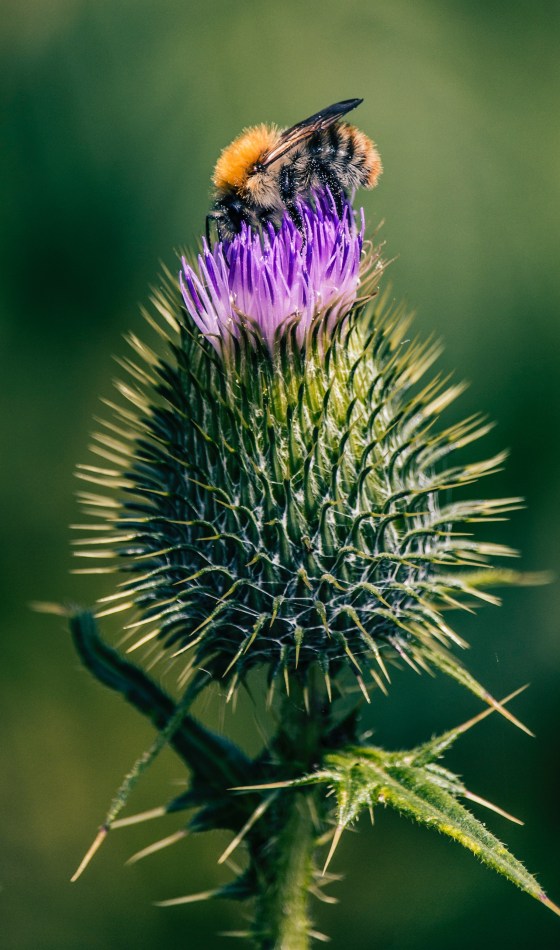
 Flowers court bees. They doll themselves up in pretty petals with attractive, noticeable shapes. They produce a cloud of tantalizing perfume, and they make alluring nectar to serve. In addition, they send out an electrical field to attract bees. Bees can discern from that field the distinctive shape of blooms, and whether other bees have recently called on that plant.

As soon as the bee leaves the flower and heads for home, she starts to manufacture honey that will nourish the colony through winter. (What did the bee say to the flower? “Hello, Honey.”)   

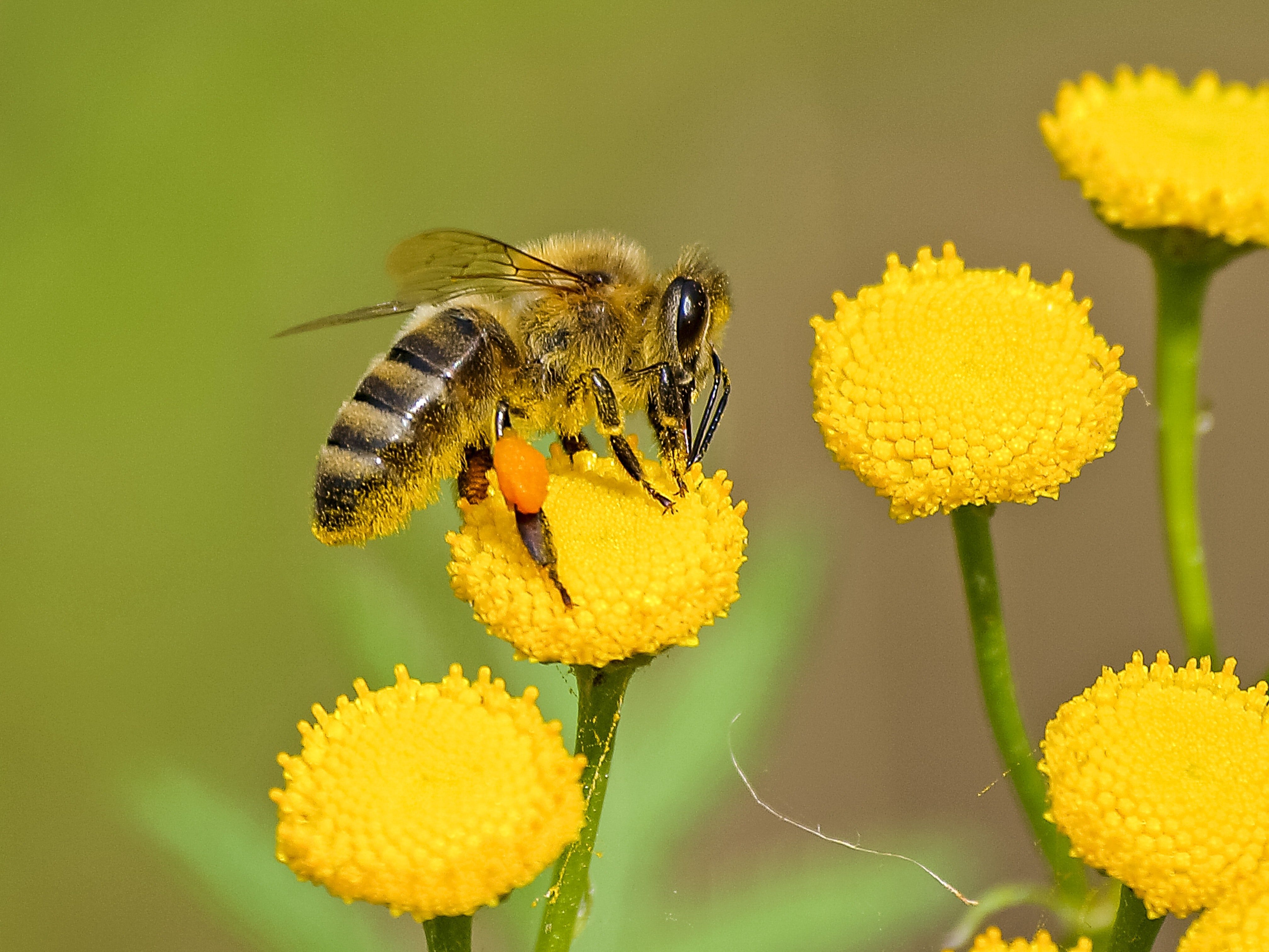
What does the bee gain from the relationship? Tiny grains of pollen attach themselves to the bee’s hairy body, and the bee carries the pollen to the flower of another plant. The pollen fertilizes the plant and allows it to develop seeds and produce fruit. (What did the seed say to the flower? “Okay Bloomer.”)

Wind can carry pollen, but bees and other pollinators do a much more efficient job and ensure a new generation of plants and crops. Many plants wouldn’t be able to reproduce without bees.  

A warming planet and crazy weather alter things for bee/flower affairs. Flowers may bloom before bees come out of their hives. So, the flowers go unpollinated. When the bees come out, they find that blooms have come and gone. Bees are deprived of their usual nutrition sources.    

Or spring storms may delay flowers from blooming, or kill blooms, and hungry, emerging bees won’t find adequate food.

 Disturbances in the synchrony between flowering plants and their pollinators have always occurred, but plant scientists see them happening more frequently now. Warming has confused species, and that concerns scientists.  

Lisa’s aunt had nailed it. “When it comes to love, timing is everything.”
bees, pollinators, beekeeping, environment · nature

Little Brains. Big Feats.

Photo by Meggyn Pomerleau

When I peer into a bee hive, it awakens me to something. That I don’t make the most of my large, three-pound brain. The bee boasts a brain the size of a poppy seed, and look what she does with it.   

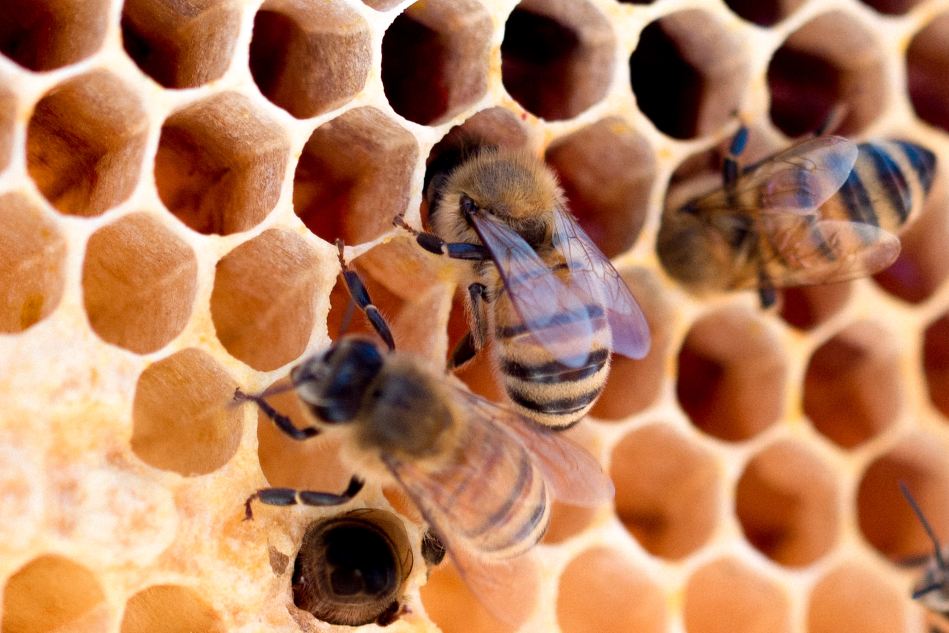
She designs and builds. The hexagon shape she chooses for making comb where she will raise brood and store honey maximizes available space. The hexagon distributes stress across its structure, and is considered the strongest shape.

Bees who build their own comb in trees or in top bar hives construct them in a catenary shape—a   curve supported on either end, a design that has fascinated engineers, architects, and even Thomas Jefferson.  

She navigates. Receptors make the bee sensitive to scent, so she can find flowers and her way home. Researchers found she also senses the electromagnetic field around flowers. Scientists found that bees appear to observe landmarks as they fly, and remember them to find their way back.

She communicates. When a forager bee finds a good source of food, she returns to the hive and performs the waggle dance. The dance tells the others where the food is, and conveys its quality and quantity. If a dancing bee observes another forager telling about a flower patch, and if her grove is better, she dances faster to draw attention away from the other bee.

She cooperates. In the hive, the worker bees divide labor. Some clean the hive, some groom returning foragers and unload pollen, some work in the nursery, some lay down wax, some patch  leaks against drafts, some act as guards, some scout for new locations to live, some feed and groom the queen so egg-laying can proceed with maximum efficiency. 

A lot of research goes into bees these days, because bees are in trouble and they’re so important. Interesting findings have come from this. One study found that bees can count. A recent study showed that bumble bees will play games with balls. During Covid, a study showed bees could efficiently detect Covid, and earlier research had shown that bees detect cancer cells earlier than dogs can.

Other species keep surprising us humans. We believed we were the only species that used tools, until we observed birds, monkeys, rodents and insects doing the same. We thought only humans had language, until we found that whales, dolphins, birds, frogs and others convey complex information to each other. Now we know that trees and sagebrush send messages to their communities.

We remained smug about one thing—we alone were self-conscious. Then one morning, Koko, the gorilla who had been taught sign language, announced, “Koko damn fine gorilla.” (Her last message to humans was, “Help Earth. Hurry!”)

I heard a children’s author say that linguists who studied hundreds of indigenous languages found that before colonization, 70 percent of those tongues didn’t have a word for “human being.” Indigenous people didn’t see themselves as separate from other miraculous beings who shared Creation.

Our incredible minds and intricate bodies deserve to be celebrated. We can feel proud of the ingenuity and goodness humans often show. We can agree with the psalmist who said, “What is mankind that you are mindful of them? . . .You have made them a little lower than the angels.”

But when I peer into a hive, this idea comes to me. I think that I shall never see a creature smarter than a bee. 

bees, pollinators, beekeeping, environment · nature

Importing a Bee Strategy

Sneem, Ireland, a town that restored its bee population, had put ideas in my head.

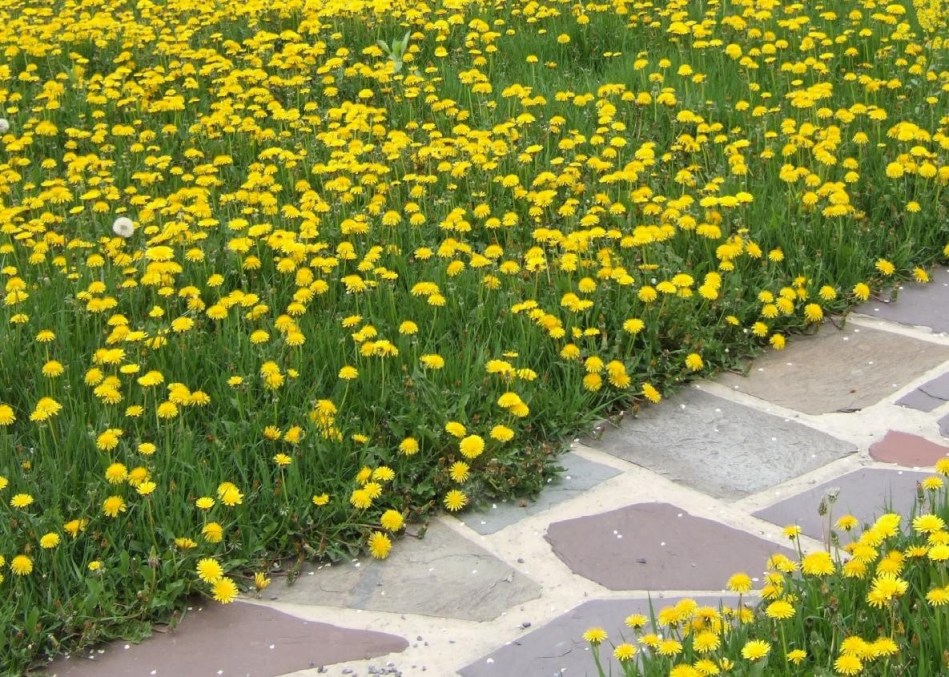
The town had followed a three-prong approach to reviving bees. Residents agreed to 1) not use chemicals on their vegetable or flower gardens, 2) plant a variety of flowers for bee health, and 3) allow dandelions to thrive.

When I got home from Ireland, I talked about Sneem and its bee restoration. Several people expressed remorse about the chemicals they use in their yards. “I know they’re bad,” a friend said, “but we’ve fallen into a habit.” Most folks said they’d be happy to plant flowers that pollinators love. But when it came to the dandelion part of Sneem’s plan, noses wrinkled or, in some cases, people laughed. “How would my neighbors like that?” Antipathy for dandelions ran as deep as dandelion taproots.      

I wrote a letter to the editor of our paper, telling about Sneem’s success. A man sent me an article about the advantages of dandelions, not only to pollinators, but also to lawns. Their long roots help loosen compacted soil, and they put nitrogen into the ground.  

They are entirely edible. People make tea from dandelion roots, and put stems and blooms, which provide Vits A, C and K, and some calcium, into salads. Some people believe eating dandelions helps fight inflammation in the body.

Allowing dandelions in public spaces would be a good place to start, I thought. If dandelions could flourish at the courthouse, in sections of parks, at the library, and along roadways, people could get used to them.

Churches aim to be stewards of the planet—I’d begin there. If one or two churches sanctioned yellow puffs on their lawns, the practice might spread. I wrote a letter to my church’s vestry (governing body) asking them to not mow the dandelions in our church lawn, at least in the springtime. I didn’t hear back. “Of course you didn’t,” a friend said.    

I never heard how the discussion about dandelions went, but good did come of the letter. A month later, a vestry member told me the church had decided to plant a bee garden on a strip of ground beside the church. Next thing, a teen, Xavier Jones, took on the garden as an Eagle Scout project. Xavier studied what flowers bees love, and his troop put in a sprinkler system and planted flowers that would bloom in succession. As soon as flowers were set in the ground, bees showed up, some of them wild varieties.

A senior citizen church member, a flower gardener, dedicated a section of her yard to dandelions.

I live in the country, far from HOAs and rules that restrain me from doing what I want with my yard. For the past years, I haven’t mowed areas where dandelions grow in abundance.  I’ve removed large areas of grass and replaced it with flowers. On the rest of the large lawn, I’ve kept the mower blade high so it wouldn’t lop off dandelion blooms.

This year I will observe No Mow May. The practice started in the UK in 2019 to benefit pollinators. Their bee numbers soared. The next year, Appleton, Wisconsin, adopted the program. Researchers reported a three-fold increase in bee diversity and a five-fold increase in the number of bees in no-mow yards.

The month can occur anytime, adjusting for local weather—when daytime temperatures are in the 60s and nighttime temps range from freezing to the mid-40s. Lawns look somewhat rough following the first mowing after No Mow, but landscapers say the grass comes back healthier.

No Mow May might catch on with the public. In many regions, lawns already face cutbacks. The owner of a local nursery told me water shortages mean landscaping must change in the future.  

Maybe dandelions will yet gain a bigger share of yards. Maybe the dream of Sneem will take hold—far, far from Ireland.

bees, pollinators, beekeeping, environment · nature

Sneem (Ireland) Had a Dream

The green landscape of central Ireland sped past our train window. Meadow grasses sneaked under stone walls and marched up hillsides to turn them emerald. Flowers of every shape and color danced with the breeze.

Snow still covered my yard in Idaho, and my son Matt and his family had escaped cold temperatures in Montreal. My daughter Mary, who lives in Utah, had flowers in her yard, “but nothing like this.”

Something troubled me. In walks with Mary and my daughter-in-law, Marta, we stopped often to sniff and admire vibrant flowers that spilled over tall fences, bordered sidewalks, bloomed in square plots, or hung from trees. But no sound came from the flower groves. My companions heard a steady plaint from me, “Where are the bees?”

Across the train aisle, my young grandchildren, Kora and Fausto, sat at a table and interviewed a friendly Irish couple who told them where to find leprechauns, and the best way to capture them. The woman, Jane, assured them leprechauns were “all over the place.”

When a lull in the conversation came, I asked Jane, “Where are the bees?”     

She shook her head. “They’re in great distress. All over the EU, bees are disappearing. It breaks my heart.”

During the next days, as we toured the Ring of Kerry and visited small villages, picnicked beside the ocean, or took walks near the house we’d rented, the situation repeated. Beautiful flowers grew everywhere. No bees sat on them.   

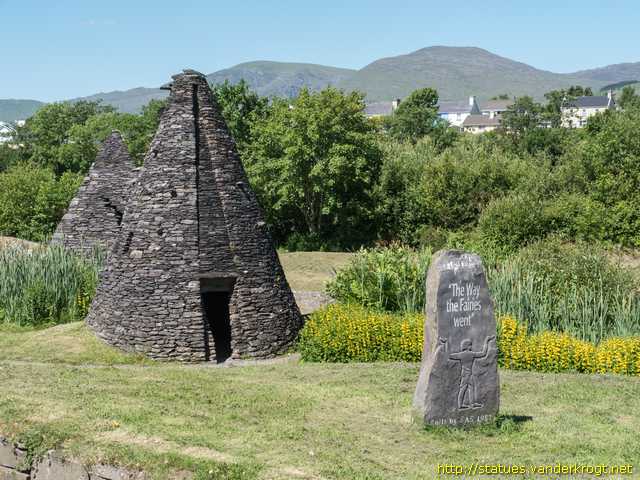
One day we happened onto the village of Sneem. The main street had a large pink building, next to a large yellow one, next to a large orange one. A beautiful rock bridge sat atop the river. A trail, The Way the Fairies Went, offered large rock sculptures and wound through woods.   

 I stood on the stone bridge and gazed down at the river. Matt called. “Hey! Come see this.” He led me to a plaque tacked to a stone building. The plaque said the government of Ireland had recognized Sneem for restoring its bees. And told how the town did it.

Sneem had enacted three reforms. Residents agreed to 1) not use chemicals on their vegetable or flower gardens, 2) plant a variety of flowers (bees need diversity in their diet), and 3) allow dandelions to thrive.

Dandelions appear early in spring as bees are emerging, and supply bees with nourishment, and a medicine unique to that plant.  

Instead of the green lawns we insist on in the U.S., in Sneem, cheerful yellow dandelions bloomed elbow-to-elbow in small, attractive yards. Different, and pretty.     

As we walked the path of The Way the Fairies Went, I heard the familiar buzz of bees I had missed. Small fairy houses, nicely furnished, had been tucked among the trees. When we peeked inside, no fairy residents were at home, but in one, a large bee had flown through the entrance and sat atop a wee kitchen table, taking a rest.  

Sneem had a dream. The town wanted to bring its bees back. It came up with a plan, and citizens got on board. I suppose some opposed it, because we humans resist change. But Sneem succeeded.

Now its paths, winding among stone sculptures and fairy houses, boasted the friendly hum of bees.   

I came home with a dream of my own. If Sneem could do it, so could small communities near me.   

Next time:  A Dream Bumps into Obstacles   

bees, pollinators, beekeeping, environment · nature

T-Rex and a Pesky Bee

/

It’s a warm, Cretaceous afternoon when a T-Rex lumbers into view, giant head swaying, throat rumbling. His great, pointed teeth gleam.

He shakes his head. A bee has landed on the despot’s neck, but T-Rex’s tiny arms can’t reach to slap it. Recent theory says dinosaurs may have been bright enough to use tools, but the flyswatter won’t appear for millions of years, and even if T-Rex puzzles out that he could use a branch for swatting, puny arms still limit his reach. The aggravated T-Rex can’t get rid of the bee.   

Did bees and dinosaurs really live at the same time? Do bees go back that far? Yes. Bees lived alongside T-Rex. Bees and various species of dinosaurs co-existed through several geological eras. Fossilized bees from 100 million years ago have been found, but scientists believe bees appeared on the planet 130-150 million years ago.  

Bees and flowering plants evolved together. The world had drab, colorless plants for a long time. For reproduction, the plants relied on the wind to carry their pollen. Most of the pollen fell on the ground, far from the female parts of plants where it was needed, or the pollen blew out to sea. Plants needed a more efficient way to multiply.      

Insects started visiting plants to feed on nutritious pollen. When they carried it to other plants, that helped the plants propagate. To attract insects, plants started dressing themselves in bright colors and molding themselves into distinctive, attention-getting shapes, to stand out from the surrounding green vegetation.  

 Bees, who had descended from wasps, changed too, in ways that helped plants. They evolved hairy bodies that pollen would stick to. After a time, the plants upped their game and began offering sweet nectar to insect guests. Bees, flies and butterflies developed modifications to their mouths that helped them suck up nectar.  

Bees began to feed the food they gathered to their larva. Bees started to form colonies to raise the young. Scientists think some bees started living in social groups about 80 million years ago. Most species of bees, then and now, remained solitary.

Why didn’t bees get wiped out when the dinosaurs did? Small creatures did better than large ones when conditions on the planet changed. When the planet became hospitable again, insects made a strong comeback.

Social insects like the bee are highly evolved and carry out all kinds of complex tasks. Bees communicate in ways that fascinate the humans who watch and study them. The bees construct nests using sound, architectural principles. They succeed in keeping the hive at a constant temperature, no matter what the outside weather is doing. They have a keen understanding of which flowers supply the best nourishment. They navigate their way back to the hive as human pilots do, memorizing landmarks. They tolerate no messes in the hive. They bravely defend their homes against large adversaries. They thrive together by having an effective division of labor.  

We feel awe when we watch how ably a colony cooperates, and wonder why we, with our oversized brains, don’t practice teamwork nearly as well.   

It’s probably a lame excuse, but we can point out that bees have had more time to learn.  

bees, pollinators, beekeeping, environment · nature

Emily Dickinson’s Bee

Emily Dickinson wrote:

To make a prairie it takes a clover and one bee,
One clover, and a bee.
And revery.
The revery alone will do,
If bees are few.

I loved this poem from the first time I saw it, long before I had a direct connection with bees. Dickinson suggests that revery—daydreaming and musing—plays an important role in achieving an end. Losing oneself in woolgathering isn’t time wasted; dreaming may be as important to producing a prairie as the seeds blown in on the wind, the sunshine, water, and pollinators coming to assist.

Books on the power of thought sell in the bezillions. Someone said, “Thoughts are things.” Self-help gurus and philosophers insist that beautiful thoughts precede beautiful creations.

I like that. Lost in thought, I blunder into furniture and walk against the light at intersections. Dickinson implies that may not be all bad. Yet, I can’t read her poem as romantically as I once did. At the time she wrote it, bees flourished. Her words, “if bees are few” were whimsy, and the phrase rhymed.  

In 19th Century agrarian America, many households kept hives and enjoyed fresh honey. As the century ended, the bee’s role in pollination became more widely understood. People who walked rural pathways came across humming fields of flowers and fruit tree orchards. Many of the bees were wild—the U.S. has thousands of native species.

You may notice when the topic of bees comes up, many adults mention that their grandparents kept bees. The Department of Agriculture says the number of bees in managed colonies dropped from 6 million in 1947, to 2.5 million today. A disturbing figure from the National Resources Defense Council says losses in managed colonies hit 45 percent in 2022.

Colony collapse disorder, which got a lot of press, seems to be abating, but the varroa mite remains an enemy to bee colonies. Loss of habitat, loss of variety of food sources (some garden flowers are unusable to bees), the family of chemicals known as neonics (banned in the EU and other countries, but permitted here), contribute to the losses. Growers who rely on pollinators face trouble. For the first time, the USDA reported that summer losses exceeded winter losses, and no one knows why.

Many groups are studying the problem. Backyard beekeepers continue to buy new bees to replace ones lost, which helps the bee population. Since beekeepers started noticing higher losses in the early 2000s, agricultural agencies, researchers, and the beekeeping industry have been working together to understand the decline and figure out how to stop it.   

With all my heart, I believe we can revive the bee population. We have to plant a variety of flowers that pollinators can use. We need continued research, a ban on bee-killing chemicals, and advocacy from people who love and admire bees. Revery alone won’t do. 

But I ain’t sayin’ it can’t play a role.   

bees, pollinators, beekeeping, environment · nature

Monarchy vs. Momarchy

You have heard about the queen bee. How she presides over the hive. Attendants wait on her, antenna and foot. They groom her, feed her, warm her, and protect her from danger and drafts. She takes a risky mating flight once in her lifetime, and after that leads a sheltered life where subjects scramble to pamper her.

This story bears no resemblance to the determined existence a queen actually lives. She lays a thousand eggs a day—up to 2,000 during the busy spring season. Before she deposits an egg, she inspects the cell to make sure it is clean. She drops an egg, and moves on to the next, the next, and the next.

The queen enjoys one privilege. From the very first, and throughout her life, she dines on royal jelly, a high-protein substance manufactured by worker bees. She requires good nutrition to keep up her pace. 

Potential queens face challenges, sometimes even before they are born. A rival young queen may sting others before they emerge. The winning young queen may have to deal with a reigning queen.

On her maiden flight, the virgin queen seeks a cloud of drones, and mates with some of them. She may encounter danger—predators or bad weather. When she returns to the hive, she holds up to six million sperm within her, and the relentless egg-laying begins. 

Beekeepers hold that the disposition of the queen determines the disposition of the hive. Easy-going workers reflect a queen’s laid-back temperament. Nasty bees with aggressive tendencies mirror their queen’s personality. Usually, one queen reigns, but beekeepers sometimes find a hive where two queens peacefully co-exist.  

Hive life, admirable in so many ways, has a few harsh aspects. The fate of queens who lose their mojo is one. Worker bees dethrone her. The queen meets the same end as Shakespeare’s royals—she is murdered. The beekeeper may be the one to make that call. No cushy retirement for an individual who spent her life laboring hard for the hive.

Queens normally live one or two years, but can live to age five, and one study found a queen who was eight. Worker bees spread the queen’s pheromones in the hive, assuring that the hive knows the queen is active and well. Pheromone production goes down in older queens. Many beekeepers replace their queens after a year or two, but some beekeepers let the bees decide whether they need a new queen. 

In a cold climate like ours, summer is short and most beekeepers don’t want to lose 16 days, the time it takes for the hive to raise a new queen. Yet, finding a replacement queen may take a few days, and introducing the new queen to the hive a few days more. Older bees may reject the new queen, or a new queen may bring problems of her own. Advocates of natural beekeeping believe bees are better at managing themselves than we are.     

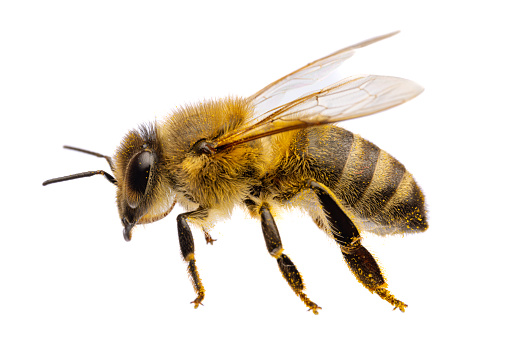
The queen bee has greater size than workers and drones. She has a long, slender abdomen and a smooth, reusable stinger, unlike the barbed ones of worker bees, and she has a shiny back, different from the fuzzy workers. 

But despite her distinctive characteristics and her importance, I don’t think of her as royalty. I live in a country that rejected monarchy, and that may be part of it. More than that, I regard the large beautiful bee who knocks herself out to ensure the hive’s future as The Mother.

bees, pollinators, beekeeping, environment · nature

The Terribly Tidy Bee

The media reported that Marie Kondo, the queen of clean, has given up on keeping things in order. After her third child was born, she said she had to surrender her perfectionism. 

She had pointed the way for the rest of us. Two years ago, when Kondo’s book was the rage, every item in my house, whether in the kitchen pantry, or bedroom dresser, or on a utility room shelf, had to pass a test. Was it useful? And did its presence spark joy for me? If not, it had to go. For a few months, orderliness prevailed in my life, and I could find things. 

With Kondo no longer a role model, where do we find an example of tidiness? We look to bees.

Bees insist on cleanliness and order. Propolis, which bees use to seal cracks against drafts, has antibacterial properties. In the hive, some bees act as janitors, ridding the hive of clutter, some work as undertakers, getting rid of dead bees, some become groomers, cleaning up other bees. 

A master beekeeper who taught a class I took told this story. In spring, he was inspecting his hives, and saw that a mouse had invaded one. The bees had stung it to death, and tried to get it to the entrance, but the rodent was too large. The fastidious bees found a solution. They coated the mouse in wax. The beekeeper picked up, by its tail, a perfect wax-sculpture mouse.   

Bees won’t poop in their hives. In a cold climate like mine, bees go a long time—months—without elimination. 

When speaking to first and second-graders, I anticipate that at the end of my talk, little hands will shoot up and incredulous children will ask, “Bees don’t poop?!” 

If a warm day comes in winter, bees take a cleansing flight to relieve themselves. A few Christmases ago, when my kids were visiting, a warm day lured the bees out for a cleansing flight. We saw dozens of them buzzing around. Some sat on the warm hood of the car. But next day, we found many dead bees. The temperature probably wasn’t warm enough for them to make it back to the hive—it needs to be about 55 F. for bees to fly.

A few years ago, our winter lasted on and on. When it began to warm, nervous beekeepers posted pictures on beekeeping sites. The exterior of their hives looked yucky. Were the bees sick, their keepers wondered. Veteran beekeepers assured less experienced folks. The bees had waited so long for a cleansing flight that it now created a mess. Little kids would have loved those photos. “Ee-yew!”  

Bees set a good example of recycling and reusing, too. When I first got back into beekeeping, a beekeeper from my area helped me do an inspection. She scraped away pieces of burr comb—wax that bees deposit on the outside of frames. “Don’t throw it away,” she said. “Leave it here, on this stump. They reuse everything.” The burr comb was gone the next day. (People also use it, to make candles.) One man in a beekeeping group said he’d put a jar of home-canned sweet pickles, soon to expire, out for the bees, and the bees cleaned it up. 

I don’t suppose I will ever attain the order in my home that bees achieve in theirs. But I get to peer into those tidy hives now and then, and the order and cleanliness I see there sparks joy in me.

bees, pollinators, beekeeping, environment · nature

If we’re to love bees. . .

If we’re to love bees, we first need to trust them. For that, we need to grasp something.  Bees don’t want to sting us. 

I give talks on bees at elementary schools, and sometimes begin by asking, “Who here is afraid of bees?” Few kids raise their hands. 

But as the hour progresses, I hear something different. A fourth-grade girl, looking at a photo of bees clustered on a comb, said, “When I look at this picture, it makes me want to throw up.” A boy whispered to me that if he had a laser gun, he’d use it on the bees that come into his yard. “I’d get them before they could get me.” 

Despite nature programs and books that convey how necessary and industrious bees are, many kids and some adults aren’t sorry to see fewer of this once-abundant species.  

Bees commonly get a bad rap. Do they sting? Yes. Do they get blamed for stings they don’t inflict? Often. 

A hiking friend and I stopped to rest on a boulder. An insect landed on my friend’s hand. She did the exact right thing. Remained still and calm. The insect stung her, she yelped, and her hand began to swell. She recognized the insect as a yellow jacket. Yellow jackets can sting without provocation. But many people would have presumed the offending insect was a bee. 

My daughter, a rafting guide, told of a guest who bit into a sandwich and got stung. His face swelled, and he cussed bees. Some of the guides referred to the annoying insects as “meat bees,” while understanding they weren’t actually bees, but carnivorous wasps. If an insect goes after the ham on your sandwich, it’s likely a wasp. 

Wasps, hornets, and yellow jackets can be aggressive and can sting more than once. Bees are workaholics, focused on their jobs. Forager bees, and the hive they belong to, make the most of summer, to prepare for winter.

A bee dies if she stings a human. A bee may investigate a person, particularly a fragrant one, but when she finds no food prospect, flies off to find blossoms. 

I have a large raspberry patch. As I collect berries, bees walk over my hands en route to a tasty bud. They have no time to waste picking a fight with a big, clumsy human. 

When do they sting? When someone tries to mess with the hive’s food. As winter approaches, bees get touchy about protecting their honey. Who of us wouldn’t stab our fork into the hand of someone, especially a relative, who tried to take food off our plate? 

If you sit or step on a bee, it will use its last breath to drive a stinger into your foot or rump. Frantic swatting can lead a bee to believe she is in danger. In the U.S. and many other countries, self-defense is a legitimate plea for leniency.  

Precautions can help us avoid encounters with bees. Don’t go barefoot in the clover. Don’t wear pastel or vivid colors when hiking or visiting places with abundant flowers. Wear tan and bland colors, or white. Skip scented soaps, deodorant, and hair conditioners. 

Next time. Tales of bee gentleness 

bees, pollinators, beekeeping, environment · nature

Giving Credit Where It’s Due

People love to recount bee-sting tales. But we seldom tell stories about the times when bees showed restraint. We should.  

When I first raised bees 25 years ago, life wasn’t as tough for them as it is now. We placed a hive at the bottom of our sheep pasture, fairly convenient to water troughs, and let them go about their lives without much interference from us. Sometimes guests wanted to visit the hive. One, a woman from Japan, stood on a rock to get a better look and lowered her head to watch the bees go in and out. “Oooooh,” she said with delight. I told her bees get nervous when someone blocks the entrance, but she was enjoying herself too much to move.  

When the bees tired of her close inspection, they started buzzing around her head. She watched them, smiling, and didn’t try to shoo them. I persuaded her to return to the house with me. 

Once, a neighbor was doing our chores for us while we were away. With two buckets of grain in her hands, she looked up and saw a large, dark basketball heading toward her. It made a loud humming sound. She dropped the buckets and ran for the house. 

Our bees had swarmed. The basketball zoomed into our garage and settled onto the rafters. By the time we returned home, the bees had firmly attached themselves, and an experienced beekeeper told us it was too late to move them. 

Every morning, I encountered bees as I carried hay to our horses. My path apparently intersected with a beeline, because I’d walk through a cloud of them. At first, I felt nervous, but with full hands, couldn’t wave them off. After a few days, walking through a mob of bees became routine. They had their work, and I had mine. 

  We hosted 4-H livestock club meetings at our house. Most of the girls chose not to use the garage entrance. The boys, especially younger ones, liked to stand and gaze at the rafters and listen to the buzzing. “Cool,” they said.

During that summer, not one of us got stung. Honey dripped onto our car, but that was the lone inconvenience. When my husband took the bees down in the fall, he got several stings, but he hadn’t zipped his bee suit all the way up, and angry bees saw an opening. 

In our climate, bees come out in late spring, eager to get started. They search my neighbors’ yards for blooms. They sit on damp clothes hanging on my clothesline. 

Two years ago, I came home with a Great Pyrenees puppy who had been car sick on the trip and thrown up all over herself. My neighbor’s child, Kelly, then 5, asked if she could help bathe her. 

I had just filled a tub with warm water when a small hand touched my back. “Can you help me?” I turned around. A bee was crawling on Kelly’s face. Kelly held perfectly still, as her mother had taught her. 

I could do nothing. If I tried to wave away the bee, it might sting Kelly’s tender cheek. The bee explored at its leisure, walking this way and that. I watched in horror as the bee headed upwards, toward Kelly’s eye. Did bees drink from eyes, like fleas? “You’re doing it just right,” I said, but I worried. Kelly remained a statue. The bee stopped right before it reached her eye, and flew away. Bravery had worked. 

A beekeeper who hosts school visits told me he had warned kindergarten guests not to stand in front of the hive entrance because it makes the guard bees nervous. When he turned his back, a little boy had put his arm into the entrance. “They won’t sting me,” the boy bragged. 

The man said, quietly, “Take your arm out, slowly.” The boy did. He didn’t get stung. 

Some races of bees are more laid back than others. Recent interest in Russian bees has spread because they are supposed to resist disease better. I’ve talked with people who raise them, and they use their smokers more than they used to. But they aren’t getting more stings.  

I raise Carniolans, who originated in Eastern Europe. They are docile. I haven’t used my smoker in years. Beekeepers from the area they come from don’t wear protective clothing.  

The county agent in my region, a second-generation beekeeper, believes it’s good for beekeepers to get a certain number of stings every year to build immunity. I’ve watched the man work bees, and he scarcely takes note of a sting. I trust he knows what he’s talking about, but I still try to avoid stings. 

For a certain percentage of the population, a bee sting is serious, and we need to keep that in mind. But we have a tendency to amplify stories where someone gets stung, and not talk at all about the many times when bees ignore us.