bee health · beekeeping · bees, pollinators, beekeeping, environment · natural cures · nature

Bees Health around the Globe. Ukraine.

We in the states wring our hands over problems facing bees. A high death rate for colonies. Varroa mite invasion. Wild fires. Loss of habitat and flowers. The EPA dragging its feet in banning chemicals that kill bees and threaten human health.

These are legitimate concerns. But consider the unfortunate Ukrainian beekeepers and what they face. The Russian invasion threatens a proud industry.  

At the start of the invasion, Ukraine was the largest European honey producer and the second largest producer in the world. Ukraine produced a bit more honey than the US, partly because along with a thriving commercial industry, many people keep bees and regard them almost like pets.

 The EU favors Ukrainian honey because of its quality. Producers lean organic or have achieved that already. In 2020, Ukraine exported 81,000 tons of honey. About 220,000 beekeepers were registered with the government, but a fraternal organization of beekeepers estimates that real numbers are twice that.  

War has savaged the industry. Honey bee research came to an end. Beekeepers had to flee their homes and abandon their hives. With no one to tend the colonies, disease and the lethal varroa mite parasite go unchecked.

Bombing and skirmishes have destroyed plants and flowers. Russian soldiers set homes ablaze, and some beekeepers have no home to return to. Other beekeepers are cut off from their bee yards.

Exporting honey and other crops became more difficult. Sunflowers, a major crop for Ukraine and a mainstay for bees, have been destroyed in some areas. Growers are hesitant to replant because Russian vehicles can hide in sunflower fields. Farmers may choose to plant rapeseed and buckwheat instead, but that is a difficult choice, because grain growers have been badly hurt, and they might prefer to plant sunflowers that bring in more money than wheat and barley.

Bees that survive have difficulty foraging for food in the ravaged countryside, which impacts the country’s long-term food security and economy.

Trapped in this horrific struggle to remain sovereign, brave Ukrainians dare to look ahead, and hope.  

One beekeeper organized honey sales, with profits going to the military to buy bullets for soldiers. “We will take care of our business afterwards,” he said.

A man who owned a thriving commercial honey business lost everything in a bombing. He turned his efforts to volunteering, and started a program to educate injured combat veterans so they will have a profession to turn to after the war, and a way to support their families. He believes the program contributes to the soldiers’ psychological rehabilitation.    

Beekeepers in areas not impacted by war are reaching out to help beekeepers in war-torn regions. One woman said, “We live in turbulent times that have a definitive bitter taste. All the more need for the sweet taste of honey.”

A google search turns up organizations that help Ukrainian beekeepers. Some have paired with Ukrainian beekeeping organizations to supply replacement bees, bee pollen, sugar for supplemental feeding, cleaning supplies, and vaccines.

Charity Navigator rates organizations for their effectiveness and legitimacy.   
bee health · beekeeping · bees, pollinators, beekeeping, environment · natural cures · nature · Uncategorized

Bee Health around the Globe-Australia

Photo by Amy Blizzard

Bee Health around the Globe. Australia

Australia’s honey producers have something to celebrate and something to mourn.

Australian honey has a reputation for good flavor and purity, and the country is one of the top ten honey producers in the world. Honeybees in Australia live amid an abundance of natural resources in a comparatively pollution-free environment. Bees have a variety of plants to visit, and the climate is mostly favorable.  

The country’s commercial industry mostly operates as nomadic. Hives are moved up to 20 times in a year, either for pollination contracts or for honey production. Beekeepers follow the budding and flowering of plants.

Australia’s native bees are small and stingless. For honey production, beekeepers depend on Asian and European honeybees.   

Australia was the last major country to remain free of the varroa mite, a parasite that has brought calamity to beekeepers around the world. But in 2022, the mite was found in Australian hives.

A government agency jumped into action to keep the mite from spreading. But only two years later, the agency said the mite can’t be eradicated, and shifted its emphasis to trying to contain the parasite. This is the goal in the U.S. also. Beekeepers try to control the spread and lessen the mite’s impact. 

Australia produces a variety of honey on its huge land, with flavors influenced by the local flora. Well-known honeys include:

• Manuka, known for its medicinal properties, produced from the nectar of the Leptospermum (tea trees).  

• Leatherwood, unique to Tasmania, known for its distinctive spicy flavor and aromatic properties.

• Jarrah and Karri, from Western Australia, known for high antimicrobial activity and thick consistency.

• Eucalyptus, with a slightly herbal flavor, harvested from the numerous eucalyptus species across Australia.

The arrival of the destructive varroa mite has been bad news, but the honey industry recently got some good news, too.  Seven years of research on Manuka honey validated its reputation as an antibacterial product. The research confirmed that Australian honey had medicinal properties similar to New Zealand’s well-known manuka honey.

This is a potential boon for the Australian industry. Medical-grade honey sourced from New Zealand earns that country an estimated $75 million a year.

Medical-grade honey has been proven to be an effective treatment for wounds and skin infections. Studies show it can kill superbugs that have built immunity to conventional antibiotics. The honey can be used to treat bacterial infections like C-diff.

“We had assumed that the unique antibacterial activity found in manuka honey is more active and stable than that of other varieties,” a researcher said. “Now, our research confirms this belief and goes a step further. We proved that Australia’s Manuka honey is just as effective, if not better, than New Zealand varieties, based on a survey of 80 Manuka-type Australian honeys.”

Beekeepers believe the research puts Australian Manuka honey on the international radar at a time when antibiotic resistance has been recognized as a global crisis.

bee health · beekeeping · bees, pollinators, beekeeping, environment · natural cures · nature

Bee Health Around the Globe. China

In China, people revere bees as symbols of good luck and prosperity. Bees appear in art and on clothing.

China still leads the world in honey production, and has more than eight million managed colonies. Plus, the country boasts an enviable diversity of managed and wild honeybee species.

But in some rural parts of China, bees have disappeared. Uncontrolled use of pesticides since the 1980s has wiped them out.   

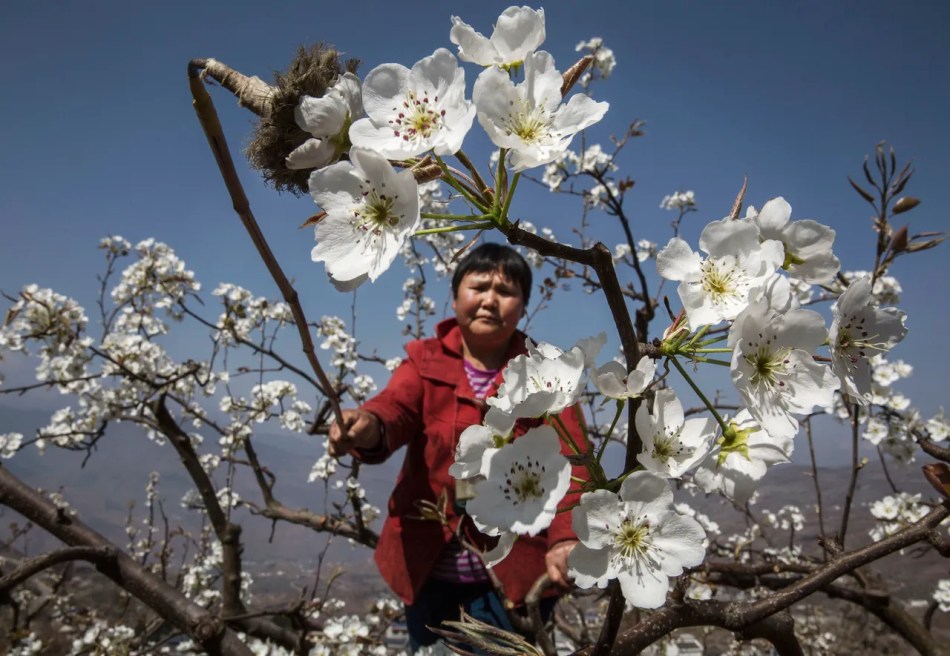
In Southern Szechuan Province, where pear orchards carpet hillsides and produce fruit for the entire country, no bees showed up to pollinate trees in 2013. Farmers reported this to the government. Beijing insisted that the farmers pollinate the crops by hand.

Today, humans do the work bees once did, and it is a laborious undertaking. A worker painstakingly collects pollen and sets it to dry for two days. Then, using a stick of bamboo and chicken feathers to imitate the body of a bee, the worker touches a blossom. A person can pollinate 30 or fewer trees in a day, whereas a hive of bees can pollinate up to three million flowers in that same time.

It isn’t just pear farmers who have learned to hand-pollinate. Apple, cherry, and other fruit growers also use people to pollinate. Farmers have proven adept at doing the work of bees, hard as it is, but some predict this may not be sustainable. As China makes economic strides, young people move to the cities. Some predict that in 10 to 20 years, farmers may not be able to find laborers to hand-pollinate crops.   

Asian bees have coevolved with the varroa mite, the parasite that has proved so destructive to bees in the U.S. and Europe, and have adjusted to it. But other diseases have jumped national borders and threaten Asian colonies. With its unparalleled diversity of managed and wild honeybee species, a further decline of bees in China would be felt globally.

China continues to use pesticides in large amounts. Farmers are told to restrict pesticide use when crops are blossoming, but some beekeepers find they must move their hives to the forests to try to shield them from heavy spraying.

Gloomy predictions say that once bees have been wiped out in an area, repopulation is unlikely.

Better to cherish and save colonies before that occurs.   

bee health · beekeeping · bees, pollinators, beekeeping, environment · natural cures · nature

Checking in on Bee Health

Photo by Amy Blizzard

How are bees doing? What is the latest word on apian well-beeing?

Most of us understand that the bees we depend on to pollinate our crops are floundering. But are things getting better, or worse?   

Pollinator advocates say a recent decision by the Environmental Protection Agency (EPA) spells bad news for bees. The EPA postponed its review of neonics, a family of widely-used, bee-killing pesticides. The agency will not issue a report on neonics until 2026, and the pesticide’s extensive use will continue unrestricted.

Bee lovers fear that colonies cannot wait two years for relief. The precipitous decline in the U.S. bee population continues. Honeybee colonies have died off at an average annual rate of 40 percent over the last decade, and studies conclude that neonics play a major role.   

Bee defenders say the EPA should also consider the health of humans and other species. In the Midwest, neonics are the number one cause of butterfly decline. In humans, research shows that neonics pass from pregnant mothers to the fetus, and into the breast milk of nursing mothers. Studies link neonics to increased risk of birth defects, like malformations in developing hearts and brains.

Even an analysis by the EPA itself concluded that neonics jeopardize the existence of more than 200 threatened and endangered species. Canada, the European Union, and other countries in the world have already put strong restrictions on the pesticides.

In the face of convincing research, why does EPA drag its feet? Critics point to the influence of Big-Ag. Bayer and other agrochemical producers have launched extensive PR and lobbying campaigns. They warn that restricting neonics will harm crop production, but experience has shown otherwise.

In Quebec, Canada, a 2019 crackdown on neonics made farmers reduce their use of neonic-treated corn seed by 99.5 percent. Four years later, crop yield remained consistent. Cornell University found that neonic-treated seed for major crops provided “no overall net income benefit” to farmers.

A single neonic-treated seed can contain enough active ingredients to kill a quarter-million bees. DDT, which the U.S. banned, looks tame compared to neonics. Neonics are 5,000 to 10,000 times more toxic to bees.

The crop absorbs only a fraction of the neonics. The rest leaches into the environment to contaminate soil, rivers and streams, and even drinking water.

Persons who want to complain to the EPA about its decision can sign a National Resource Defense Council (NRDC) petition found online. Other environmental groups may be circulating petitions, too.   

Next time: How are bees doing around the globe?

bee health · beekeeping · bees, pollinators, beekeeping, environment · natural cures · nature

Lessons in Democracy from the Honey Bee

My eight-grade civics teacher told us that ancient Greeks were the first to practice democracy.

Years later, a Basque-American told me that was incorrect. The Basque homeland held that distinction.  

Some say Sumerians, certain regions of India, and assorted indigenous tribes were first to experiment with democracy.

But it turns out that humans are novices in democratic organization, compared to a nonhuman species we share life with. Honey bees.    

A book, Honeybee Democracy, attracted attention when its author, Thomas Seeley, of Cornell University, explained how bees make the decision to swarm and relocate to a new home. The venture involves scouting the countryside, visiting potential sites that other scouts have discovered, group discussion, and dancing to disclose location. Seeley says the bees cooperate in a way that humans would do well to emulate.  

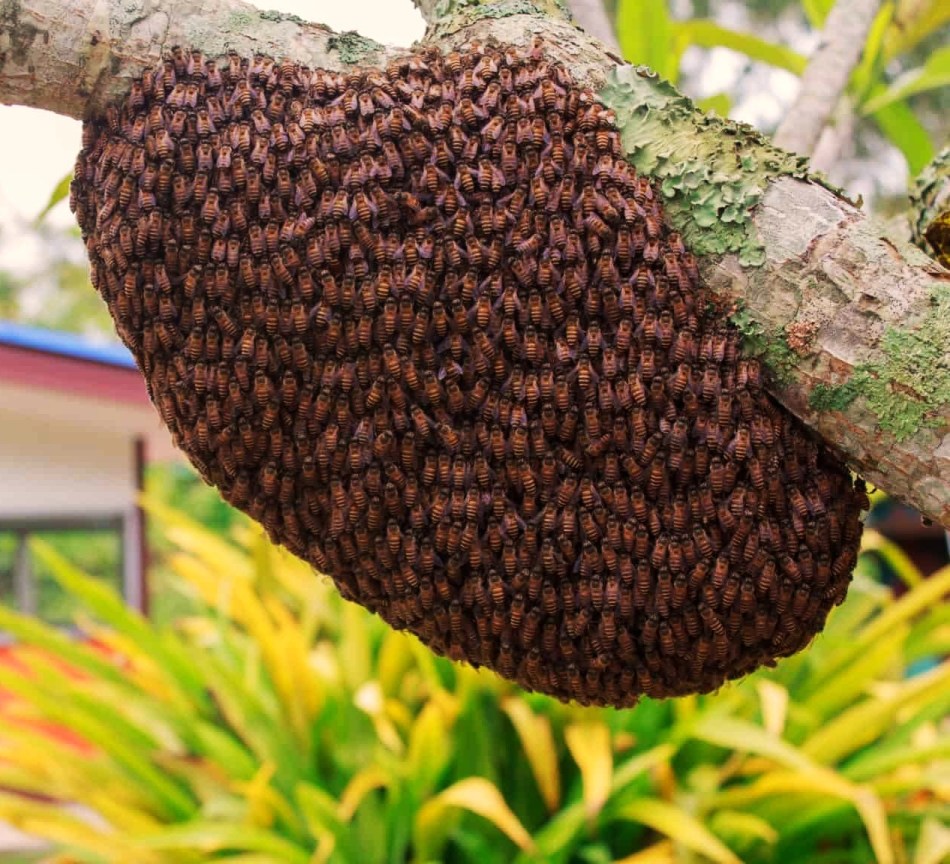
Honey bees swarm to multiply, continue the species, and extend their reach. When a hive gets crowded, or no longer feels vibrant, scouts, the most mature bees in the hive, go looking for a new home. Scouts report back their findings, then scout committees go off to check out the candidate sites.  

While scouts may prefer the locations they found, the final decision stands on what is best for the hive’s welfare—proximity to water and food, safety, and comfort. It’s a lot to process for the bee’s poppy-seed brain.

Vigorous discussion follows. After arriving at a choice, the scouts rouse the queen and most of the workers to follow them to the new location. They leave behind enough workers to tend unborn brood and a virgin queen, who will mate and hopefully repopulate the original hive.

Seeley claims human groups could benefit from following the example of bees.

First, a group should be made up of individuals who share interests and mutual respect. Bees have a singular purpose that humans may not, but humans can remind themselves that everyone has a stake in the group’s welfare.   

Second, leaders should minimize their influence on the group. In the hive, each scout has an equal say. True democracy. No leader collects the information from various groups or tells others what to do.

Third. Honeybees open themselves to diverse solutions. They investigate the widest possible choices, increasing their chances of ending up in great living quarters. Seeley advises humans to create environments where group members feel comfortable about proposing solutions.

Fourth. Spirited debate can be positive. Seeley says bees ingeniously balance interdependence and independence. They work together to sort out good options from poor ones. Looking around, we may wish we saw these principles at work more in our species, though Quakers manage to sit quietly, waiting for the Spirit to move them to consensus. They don’t require everyone to agree, but they decline to move ahead if someone actively objects to an idea.

Bees preceded us on the planet by millions of years. They have had more time to work out democratic decision-making.

Yet, even with all that time and practice behind them, bees sometimes end up in the eaves of gas stations, or under the hoods of cars, and we wonder, why?  

Gorged with food, they may just be stopping to rest on their journey. Or, maybe they sometimes get it wrong.

Like us.