bees, pollinators, beekeeping, environment · natural cures · nature · Uncategorized

Bring Back the Bugs

We didn’t like living with insects. Spiders startled us, flying insects smashed themselves against windshields, and ants showed up minutes after we spread the blanket for a picnic.

It turns out, insects did not like living with us, either, and decided to check out. In the last 40 years, insect populations decreased by 45 percent. Just as we started to appreciate that everyone has a place in the choir and the ecosystem. The insects who promote health in agriculture, forests, and plains disappeared along with the ones who bugged us.

The plight of bees gets a lot of attention. The measures we take to help them will benefit other insects, too. Bringing back native plants, ones that evolved with the ecosystem where we live, helps bees, domestic and wild, and their six and eight-legged buddies. Eschewing chemicals helps, too. 

Not everyone can comfortably replace their lawn. People have neighbors with expectations. Some homeowners are governed by HOAs. Renters would seem to have no opportunity to help. But this week I heard of practical suggestions that almost anyone can adopt.

Designate a certain area of yard to native plants. If the neighborhood is strict, a small, inexpensive fence around the native-plant area will signal that the plants are intentional. Many native plants are attractive, and can add to a yard’s beauty. Some plants attract pollinators, but are not native and won’t interact with the animal and plant life around them. 

Some varieties of caterpillars fall from trees, and spend the next phase of their life in vegetation at the base of trees. Trouble is, caterpillars fall onto naked ground. Most yards and all parks have barren circles at the base of trees.

Native species planted around trees invite insects back. To many eyes, the plants bring extra beauty.

Renters or apartment dwellers can offer to adopt a single tree and cultivate plants around it. The expert I heard said most landlords don’t object to a person getting involved with the yard. The same can go for HOAs. A person can start with a single tree, rimming it with plants, and then add more.

Expensive fogging for mosquitoes doesn’t work, but does harm other insects. People can build a mosquito trap in a half-bucket of water, and add an inexpensive mosquito dunk pill, available at hardware stores. 

Some folks resent honeybees. They say the European honeybee has pushed native and wild bees aside.

Those of us who keep honeybees like how useful they are. We love and revere honey, and know that honeybees are vital to fruit trees, berry bushes, vegetable gardens, and nut groves. I see many native bees in the pollinator-friendly flowers I have planted, and the plants also attract butterflies, moths, and hummingbirds.

We can work together to bring back the bugs.
bees, pollinators, beekeeping, environment · natural cures · nature

Ugly Lawns and Gray Hair

A six-person panel of international judges gave first place in the World’s Ugliest Lawn Contest to Kathleen Murray of Tasmania.

The competition started in Sweden as a way to reward water conservation. Lawns require a lot of water.

Murray’s dusty yard, pocked with holes dug by animals, placed first. I was struck by something she said.

“It’s a bit like women (she could have included men) who choose to stop dyeing their hair and let it go gray.” Sometimes a person freaks out and goes back to dyeing, but she chose to “let my lawn go gray.”

I have done both. Let my hair go gray, and tried to rid my front yard of grass. I think Murray’s comparison works.   

We who embrace gray hair enjoy how easy it is. No more visits to a salon or time-consuming do-it-yourself sessions at home. It may be healthier to avoid chemicals on our scalp.   

But some people like to see the brunette, blonde, or red-haired person they have always known looking back at them from the mirror. Colored hair usually looks younger, which may be a benefit in certain occupations.   

A friend and mentor of mine kept dyeing her hair until she left this world at 94. No one who knew her would call her shallow or vain. She had a reputation for being wise, loving, and lovable.    

Back to lawns. For years, I have been trying to replace my front lawn with plants useful to pollinators. I have variously suffocated the grass with black plastic, cardboard, or straw. One year, I hit it on all fronts. I used black plastic, straw, and had it plowed. I sprayed with a chemical. I thought I had seen the last of it.    

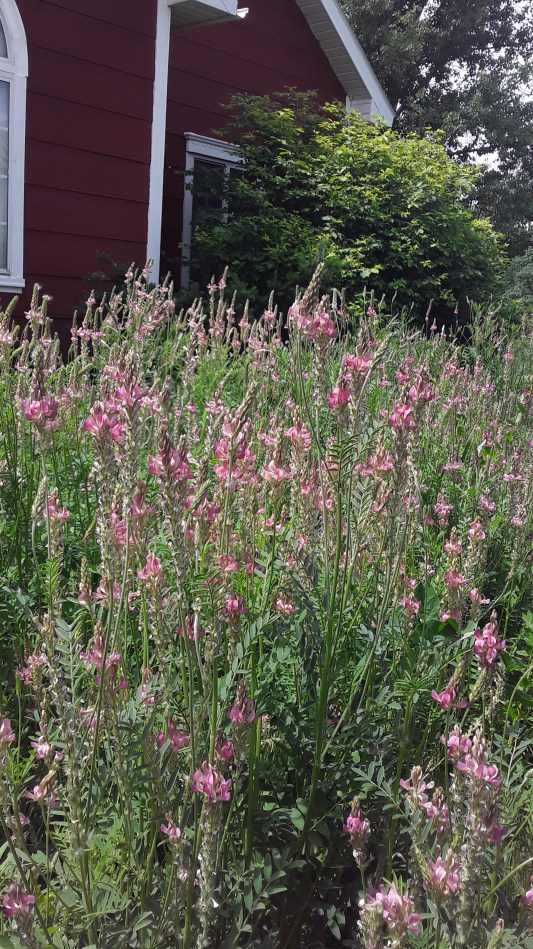
A satisfying crop of sainfoin, a cousin of alfalfa, bloomed where the lawn had been, and flowered for months. The bees loved it. I considered it beautiful, with its multiple pink flowers on every stalk, loaded with bees. But when a friend visited, he asked, “You planted this? Looks like a bunch of weeds.”

Morning glory (bindweed) wound its nasty self around the sainfoin stalks, choked it, and killed it. I turned my battle to getting rid of bindweed, a labor-intensive effort.

Just when I thought I had won, grass returned and pushed out the sainfoin. Grass puts up a fight. I turned to cardboard and tarps again, and starved the grass of water. By then, I had learned that sainfoin requires more water than some alternatives, and planted clover.

I live in a rural area with lax zoning regulations and no HOAs governing lawn care. It would be harder for me if disapproving neighbors scowled my way. 

Advocates for native plants talk about the advantage of not mowing lawns. That may be true once the grass has been vanquished and native plants have established themselves. I have struggled to learn how much water native plants need, and which ones agree with my kind of soil. My back yard, still in grass, seems easy to care for by contrast.   

I am not giving up. The clover I planted last fall peeked through before the snows came. I’m told it will give grass a run for its money. And we know how bees feel about clover.  

The manager at the garden center where I bought clover seed had just returned from a national conference. He told me it is only a matter of time until lawns disappear. He sells lawn seed and lawn products, and anticipates modifying his inventory. Extended drought in the Western U.S., and the world-wide shortage of water mean that drought-tolerant plants will replace lawns.   

We will learn to see them as beautiful. Sort of like gray hair.

bees, pollinators, beekeeping, environment · natural cures · nature

Bees and Our Colorful World

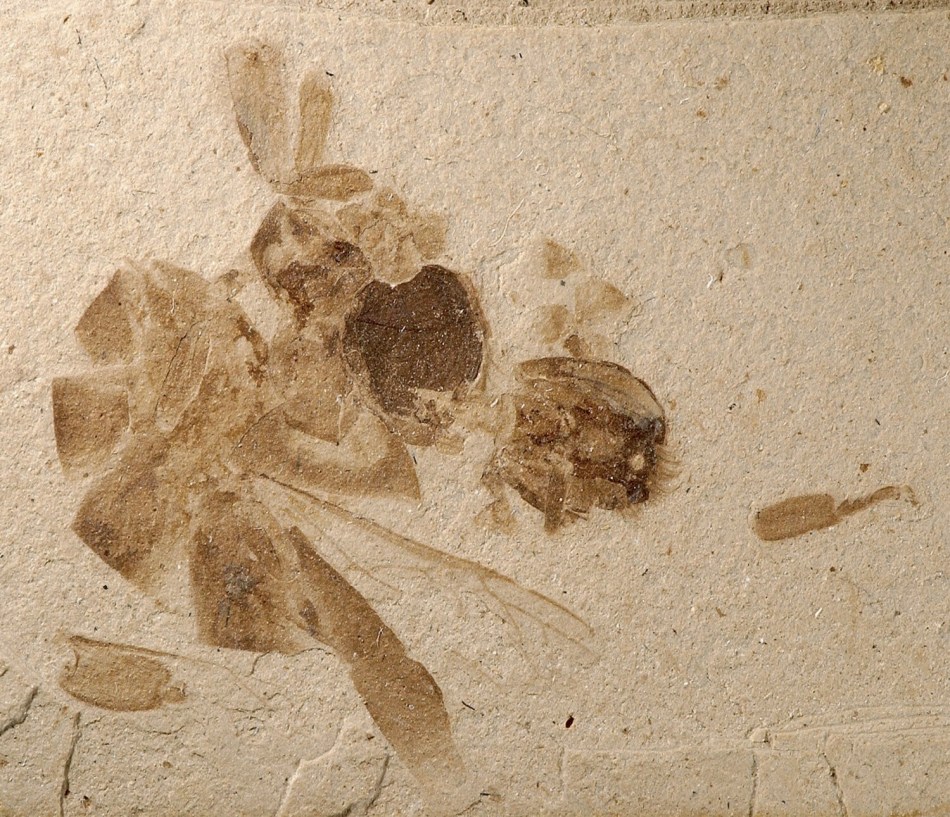
Early North American bee fossil

We appreciate bees because they give us delicious honey. And we bless them for an abundant assortment of fruits, vegetables, berries, and nuts to nourish us. But we forget, or maybe never knew, that ancient bees gave the world something else. Color!   

The planet looked much different 130 million years ago. New continents emerged from shifting land masses, new oceans were still forming. Green trees, some of them ancestors of present-day trees, grew in lush forests. Huge, herbivore dinosaurs had plenty of vegetation to consume. Pterosaurs with 40-foot wingspans flew over this ancient scene, and looked down on landscapes that were green, gray, brown and tan. Colorful flowers had not arrived.  

Plants reproduced inefficiently. The wind carried pollen, but most of it fell on the ground or was carried out to sea. A tiny percentage of pollen fell on female plants, by chance. Sometimes pollen caught in the hairs of big, clumsy animals and spread that way, but overall, plants reproduced slowly, and took a long time to spread.  

Insects liked nutritious pollen. Some insects got good at collecting it. Sometimes, insects accidentally dropped pollen onto female flowers.

Flowers saw an opening. They began to compete for the attention of insects. They started to grow in conspicuous shapes, and wear an array of colors that would stand out in a monochromatic scene, and be visible to insects.

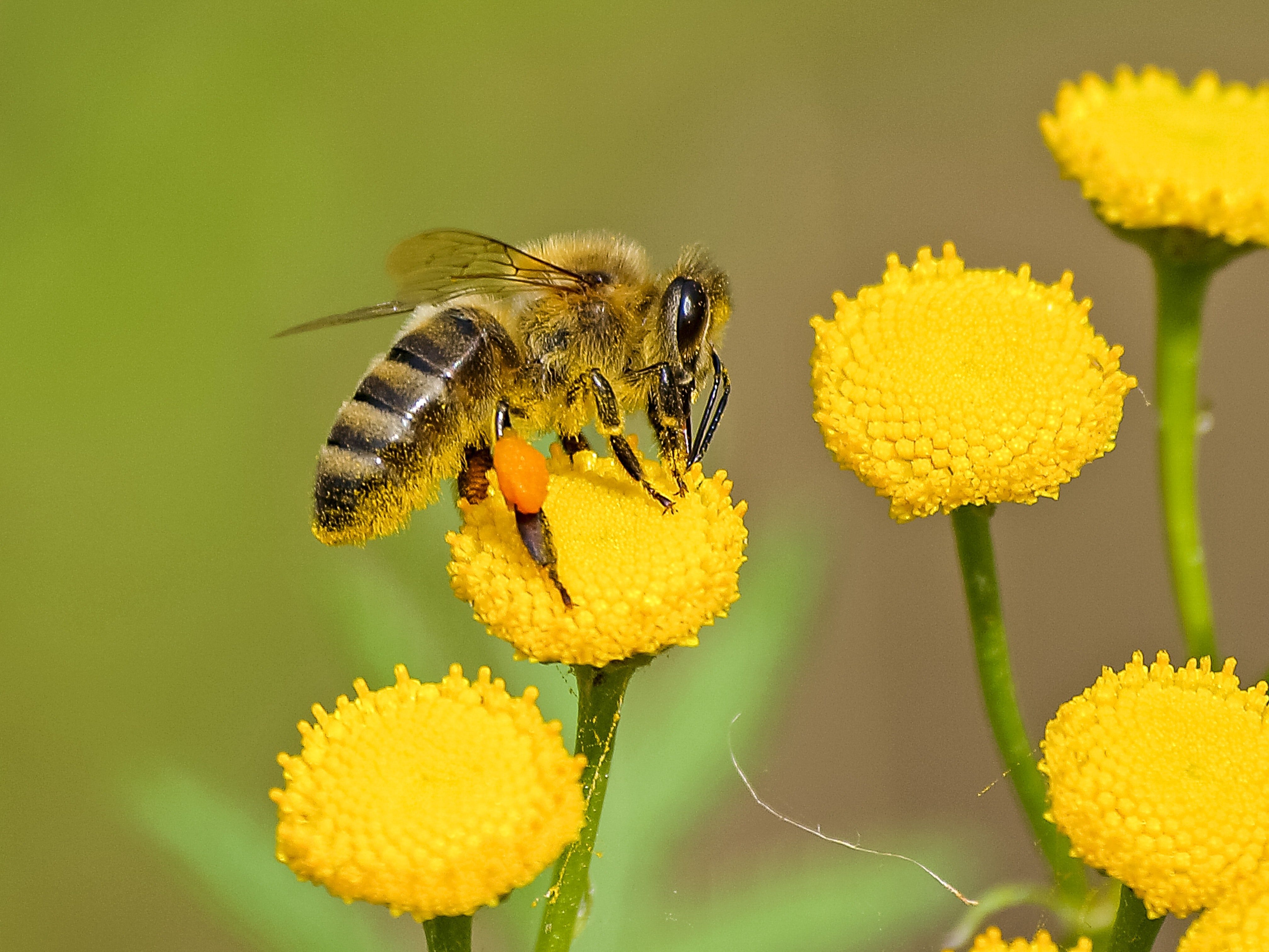
The insects developed modifications, too, such as body hair, to assist them in collecting pollen. Bees and flowers evolved together. Honey bees have hairy areas on their back legs, called pollen baskets. A forager honey bee can carry almost her own weight in pollen.

As an added enticement, flowers became fragrant. Upping their game once more, flowers started to produce nectar to attract pollinators. Flowers hid the nectar so the insects would need to spend time when they visited, and get saturated with pollen. The insects, in turn, evolved long tongues to reach the nectar.

Scientists tell us that an 80-million-year-old bee, fossilized in amber, had already evolved a social lifestyle. Scientists found evidence of picnics and parties, I guess.

Until recently, entomologists believed bees evolved from carnivorous wasps. But now a University of Washington team has a different idea. An extensive genomic project showed that bees evolved more quickly than previously thought in the Southern Hemisphere. That may be one reason that hemisphere has such diverse and vivid plants.    

Those of us who endure long winters cherish the spring moment when we walk outside and see a yellow, or ruby red, or purple flower standing tall in a patch of mud-brown earth. We praise that flower with poems and songs.  

Let us also send gratitude to the bee, who played an indispensable part in creating a world of vibrant color.   

bees, pollinators, beekeeping, environment · natural cures · nature

A New Year, and Hope

As we walk into the new year, bee lovers see pockets of good news to smile about. Those include: reports of a promising vaccine against disease, bumble bees who fight off Asian hornets, and states adopting measures to limit the use of neonics, a family of chemicals that wreaks havoc on pollinators.   

Scientists had long believed that insects don’t create antibodies, so vaccines wouldn’t work on them. But researchers discovered that bees have a primitive immune system. A queen bee had an immune response when exposed to bacteria. The University of Georgia, partnered with a private animal health corporation, discovered that a vaccinated queen will pass immunity to her numerous offspring. A scientist said it was “like magic.”

The vaccine can combat foulbrood, a bacterial disease that until now has been incurable. Our government, along with those of other countries, requires infected bees, hives, and all beekeeping equipment, to be burned and buried. The disease can wipe out a commercial or backyard beekeeper.  

The new vaccine is expected to protect against other diseases and viruses, too. And maybe some pests.     

So far, negative side effects have not been observed in colonies, and the vaccine hasn’t had an impact on the honey.

The yellow-legged Asian hornet has invaded mainland Europe, where it has no natural enemies, parts of east Asia, and for the first time has been spotted in the US. Sightings in the UK and mainland Europe are at an all-time high, and people fear for the bees.

But scientists in the UK found that a certain species of bumblebee will fight back, and defeat the hornets. The bumblebees drop to the ground when the hornets attack, and carry the pests with them. Hornets lose their grip as they drop, or the bee raises its stinger and fights until the hornet gives up.

Surprised scientists watched 120 attacks that had the same outcome. The bumblebees triumphed.

Hornets hover outside the nests of bees, and attack returning foragers. But when the hornets try the same thing with bumblebees, they fail.

But the attacks are energetically costly for the bumblebees. And if hornet populations are high, it can be a major problem for foraging bees.

“Hornets consume nectar from flowers, meaning they compete with bees for food and harass them at flower patches,” a scientist said.

The team has placed colonies of the buff-tailed bumblebees in several locations in Spain, where Asian hornets have invaded.

California became the latest state to restrict the use of neonics. The new law takes neonics out of the hands of homeowners, but allows lawn care companies to continue using them. California law falls short of the strongest state laws in Nevada, New Jersy and Maine, which have eliminated all outdoor, nonagricultural uses of these chemicals, even by lawn care companies.

In June, 2023, Nevada became the third state to ban lawn and garden use of neonics. Colorado prohibits homeowner use of land and garden neonic products, which resembles laws in Maryland, New York, Massachusetts, Rhode Island, and Vermont. Minnesota recently banned neonic use on state lands and granted home-rule subdivisions the authority to ban “pollinator-lethal pesticides.”  

Bee advocates who worry about declining bee population celebrate these steps in the right direction. But the state-level restrictions pale in comparison to robust protections in the European Union (EU). The EU has banned neonicotinoid pesticide use on all outdoor areas, allowing use only in enclosed greenhouses.

bees, pollinators, beekeeping, environment · natural cures · nature

The House by the Side of the Road

Friends of bees love to hear good news.

The radio announcer said the guest from the Idaho Transportation Department would speak about making highways friendly for wildlife. I assumed the spokesperson would talk on a well-publicized subject—protecting migratory routes for deer, elk, and pronghorns.

Instead, the person talked about the agency’s efforts to establish habitat for pollinators around highways.

Idaho has millions of acres planted in farm crops, and many leading crops rely on pollinators. The transportation department has partnered with the Idaho Department of Agriculture to come to the aid of ants, butterflies, beetles, and of course bees, by planting pollinator-friendly plants at rest areas, around state buildings, and next to highways.

Predictions of extended drought here in the West have increased the interest in native plants to replace water-loving, non-native species. State employees have planted native species that fit the arid environment at a rest area on I-84.

Plants that attract pollinators will help other wildlife species, because little creatures get eaten by larger ones.   

The Idaho Transportation Department (ITD) understands the public may need to adjust its expectations. Some popular ornamental flowers do nothing for pollinators. Tidy, well-groomed plots of grass near roadways look orderly, compared to native flowering plants that can look helter-skelter.

Revegetating areas that have been highly disturbed can be a challenge, too. Employees are using compost to amend the soil in those places. The native plants may need to be watered at first, too, to help them send down the deep roots that will stabilize the soil. The agency gives preference to plants that bloom from early spring until fall.

The ITD pollinator wellness program also includes evaluating when and where to mow.

In another state, Illinois’ Department of Transportation has adopted new mowing procedures aimed at creating and protecting habitat for pollinators, including the monarch butterfly. Their strategy regulates when mowing occurs, and reduces the amount of land mowed.

The ITD also participates in Operation Wildflower, where districts distribute native wildflowers to volunteer groups for seeding selected areas. The ITD and Idaho Fish and Game are cooperating to make pollinator waystations, seeding roadsides with native flowers and grasses.

This goes beyond supporting pollinators. The native flowers and grasses beautify the roadways and reduce maintenance costs. The ITD uses a variety of native seeds for revegetating around construction and maintenance projects.

It is cheering to picture deep-rooted, drought-tolerant flowers and shrubs taking hold along the roadways, stabilizing the soil and attracting pollinators. Hardworking bees might sympathize with the words of the 19th Century poet, Sam Walter Ross, who wrote,

Let me live in a house by the side of the road

And be a friend to man.

bees, pollinators, beekeeping, environment · natural cures · nature

Honey. Weapon of War?

Designed by Freepik.

We use honey as a term of endearment. When we chat with a child at the grocery store, we call them “Honey.” “It’s your birthday? Happy birthday, Honey.”

When our hair turns gray, clerks at the grocery store call us “Honey.” “Find everything okay, Honey?” (I hate this. I am not eight.)

We regard the wonder food that bees manufacture as dependably sweet and healthful. But at least once in history, an ancient army used toxic or “mad” honey to disable enemy troops and win a battle. A foretaste of chemical warfare.

Pliny the Elder, a Roman naturalist and philosopher, raved about the excellent honey of the Mediterranean region. He also wrote about “mad” honey, which came from nectar collected from a toxic species of rhododendron. Consuming a dose of it caused blurred vision, dizziness, hallucinations, nausea, numbness, fainting and seizures. In Turkey, this honey bore the name “crazy honey.”

Rhododendron ponticum grew in abundance in Turkey on the coast of the Black Sea. Local bees collected much of their nectar from the dense concentration of those plants. It did not appear to harm the bees.

King Mithridates became aware of toxic honey’s potential when his own Greek soldiers found and ate it and suffered horrible effects. Some went out of their heads. But they didn’t die.

The King schemed to use the honey against enemy soldiers. He laid toxic honeycomb along a roadway that invading Roman soldiers would travel. The Romans saw the honeycomb as a gift from the gods, and eagerly consumed it. The honey made them horribly sick and disoriented, and the Greek soldiers moved in and killed them. It is ironic and sad to think of honey, valued for its healthful properties throughout the world, making soldiers so ill they lost their lives.  

This toxic variety of rhododendron bush has spread to the British Isles, but a program is in place to eradicate it. It appears that bumble bees pollinate the plant, and local honey bees avoid it.

We cannot let this account of bad honey taint our appreciation for how often honey has benefitted soldiers. Russians used honey in WW I to prevent infections in wounds and assist in healing. During the U.S. Civil War, medics on both sides relied on honey because of a scarcity of salves and ointments. Those are famous cases, but we can assume that warriors from the earliest times and in the most remote places have relied on nourishing honey for use, internally and externally.      

bees, pollinators, beekeeping, environment · natural cures · nature

The Incredible Buzzy Body-Part Three

A friend loaned me a novel where a woman beekeeper tells much of the story. The book had great pacing, and the author showed a knowledge of beekeeping and honey collection. For a while, I wondered if the writer might be a beekeeper. But at some point, I decided she wasn’t. I read up on her, and it appears she isn’t. 

Yesterday I saw an email from a beekeeper that included the statement, “Nothing humbles me like observing bees.” That was it! What I found missing in the novel. The author had a ton of information, but didn’t convey the awe that beekeepers feel for bees. 

I’m generalizing. Some beekeepers may have a strictly practical outlook on beekeeping. But the ones I know rhapsodize about the small creatures in their care.  

The bee body perfectly suits the role the bee plays in nature. Previously, we looked at the bee’s antenna, mouthparts, and brain. Now we’ll look at the rest of the body.

Some animals and insects try to hide from predators. That would not work for bees, considering their occupation. They advertise their presence with light and dark stripes, warning predators and intruders to be careful—they can sting. Workers have a barbed stinger. Extracting it from mammalian skin usually kills the bee. Queen bees don’t have barbed stingers and could sting repeatedly, but humans seldom encounter a queen, and being stung by one is rare. Drone bees don’t have stingers.

 The honeybee has a layer of hair on its body to aid in gathering pollen and regulating body temperature.

The thorax (midsection), with its six legs and two pairs of wings, focuses on locomotion. Muscles in the thorax control the movement of the wings during flight, and rapid contractions control the movement of the wings. Lift-off happens when the bee does a propellor-like twist of its wings. A bee can fly at 15 miles per hour. Though a bee’s normal range is a three-mile radius, researchers found that bees can fly up to 25 miles in extenuating circumstances. 

Honey bee’s legs have six sections, making them flexible. The legs have taste receptors on the tips. The legs have claws for gripping, and sticky pads for landing on slick surfaces.

The front legs clean antennae; the rear legs have what are called pollen baskets, concave structures where pollen accumulates. The bee on a flower brushes the pollen that sticks to her body toward her hind legs. She mixes in some nectar to help keep the pollen together during flight.

The honeybee has two stomachs, one for collecting nectar, sometimes known as the crop. A special structure at the end of the crop prevents food from the other stomach entering and contaminating the nectar. When people call honey bee barf, that misunderstands the process. The crop can swell the abdomen to twice its size when transporting nectar.

The rectum also can swell. Bees won’t poop in the hive, so in northern climates like Idaho, bees  go months waiting for a warm day to take a cleansing flight. 

In queen bees, the abdomen holds the spermatheca, which stores an infinite number of sperm collected during her single mating flight. She goes home to lay 1,000 to 2,000 eggs a day until she dies, or the hive deposes her.

Most drones never mate. The few who do die in the act. The drone’s ejaculation is so explosive, the human ear can hear it. After that, the drone’s internal organs are ripped from him and he falls to his death. Sometimes a person comes across a drone in his death throes, and it is pitiful to see.

Young worker bees have the job of creating wax. Wax-producing scales located on the underside of the abdomen secrete liquefied wax, which hardens into thin scales when exposed to air. A worker creates about eight scales in a 12-hour period. A thousand scales make a single gram of wax. As a new beekeeper, I admitted at a beekeeper’s club that I threw away the wax. People turned and looked at me with horror. I don’t waste it now.

The next time you see a honey bee, consider how intricate, efficient, productive, and marvelous that tiny body is. And be humbled.

bees, pollinators, beekeeping, environment · natural cures · nature

The Incredible Buzzy Body, Part 11

The last post, describing the bee’s marvelous body, got only as far as their crazy mouths and multi-talented antennae. On to the brain and eyes.

Scientists like to study bees because of their cognitive abilities. The honeybee brain, small as a poppy seed, manages complex tasks and social interactions that guide colony life. Like the waggle dance, which forager bees perform to tell others where the blooms are. The dancer conveys location, quantity, and quality of her discovery.

A worker bee becomes a forager after holding many other jobs in the hive, and when she does, a navigator gene switches on in her brain. Researchers have found that bees rely not only on scent and air pressure to find their way—they also memorize landmarks. Bees remember patterns and faces as well, and understand concepts such as above/below, and same/different.

One citizen-scientist experiment showed that bees learned faster when treated with caffeine than bees treated with dopamine, and the control bees. A study in the European Union showed that bees can count – at least up to five. And similar to humans, bees process information differently in the two hemispheres of their brains.

Those of us who react with fear when Math rears its complex head may feel uneasy about the results of an Australian study. That research showed that bees can learn to add and subtract.  

To find flowers, bees need good vision. Bees pick up odor cues, but only if they are close. They need to see them from a distance.  The bee has five eyes—two, large compound eyes made up of many tiny lenses, and three simple eyes located on the top of the head that detect light. A bee can sense a predator approaching from above.

The two larger eyes have tiny hairs that detect wind direction and allow bees to navigate when it is windy. Bees can see polarized light (light that goes through a filter), so bees can view the sun on a cloudy day.  

Bees can detect motion in as little as 1/300th of a second. This allows them to see flowers swaying in the smallest breeze. Humans detect movement if it happens for longer than 1/50 of a second.

Bees can see in the ultraviolet spectrum, which humans cannot. Flowers that depend on bees for pollination have ultraviolet color patterns that catch the bee’s eye.  

Bees can distinguish dark from light, which allows them to see edges, which helps them identify shapes.  

Bees cannot see the color red, and interpret it as black, which they associate with predators. Bears, skunks, and raccoons have black noses. There is agreement that bees can’t see white, which is why beekeepers wear white bee suits and veils.    

Next time. More on the Incredible Buzzy Body.

bees, pollinators, beekeeping, environment · natural cures · nature

The Marvelous Buzzy Body

bees, pollinators, beekeeping, environment · natural cures · nature

Is Cooking with Honey Healthier?

A joke in beekeeping circles is, “Ask four beekeepers a question, and you will get five answers.”

I find beekeepers a congenial lot, but it’s true they hold conflicting opinions on many subjects. Like, how best to house bees, mite control—natural or chemical? —and frequent hive inspections vs. leave-bees-the-heck-alone. It is not surprising that the bee community, which includes bee researchers, disagrees about whether using honey in cooking and baking has health benefits.  

I don’t think anyone disputes that dishes and baked goods made with honey taste better. Custards made with sugar taste fine; custards made with honey taste glorious. Same for granola, and vegetable and meat glazes made with honey.

Many frontier recipes call for honey. Our great-grandmothers cooked with it because rural people kept bees.

When sugar was cheap, natural food advocates wanted to give people a reason to use expensive honey in cooking. Honey had antibacterial properties and antioxidants, vitamins, and minerals. Beekeeping sites and honey producers run food recipes that call for honey, along with recipes for honey-based beauty products like facial scrubs, and health remedies like wound ointments. But many people believe that the good properties in honey don’t survive heating.    

Practitioners of Ayurvedic medicine, an ancient health system still honored in India, claim that heating and cooking honey changes its natural composition. This, they believe, allows for toxic molecules to stick to mucous membranes of the digestive system, which can convert to a toxin called Ama, which leads to upset stomach, affects respiration, insulin sensitivity, skin diseases, and weight gain. For those who do not buy that, Ayurvedic proponents still advise—don’t heat honey, because it wastes honey’s health benefits. Don’t even put it in hot liquids. What? Morning tea without honey?

But what about the university research that validated the old-time remedy of honey in hot liquids? They found it beneficial for coughs and sore throats.  

It gets confusing. An article circulated by extension services laid down guidelines for heat and honey. Honey should not be heated rapidly over direct heat. The hotter the heat, the more potential for reducing nutritional value.

Honey begins to lose its healthful properties at 113F, and worsens at 122 F. It doesn’t say how long it takes for that damage to occur. One site recommends letting tea or coffee cool to a drinkable temperature before adding the honey.

As with most arguments, we can find evidence to support the theory we like best. Some articles say heat destroys the beneficial elements in honey, some say honey has a multitude of healthful components, some of which survive cooking. Some people point out that honey, even cooked, has a lower glycemic index and is better for people with diabetes and hypoglycemia. Some concede that honey loses some of its bioenzymes with cooking, but still imparts a nice aroma and flavor to baked goods.    

We may wish to consider the Placebo Effect and the Happiness Factor, too. When we believe a substance or pill helps our body, it does, even if the pill is worthless. Machines and tests have measured that in labs. And when we enjoy something, it triggers all sorts of health benefits, also verifiable in the lab. A recent study proclaimed ½ cup of ice cream per day as a surefire way to bolster health.

Take that, naysayers!