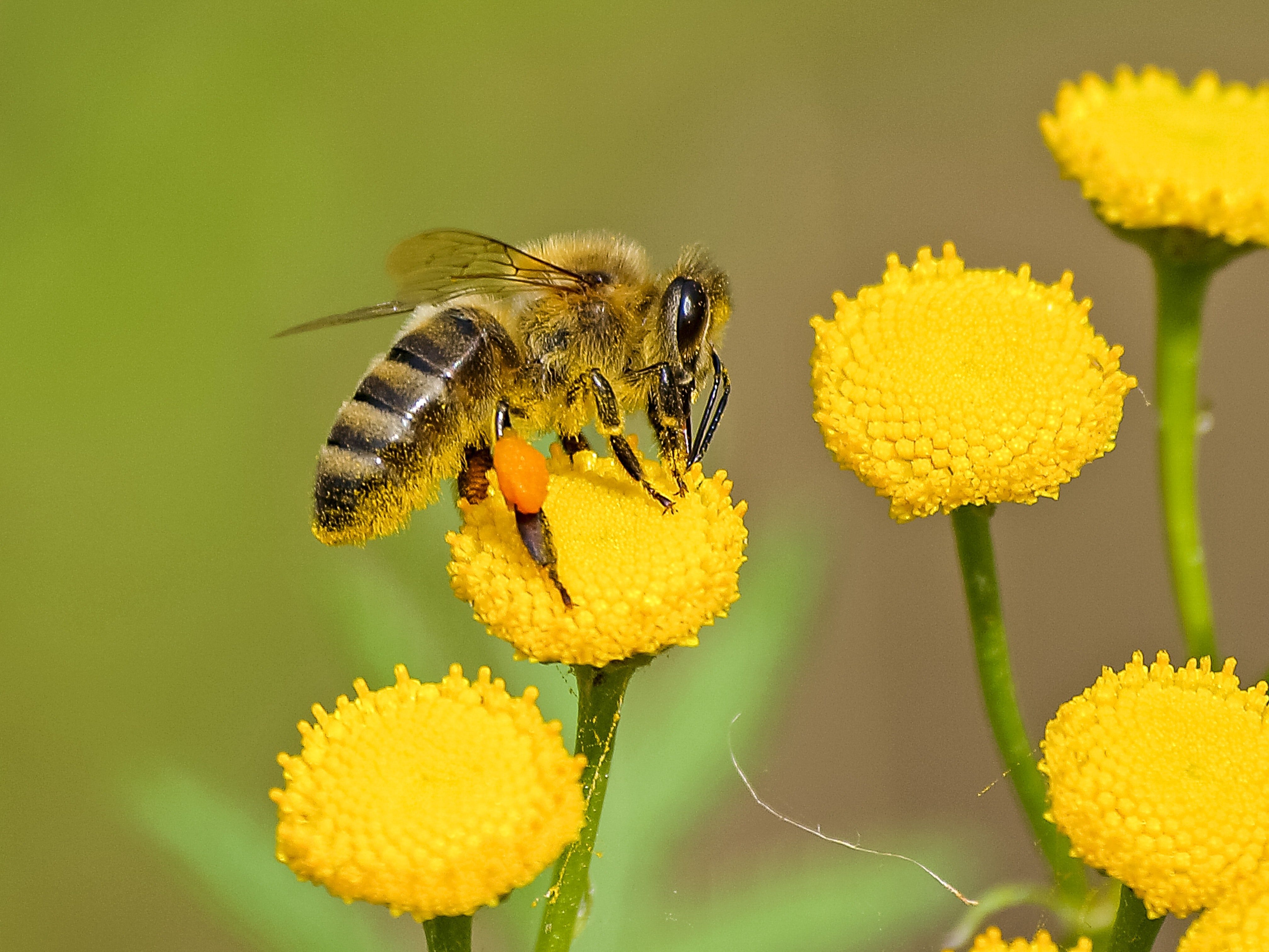
bee health · beekeeping · bees, pollinators, beekeeping, environment · natural cures · nature

Checking in on Bee Health

Photo by Amy Blizzard

How are bees doing? What is the latest word on apian well-beeing?

Most of us understand that the bees we depend on to pollinate our crops are floundering. But are things getting better, or worse?   

Pollinator advocates say a recent decision by the Environmental Protection Agency (EPA) spells bad news for bees. The EPA postponed its review of neonics, a family of widely-used, bee-killing pesticides. The agency will not issue a report on neonics until 2026, and the pesticide’s extensive use will continue unrestricted.

Bee lovers fear that colonies cannot wait two years for relief. The precipitous decline in the U.S. bee population continues. Honeybee colonies have died off at an average annual rate of 40 percent over the last decade, and studies conclude that neonics play a major role.   

Bee defenders say the EPA should also consider the health of humans and other species. In the Midwest, neonics are the number one cause of butterfly decline. In humans, research shows that neonics pass from pregnant mothers to the fetus, and into the breast milk of nursing mothers. Studies link neonics to increased risk of birth defects, like malformations in developing hearts and brains.

Even an analysis by the EPA itself concluded that neonics jeopardize the existence of more than 200 threatened and endangered species. Canada, the European Union, and other countries in the world have already put strong restrictions on the pesticides.

In the face of convincing research, why does EPA drag its feet? Critics point to the influence of Big-Ag. Bayer and other agrochemical producers have launched extensive PR and lobbying campaigns. They warn that restricting neonics will harm crop production, but experience has shown otherwise.

In Quebec, Canada, a 2019 crackdown on neonics made farmers reduce their use of neonic-treated corn seed by 99.5 percent. Four years later, crop yield remained consistent. Cornell University found that neonic-treated seed for major crops provided “no overall net income benefit” to farmers.

A single neonic-treated seed can contain enough active ingredients to kill a quarter-million bees. DDT, which the U.S. banned, looks tame compared to neonics. Neonics are 5,000 to 10,000 times more toxic to bees.

The crop absorbs only a fraction of the neonics. The rest leaches into the environment to contaminate soil, rivers and streams, and even drinking water.

Persons who want to complain to the EPA about its decision can sign a National Resource Defense Council (NRDC) petition found online. Other environmental groups may be circulating petitions, too.   

Next time: How are bees doing around the globe?

bees, pollinators, beekeeping, environment · natural cures · nature

Please Won’t You Bee My Neighbor?

The man who taught Beginning Beekeeping advised us to inform our neighbors that we had acquired bees. In his view, it was the neighborly thing to do.  

The first time I raised bees, many years before, we planted our hives on a distant corner of our 40-acre farm. We ignored them. They left, eventually. I planned to do beekeeping with more care this time.

I live on an acre in the country, with lots of room. When I saw my closest neighbors working in their yard, I went over to tell them I had purchased bees and bee houses. I mumbled it, like a confession.   

The couple looked at each other. “Yay!” the man said. The woman said, “Let’s plant our garden close to the fence, so they don’t have to fly far.”

The neighbor I share irrigation water with said, “I hope this helps our pear tree. It hasn’t been doing well.” Today, that neighbor calls the pollinators in her productive pear tree “our bees.” “I’m getting rid of wasp nests,” she says, “to protect our bees.”

A summer celebration in our rural community brings together people from acreages and from farms. The first summer I had bees, I sat down to eat at a table of farmers. A man said to me, “Are you the one with bees?” Uh-oh. Had he been stung? Had my bees annoyed his wife as she hung her wash?  

A suspenseful silence followed. Finally, he said, “We have the best raspberry crop we’ve had in years. Tell your bees thank you.”

A good friend of mine longs to keep bees, but her across-the-street neighbor has a severe allergy. Bees forage a three-mile radius, so the man likely encounters bees, regardless. But I understand not wanting to increase his risk.   

In spring, bees can be a nuisance. They act confused when they first emerge. My neighbors tell me that my bees swarm around their yards. In spring, I can’t go in and out of my house without a bunch of bees following me in.

For years, I tried to capture them individually, with an envelope and a glass. Often, this resulted in accidental deaths. Now I leave the door open. Wasps aren’t out yet, and flies are few. The bees hum around the kitchen for a while, then leave. This investigative phase lasts for only a couple of days.   

One year, I bought used equipment from a beekeeper who lives in town. The city allows for four hives, and that’s what he has—four neat hives snugged up against his house. I asked how his neighbors feel about them.

“They don’t know I have them. Bees go up. In the morning, my bees fly up and away, and the neighbors aren’t aware they live here.”

It looks like beekeepers have a choice. To tell their neighbors, or not. A disadvantage in not telling, seems to me, is that the beekeeper misses out on neighbors’ gratitude.  

Some people don’t want to be near bees. Some people mistake wasps for bees. But even those who are leery of bees understand their importance to everything—vegetables, nuts, alfalfa hay for dairy cows, beautiful flowers.

People miss bees when they aren’t present, and welcome them when they come to a  neighborhood.