bee health · beekeeping · bees, pollinators, beekeeping, environment · natural cures · nature

Small Actions/Great Love

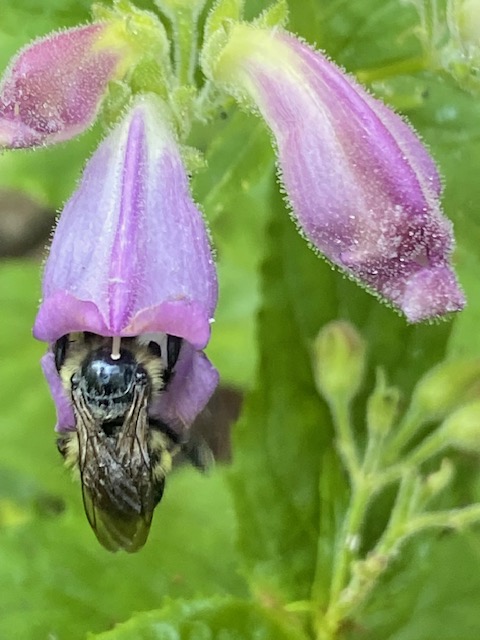
Photo by Debbie Orme


When people read dystopian books or articles about the changing environment, do they change their ways and better respect Mother Earth? Should the public be made aware of all the dire scenarios climate change presents? Or do predictions about a dark future cause people to lose hope and surrender to passivity?

Climate writers have been debating this. Writers who concentrate on environmental topics hoped to gin up compassion for our planet and for the populations most affected by global weirdness. But now those writers ask themselves whether they have scared readers into despondency.

Some propose a different approach. To write “hopeful dystopia.” They look to the butterfly affect for inspiration. Their imaginary characters or the real people they write about will make small changes that if widely adopted would help avert the worse consequences of climate change.     


Beekeepers have held that view for a while. They acknowledge the serious decline of bees and what that means for humankind, while pleading with the public to make small, personal changes that will help stop the losses. These changes can be adopted with little inconvenience, and if multiplied, make a significant difference.


Folks can designate a portion of yard to dandelions. Or they can lift the mower blade in spring to allow dandelions to flourish when bees need them most.


They can sign on to No Mow May. Communities and countries who practice this have seen a return of beneficial insects.  


Concerned people can sign petitions and write representatives, urging them to ban neonics, a family of chemicals used in pesticides. These harmful chemicals weaken or kill bee colonies and are harmful to humans, too. The EU and other countries have banned them; some US states have.


Gardeners can favor pollinator-friendly flowers over ornamentals that don’t benefit bees and butterflies. And native plant species generally support all insects better.  


What can those who live in apartments or rental homes do? Place planters with beneficial flowers in entryways, balconies, and even on rooftops.


We must teach kids to respect bees and learn to coexist with them. A couple of years ago someone posted a story on Facebook about kids who sprayed a bee swarm with a garden hose. An adult tried to save the wet bees by placing them in a dry, sunny place, but the bees died. The kids may have thought they were destroying dangerous insects. Bees can sting, but mostly go about their important work of pollinating and creating a honey supply for winter. Wasps, hornets, and yellow jackets act more aggressively, and bees often get the blame for stings they inflict.  


Mother Teresa left us good advice. “It’s not about doing big things; it’s about doing small things with great love.” Benjamin Franklin said, “Little strokes fell big oaks.”
bee health · beekeeping · bees, pollinators, beekeeping, environment · natural cures · nature · Uncategorized

We Can Reverse Insectageddon

On my first date, a boy took me to a movie. His dad drove us, and his little brother, age 8, came along.

The movie featured a villainous giant spider with hairy legs and hideous fangs. I had hoped my date would hold my hand, but he couldn’t. My hands covered my eyes. Little Brother dove under his seat and hid.


Periodically, a movie, book, or article predicted a future where fragile humans would cede their dominance to durable insects, usually creepy ones.    

That forecast hasn’t come true. Instead, insects have declined precipitously and some species have gone extinct. Even scientists who disagree with the idea of an insect apocalypse don’t dispute the losses. They argue that we have not identified all insect species because they are so numerous, so we don’t have the entire picture.


But we know about bees and butterflies, and the loss of birds who depended on insects for their diet. That is well-documented.    


Harmful chemicals, urban encroachment and habitat loss, intensive farming and climate change all play a role in insect decline, and harm for the plants and animals who depend on them.

These problems feel overwhelming. But a 2007 book, Nature’s Best Hope—A New Approach to Conservation That Starts in Your Yard, became a bestseller by telling readers they could bring back the insects and birds. The author, Douglas Tallamy, an entomologist, urged people to convert their yards from lawns to native plants.


Tallamy had an ambitious proposal. If every American converted half of their lawn to native plants, it would restore 20 million acres of ecological wasteland. That would comprise the country’s largest park system.


Native plants advocates tell us that soil and weather conditions give those plants an edge over nonnative grasses and plants. And nourish birds and other species.   
But as someone trying to convert a large section of lawn to native plants, I have seen that grass doesn’t surrender territory without a long, bitter fight. And sadly, nonnative weeds also can push aside beneficial plants.


I have planted species known to be aggressive that lost out to grass and invasive weeds. The past few years have shown me which native plants will hold their own in my yard against grass and intrusive plants. Yet, grown at a neighbor’s place, those same plants might struggle.


In hindsight, it might have been better to experiment with small areas that I could monitor before trying to convert a large chunk of property. 

  
Converting half of U.S lawns stands as a great goal. But to people who can’t conceive of yards without border-to-border green lawn, it sounds radical. If each of us would convert just a section of property, we could help bees, butterflies, and the birds that we love, and overcome our feeling of helplessness.


Legions of people rent houses and apartments and have no say over the grounds where they live. Those folks can advocate for native plants in public spaces, and plant beneficial plants in pots to place on balconies and porches.     


Here is the National Wildlife Federation web site for advice on native plants: http://www.nwf.org/NativePlantFinder.

bee health · beekeeping · bees, pollinators, beekeeping, environment · natural cures · nature

The Cassandra Effect and Bees

Cassandra, the King of Troy’s beautiful daughter, turned the head of the god Apollo. Wanting to impress her, Apollo bestowed on her the gift of prophecy. But she wouldn’t have him, and he cursed her. She could see the future, but no one would believe her.
The gift brought her misery. Foreseeing death and chaos, she warned the people of Troy not to open the city gates to a giant wooden horse, a gift from the Greeks. No one heeded her. Greek soldiers who hid inside the horse sacked and pillaged Troy.
The myth expresses a truth we see played out in real life. We humans don’t like dire news and turn a deaf ear to it. Some want to dismiss the latest figures about the decline of bees. The report says that over 60 percent of bee colonies were lost during the last year.
 “No way,” some cry. Losses during the past two decades sometimes reached as high as 50 percent, which was alarming enough. But organizations like the National Resource Defense Council and the Department of Agriculture stand by the disturbing new figures.

Of course people want to disbelieve. Three-quarters of our key food crops depend on bees and other pollinators. Experts tell of a general insect apocalypse, and we don’t miss some bugs. But we recognize our dependence on pollinators.
Many factors contribute. Climate change means more extreme weather. Too hot, too cold, too rainy, too dry. Flowers may bloom too early or too late for emerging bees. Loss of habitat factors in. Development means loss of native plants species. Monoculture—huge tracts of land given over to one crop—means bees don’t get the variety of blooms they need.
Varroa mites menace hives, and bees weakened by chemicals can’t overcome them.     
The bee industry cannot understand why the U.S. allows neonics, a family of chemicals that have been banned in the EU and many other countries. Study after study confirms that neonics, present in agrochemicals, harm bees, wild and domestic. A strong corporate lobby defeats attempts to stop their use.
The decline in bee health should raise other alarms. A body of evidence shows that neonics pose health hazards for humans, including threats of neurological and developmental damage to children, especially those exposed in the womb. The chemicals remain in the soil and don’t dissipate.
We wish awful statistics and the gloomy people who present them would go away. But Cassandra shows us. We should listen to prophets.     

bee health · beekeeping · bees, pollinators, beekeeping, environment · natural cures · nature

Those Wise Mayans

We believe we are clever with our high-powered microscopes and telescopes, brain mapping and gene splicing, and advanced machinery. It surprises us when we learn that some ancient societies came to understand a lot, also.

The Mayan priestly caste shuttered itself indoors in the daytime so they could strengthen their night vision. From temple heights they studied the sky, learned to predict eclipses of the sun and moon, and planted their crops according to the position of the planets.

What else did they know? Recent archeological finds confirm that beekeepers played an important role in Mayan culture. The people who lived in the Yucatan Peninsula considered honey to be sacred and harvested it from the jungle. Honey became their main product for trade, and the heart of religious rituals.

Modern researchers recognize honey’s antimicrobial and antioxidant properties. They hope it can help replace antibiotics that no longer work for us. The Mayans applied honey to external wounds and consumed it to ease stomach complaints.

Tools used for beekeeping dominated the new cache Mexican archeologists unearthed. Scientists will analyze the 261 artifacts to learn more about Mayan life, but the team recognized them as beekeeping tools. They included hollowed-out logs that housed the bees, limestone lids used to cap the logs, vases to hold the honey, and axes and hammers. 

Mayans cultivated the Melipona bee native to that area, and considered it sacred. Many of their religious rites revolved around the bee. Indigenous beekeepers of that area today use similar tools and methods, and the same species of bee for honey production. 

Which culture looks wiser? The one from fifteen hundred years BCE, where people celebrated bees as sacred and used honey to remedy internal and external medical problems? Or our modern culture where numbers of people consider bees a nuisance to be slapped and sprayed, and think that it is okay to ravage their habitat with deadly chemicals?    

Uncategorized

Bees Finally Catch a Break

Beekeepers and bee lovers have learned to dread reading news about bees. It is nearly always bad. Poisonous pesticides, habitat loss, disease, and climate change combine to make a gloomy outlook for bees and their future.

But now university researchers have announced a new product that offers hope. They have created a synthetic food that can sustain bees when natural food sources wane.

The artificial food source works similar to power bars for humans. Placed in a honeybee colony, the supplement supplies essential nutrients for larvae and adult bees. 

Inadequate nutrition threatens the health of bees, especially those that primarily pollinate one crop. Bees need a variety of blooms to stay healthy. Crops like blueberries and sunflowers don’t supply adequate nutrition. Some beekeepers have stopped renting their bees to blackberry growers because their bees sickened and died from malnutrition.    

“Until this study,” a scientist said, “honeybees were the only livestock that could not be maintained on man-made food.”

The researchers discovered that isofucosterol, a molecule found in natural pollen, acts as a vital nutrient for honeybees. Colonies fed isofucosterol-enriched food survived an entire season without access to pollen, and colonies weakened from malnutrition recovered when fed the new food.

The high death rate of colonies makes the development critical. Changes in land use, urban expansion, and extreme weather have impacted available food sources for pollinators.

Three teams cooperated in the research:  APIX Bioscience, Belgium; Washinton State University; and prominent beekeepers in California.  

The developers express confidence that the new product will have a positive impact for beekeepers and growers who depend on pollinators. They predict the nutritional supplement will be available for purchase in the US in 2026.

bee health · beekeeping · bees, pollinators, beekeeping, environment · nature

Insect Apocalypse

A visit to a Montreal insectarium awakened in me something that went dormant decades ago. Affection for bugs.

When I was a child, a nearby creek in a cow pasture held numbers of water skippers. I lay in the grass and watched them. Graceful dragonflies hovered above the water, but I kept my eye on them because a neighbor kid had told me they used their tapered abdomens to take stitches in human skin. (Not true.)

At the Montreal museum, kids sat mesmerized while a parade of leaf-cutter ants carried green and pink leaf slivers across a log. Shiny beetles with blue and red fluorescent stripes attracted admirers, and adults and kids alike froze when a butterfly flew near, hoping it would light on them and bring them good luck.  

Globally, the insect population declines each year because of deforestation, pesticides, light pollution, and climate change. People who never liked bugs anyway need not see this as good news. Bugs undergird the food chain—reptiles, birds, and mammals rely on them for food.  A yellow jacket feeds a blackbird who feeds a red fox who feeds a majestic hawk. Insects tether all freshwater and terrestrial ecosystems in the world, and humans need pollinators in their gardens and orchards. 

Fireflies who once blinked on when darkness came have vanished from many of their home regions. The plight of migrating butterflies and honey bees is well-publicized.  

Around the globe, insects pollinate more than 75 percent of crops. In the US, insects perform services estimated at $57 billion per year. Dung beetles alone are worth $380 million per year to the US cattle industry because they break down manure and churn range land soil.

This doesn’t refute that some insects are creepy. At one display, I strained to see insects but saw only twigs, some nine or ten inches long. Then a big twig moved. I would hate to pick up a twig and discover it was a giant insect in camo.

Not everyone agrees that insect populations are in decline. Some insect populations are growing. Unfortunately, the ones increasing in number are mostly pests.

Can the average person do something to help beneficial insects? Yes.

Favor native plants over ornamentals. A rabbit brush plant supports 37 different species of insects, including honey bees.

Reduce or eliminate yard lights.  

Seek natural methods to control destructive insects. If none are available, find commercial products that target the harmful actors.  

Instead of mowing and weed whacking around trees, leave mounds of grass and leaves. When insects and their larvae fall out of trees, they will have a place to thrive.   

Postpone mowing grass until late spring. This helps insects at a crucial time, and contributes to lawn health. Many communities observe no-mow March or no-mow May, depending on when spring comes to their area. Those communities have significantly increased their pollinator populations.  

bee health · beekeeping · bees, pollinators, beekeeping, environment · natural cures · nature

Do Bees Welcome Strangers?

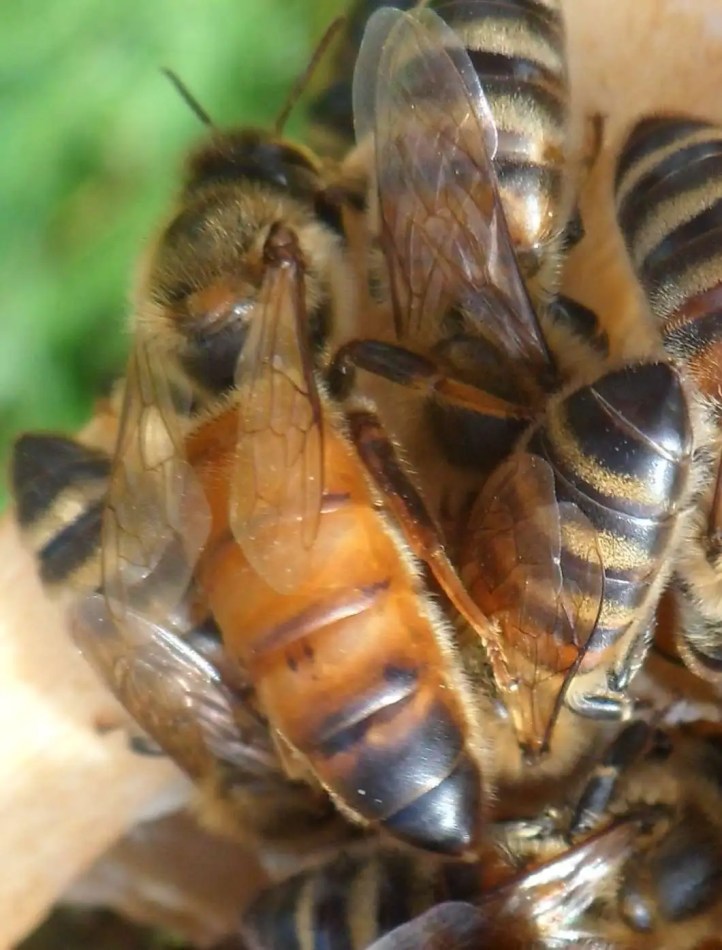
Photo by Roland Prakel-Close-up of a queen bee

Bees face many perils. The ones we humans have introduced into their lives, like deadly chemicals and loss of healthy habitat, and ones that Nature puts in their path. Bees have enemies small and large, and must be vigilant.

Two years ago, during an especially brutal winter, mice invaded my hives and made a disgusting mess, as well as destroying a colony. Beekeepers install mouse guards to prevent such disasters, but I had become complacent because my type of hive sits high above the ground. I’ve gone back to using mouse guards.  

Bears broke through a regular fence and smashed my daughter-in-law’s hives. She and my son bought a heavy-duty, electrified fence that would repel bears. They gave up beekeeping a year or two later because flowers in their area disappear in midsummer. The fence guards chickens now.

Skunks and raccoons also invade hives. Wasps do too. It appears inconsistent—how much beekeepers value one variety of insect, and loath another. The enemy of my friend is my enemy. Like many others, I have lost a hive to wasps. And one time, I interrupted an invasion.

Spiders can prey on bees, so I remove the icky, sticky webs that jumping spiders make on the edges of combs, though I suppose the spiders wouldn’t cause great harm.       

If a hive loses its queen and the beekeeper buys a replacement, the beekeeper introduces the new queen to the colony with tact, allowing time for adjustment. Older bees may be reluctant to accept a newcomer.  

In spring, when people buy new bees, the bees arrive in one of two ways. In an established colony, where the queen and workers know each other and the queen is already at work. Or, in a nuc (nuclear colony) where the queen is in a cage, and will be released after the workers get acquainted with her. In cold climates, where summer is short, the nuc loses days in the adjustment period, whereas an established colony goes right to work. But nucs are less expensive. And people like me, who run an atypical style of hive, must choose nucs.

When the nuc arrives, workers already surround the queen cage. It appears the workers like the queen and are protecting her. But the beekeeper must look closer. Maybe the workers want to get to the queen to kill her. It’s all about scent, we’re told.

After a few-day period of observation, the beekeeper releases the queen. Fumbles may occur during this action. One time I dropped the queen in the grass. A friend who was helping spotted her, carefully picked her up, and deposited her in the hive.   

Bees resemble us in the way they accept a newcomer. When a new neighbor arrives, we grumble. Their new house blocks our favorite view. We liked the old neighbor and wish they hadn’t moved. The new neighbor owns a peacock, whose raucous call awakens us in the mornings.   

Then one day, the new neighbor shows up at our door with a warm loaf of good-smelling bread. In chatting together, we discover we attended the same college. Our kids ran track together. The new neighbor has an adorable dog. We see the potential for friendship.

Like a queen bee, the new neighbor gets incorporated into the colony/neighborhood.

bee health · beekeeping · bees, pollinators, beekeeping, environment · natural cures · nature

Bee Health around the Globe: MEXICO

Mexico has great biodiversity in birds, amphibians, plants, and insects. Diverse species require abundant and varied vegetation, and that depends on a healthy population of pollinators.

The country’s farmers rely on pollinators, too. Like other countries around the world, Mexico has experienced a decline in its bee population due to loss of vegetation and increased use of fertilizers and agrochemicals on plants the bees visit.    

Add to that, the varroa mite. The enemy of beekeepers throughout the world has found its way to Mexico. When the mite showed up in the U.S. and Canada, Mexico closed its borders to U.S. bees. But it was only a matter of time until the destructive parasite showed up in our southern neighbor’s colonies.

The decline has economic implications. Mexico has 42,000 honey producers operating 2 million beehives. Honey exports bring about 56 million (US) dollars into the Mexican economy.

Mexico is home to native bees that live in small colonies and make honey. And many indigenous communities engage in beekeeping, cultivating and harvesting honey with pre-colonization methods, like using clay pots to house bees.

But the domesticated European beepollinates many more plants and produces much more honey. The two main production areas are the Yucatan Peninsula and the states of Chiapas, Veracruz, and Guerrero.  

Adding to the country’s beekeeping woes, Mexico has been under severe drought and faced extreme heat, especially in the northern part of the country. This exacerbated the problems facing domestic and wild bees.

Bees are dying in huge numbers because the lack of rain drastically reduced wild flower blooms. The bees went looking for pollen in fields with crops. Chemicals killed them, as well as pests.

The northern state of Chihuahua has a dry or semi-dry climate at the best of times, but rainfall has been unusually low in recent years. Dams and lagoons have emptied.

Farmers decided to leave land unplanted and use scarce water to keep long-standing groves of walnut trees from dying. One longtime beekeeper said that in his memory, the landscape has never been so bleak.

Mexico’s southern states have not been immune from lack of rainfall and high heat. Last year, beekeepers mounted a campaign to rescue wild bees that had no water or food sources, because the farmers needed them to pollinate their crops.

Uncategorized

Bee Health around the Globe: MEXICO

Mexico has great biodiversity in birds, amphibians, plants, and insects. Diverse species require abundant and varied vegetation, and that depends on a healthy population of pollinators.

The country’s farmers rely on pollinators, too. Like other countries around the world, Mexico has experienced a decline in its bee population due to loss of vegetation and increased use of fertilizers and agrochemicals on plants the bees visit.    

Add to that, the varroa mite. The enemy of beekeepers throughout the world has found its way to Mexico. When the mite showed up in the U.S. and Canada, Mexico closed its borders to U.S. bees. But it was only a matter of time until the destructive parasite showed up in our southern neighbor’s colonies.

The decline has economic implications. Mexico has 42,000 honey producers operating 2 million beehives. Honey exports bring about 56 million (US) dollars into the Mexican economy.

Mexico is home to native bees that live in small colonies and make honey. And many indigenous communities engage in beekeeping, cultivating and harvesting honey with pre-colonization methods, like using clay pots to house bees.

But the domesticated European beepollinates many more plants and produces much more honey. The two main production areas are the Yucatan Peninsula and the states of Chiapas, Veracruz, and Guerrero.  

Adding to the country’s beekeeping woes, Mexico has been under severe drought and faced extreme heat, especially in the northern part of the country. This exacerbated the problems facing domestic and wild bees.

Bees are dying in huge numbers because the lack of rain drastically reduced wild flower blooms. The bees went looking for pollen in fields with crops. Chemicals killed them, as well as pests.

The northern state of Chihuahua has a dry or semi-dry climate at the best of times, but rainfall has been unusually low in recent years. Dams and lagoons have emptied.

Farmers decided to leave land unplanted and use scarce water to keep long-standing groves of walnut trees from dying. One longtime beekeeper said that in his memory, the landscape has never been so bleak.

Mexico’s southern states have not been immune from lack of rainfall and high heat. Last year, beekeepers mounted a campaign to rescue wild bees that had no water or food sources, because the farmers needed them to pollinate their crops.

bee health · beekeeping · bees, pollinators, beekeeping, environment · natural cures · nature · Uncategorized

Bee Health around the Globe-Australia

Photo by Amy Blizzard

Bee Health around the Globe. Australia

Australia’s honey producers have something to celebrate and something to mourn.

Australian honey has a reputation for good flavor and purity, and the country is one of the top ten honey producers in the world. Honeybees in Australia live amid an abundance of natural resources in a comparatively pollution-free environment. Bees have a variety of plants to visit, and the climate is mostly favorable.  

The country’s commercial industry mostly operates as nomadic. Hives are moved up to 20 times in a year, either for pollination contracts or for honey production. Beekeepers follow the budding and flowering of plants.

Australia’s native bees are small and stingless. For honey production, beekeepers depend on Asian and European honeybees.   

Australia was the last major country to remain free of the varroa mite, a parasite that has brought calamity to beekeepers around the world. But in 2022, the mite was found in Australian hives.

A government agency jumped into action to keep the mite from spreading. But only two years later, the agency said the mite can’t be eradicated, and shifted its emphasis to trying to contain the parasite. This is the goal in the U.S. also. Beekeepers try to control the spread and lessen the mite’s impact. 

Australia produces a variety of honey on its huge land, with flavors influenced by the local flora. Well-known honeys include:

• Manuka, known for its medicinal properties, produced from the nectar of the Leptospermum (tea trees).  

• Leatherwood, unique to Tasmania, known for its distinctive spicy flavor and aromatic properties.

• Jarrah and Karri, from Western Australia, known for high antimicrobial activity and thick consistency.

• Eucalyptus, with a slightly herbal flavor, harvested from the numerous eucalyptus species across Australia.

The arrival of the destructive varroa mite has been bad news, but the honey industry recently got some good news, too.  Seven years of research on Manuka honey validated its reputation as an antibacterial product. The research confirmed that Australian honey had medicinal properties similar to New Zealand’s well-known manuka honey.

This is a potential boon for the Australian industry. Medical-grade honey sourced from New Zealand earns that country an estimated $75 million a year.

Medical-grade honey has been proven to be an effective treatment for wounds and skin infections. Studies show it can kill superbugs that have built immunity to conventional antibiotics. The honey can be used to treat bacterial infections like C-diff.

“We had assumed that the unique antibacterial activity found in manuka honey is more active and stable than that of other varieties,” a researcher said. “Now, our research confirms this belief and goes a step further. We proved that Australia’s Manuka honey is just as effective, if not better, than New Zealand varieties, based on a survey of 80 Manuka-type Australian honeys.”

Beekeepers believe the research puts Australian Manuka honey on the international radar at a time when antibiotic resistance has been recognized as a global crisis.