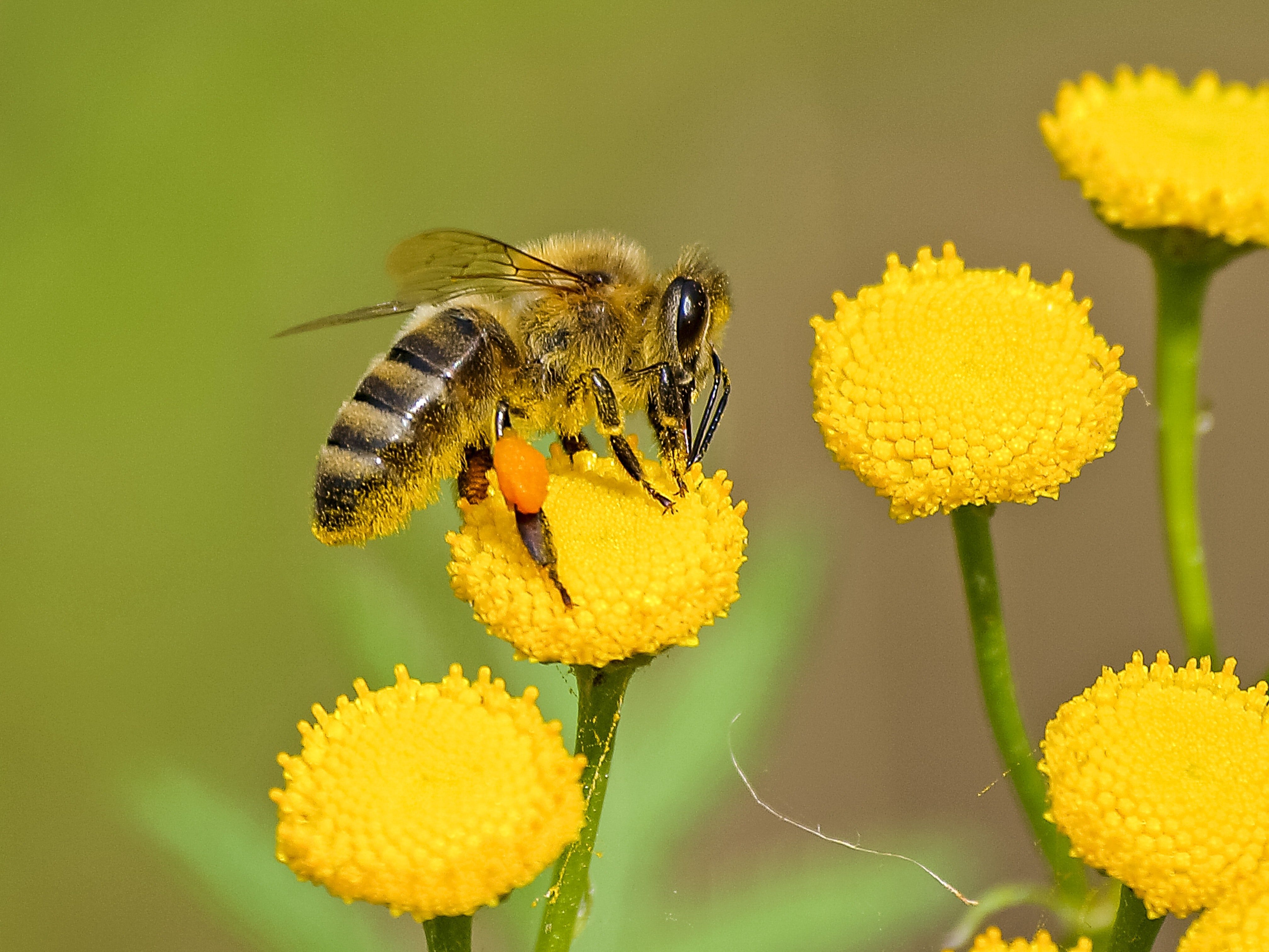
In China, people revere bees as symbols of good luck and prosperity. Bees appear in art and on clothing.
China still leads the world in honey production, and has more than eight million managed colonies. Plus, the country boasts an enviable diversity of managed and wild honeybee species.
But in some rural parts of China, bees have disappeared. Uncontrolled use of pesticides since the 1980s has wiped them out.
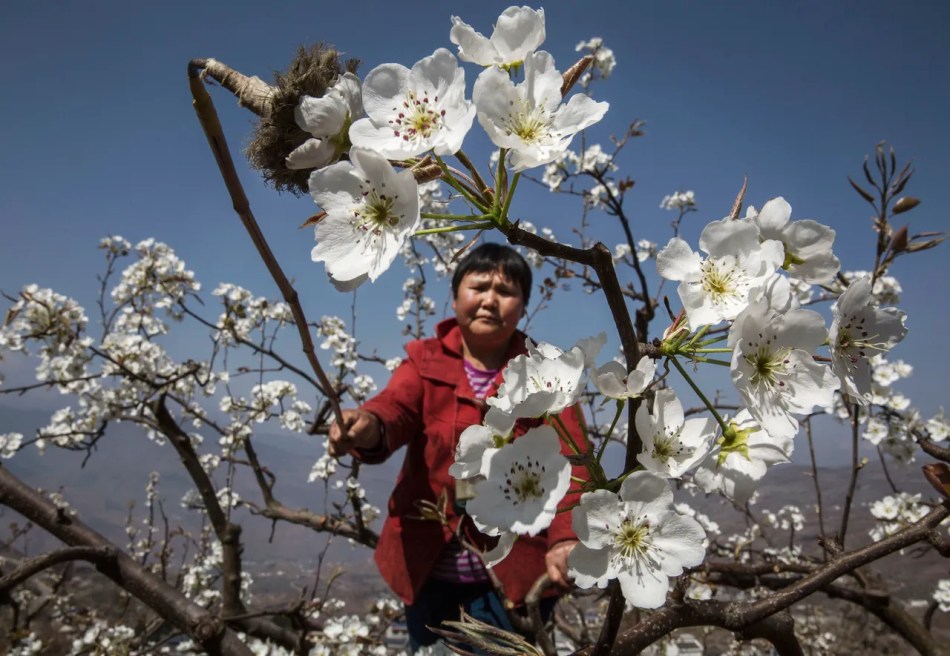
In Southern Szechuan Province, where pear orchards carpet hillsides and produce fruit for the entire country, no bees showed up to pollinate trees in 2013. Farmers reported this to the government. Beijing insisted that the farmers pollinate the crops by hand.
Today, humans do the work bees once did, and it is a laborious undertaking. A worker painstakingly collects pollen and sets it to dry for two days. Then, using a stick of bamboo and chicken feathers to imitate the body of a bee, the worker touches a blossom. A person can pollinate 30 or fewer trees in a day, whereas a hive of bees can pollinate up to three million flowers in that same time.
It isn’t just pear farmers who have learned to hand-pollinate. Apple, cherry, and other fruit growers also use people to pollinate. Farmers have proven adept at doing the work of bees, hard as it is, but some predict this may not be sustainable. As China makes economic strides, young people move to the cities. Some predict that in 10 to 20 years, farmers may not be able to find laborers to hand-pollinate crops.
Asian bees have coevolved with the varroa mite, the parasite that has proved so destructive to bees in the U.S. and Europe, and have adjusted to it. But other diseases have jumped national borders and threaten Asian colonies. With its unparalleled diversity of managed and wild honeybee species, a further decline of bees in China would be felt globally.
China continues to use pesticides in large amounts. Farmers are told to restrict pesticide use when crops are blossoming, but some beekeepers find they must move their hives to the forests to try to shield them from heavy spraying.
Gloomy predictions say that once bees have been wiped out in an area, repopulation is unlikely.
Better to cherish and save colonies before that occurs.
 1000 Reasons to Love Bees